Helping preschoolers recognize letters doesn’t have to involve flashcards or worksheets alone. Research shows that children learn best through playful, meaningful experiences that encourage exploration, repetition, and conversation. If you’re looking for effective ways to teach letter recognition at home or in the classroom, these evidence-based strategies can help build a strong foundation for future reading success.
Research-Backed Strategies for Teaching Letter Recognition to Preschoolers
Why Letter Recognition Matters
Letter recognition is one of the strongest predictors of later reading achievement. Before children can begin decoding words, they first need to recognize letters, learn their names, and understand that each letter represents sounds used in spoken language.
According to Piasta and Wagner (2010), intentional alphabet instruction significantly improves children’s letter knowledge compared with simple exposure to printed letters. The researchers also found that combining letter names with letter sounds during instruction leads to stronger learning outcomes than teaching either skill alone.
Rather than expecting children to memorize the alphabet, research encourages providing many playful opportunities to interact with letters throughout the day. It’s important for development to follow research-backed strategies for teaching letter recognition.
What Research Says About Teaching Letter Recognition
Several decades of early literacy research point toward similar conclusions.
Children learn letters best when instruction is:
- playful and engaging
- taught explicitly by an adult
- repeated frequently
- connected to meaningful experiences
- paired with conversations about letters and sounds
Researchers have also found that alphabet knowledge develops gradually. Most children first recognize letters visually before consistently naming them or identifying their sounds. Because every child develops at their own pace, repeated practice across many activities is more effective than trying to master all 26 letters at once.
12 Research-Backed Strategies for Teaching Letter Recognition
1. Make Learning Hands-On
Research consistently shows that young children retain information better when they actively manipulate materials rather than simply looking at them.
Try activities such as:
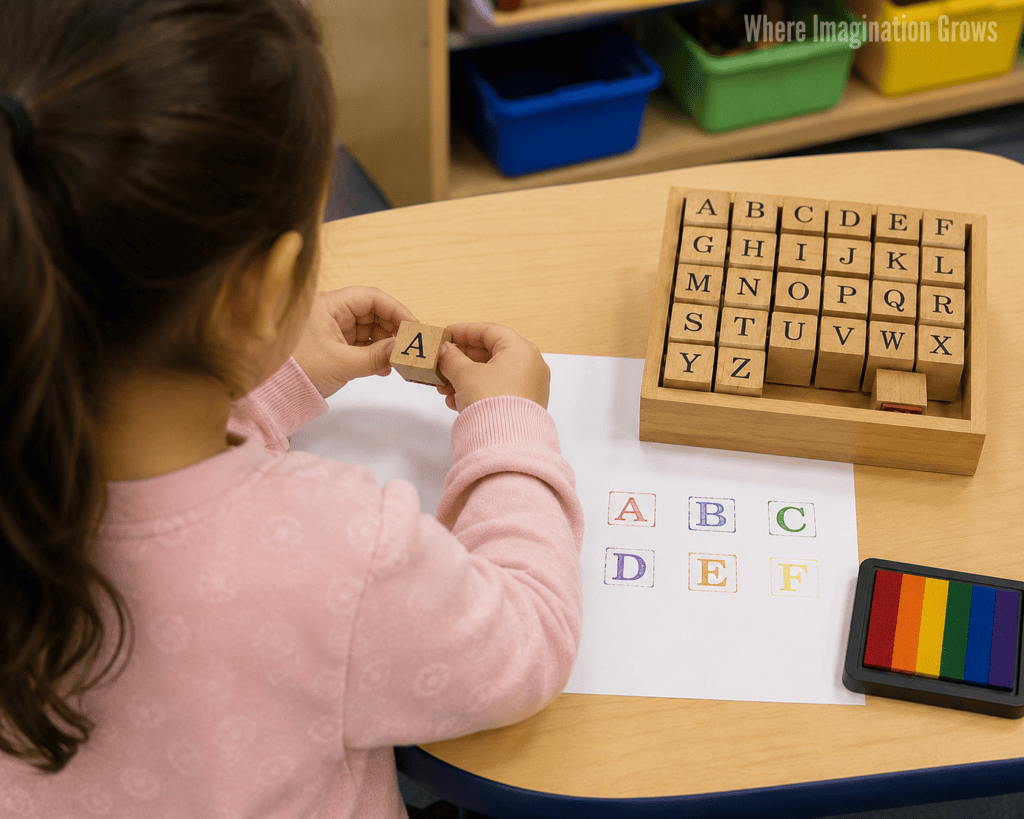
- magnetic letters
- alphabet puzzles
- play dough letters
- tracing letters in sand
- letter stamps
- building letters with craft sticks
- sensory bins filled with alphabet objects
The more senses children use, the more memorable the learning experience becomes.
2. Teach Letter Names and Sounds Together
Instead of introducing only the letter name, pair it with its most common sound.
For example:
“This is the letter M. It says /m/. M is for moon.”
Making these connections early helps children build phonological awareness alongside alphabet knowledge.
3. Start With Your Child’s Name
Children often recognize the letters in their own names before learning the rest of the alphabet because those letters are personally meaningful and appear frequently in their environment.
Try:
- name puzzles
- magnetic name building
- tracing their name
- matching letters in their name
- finding their name on cubbies or artwork
Using familiar words increases motivation and engagement.
4. Read Alphabet-Rich Books
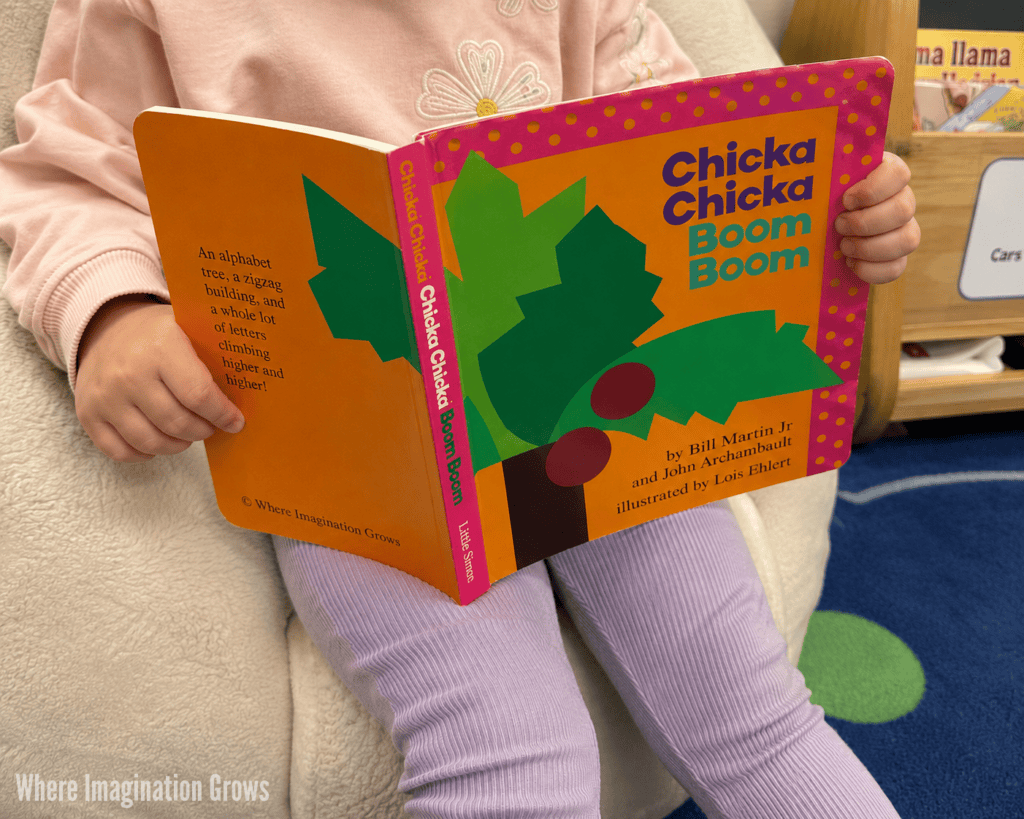
Shared reading provides natural opportunities to notice letters.
While reading:
- point to letters
- ask children to find a specific letter
- notice letters that appear in their names
- discuss beginning sounds
Reading together builds vocabulary while strengthening print awareness.
5. Practice a Few Letters at a Time
Children benefit from repeated exposure instead of introducing the entire alphabet quickly.
Choose three to five letters and revisit them through multiple activities before adding new ones.
Repetition builds confidence and long-term memory.
6. Incorporate Letters Into Everyday Play
One of the easiest ways to reinforce learning is to include letters naturally throughout the day.
Examples include:
- sidewalk chalk
- scavenger hunts
- baking alphabet cookies
- water painting letters outdoors
- letter matching games
- sorting objects by beginning sound
- labeling classroom centers
- finding letters during walks
These authentic strategies for teaching letter recognition help children understand that letters have meaning beyond worksheets.
Our Favorite Hands-On Letter Recognition Activities
Examples:
- Letter Recognition with Rocks
- Salt Tray Letter Hunt Game
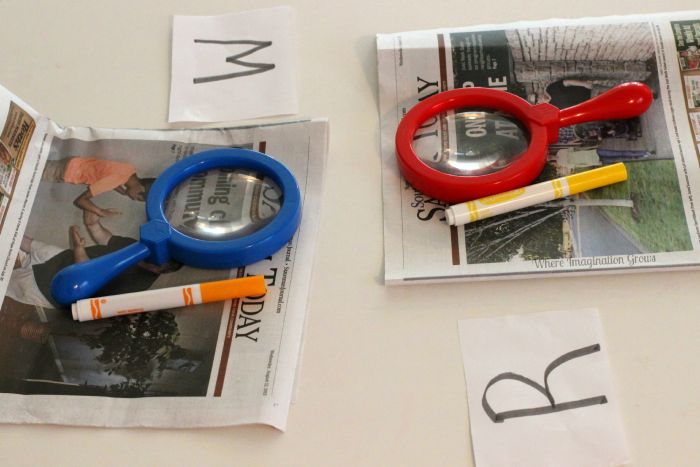
- Recycled Newspaper Letter Hunt
- DIY Letter Matching Cards (glow-in-the-dark too!)
- Letter Matching Sensory Bin
- Making letters with playdough
- Searching for letters around the room
Final Thoughts
Helping children learn letter recognition doesn’t require expensive programs or hours of formal instruction. Research consistently shows that young children learn best through playful, intentional experiences that combine repetition, conversation, and hands-on exploration.
Whether you’re a parent, preschool teacher, or home daycare provider, incorporating simple alphabet activities into everyday routines can build confidence while laying the foundation for reading success. Remember that every child develops at their own pace. Celebrate small milestones, keep learning fun, and provide plenty of opportunities to explore letters in meaningful ways.
References
Piasta, S. B., & Wagner, R. K. (2010). Developing early literacy skills: A meta-analysis of alphabet learning and instruction. Reading Research Quarterly, 45(1), 8–38. https://doi.org/10.1598/RRQ.45.1.2
Piasta, S. B., Purpura, D. J., & Wagner, R. K. (2012). Alphabet knowledge development: A Rasch model analysis. Reading and Writing, 25(7), 1595–1619.
Kim, Y.-S. G., Petscher, Y., Foorman, B., & Zhou, C. (2021). U.S. children’s understanding of the English alphabet. Journal of Educational Psychology.
National Center on Improving Literacy. (n.d.). Early literacy resources. https://improvingliteracy.org
Florida Center for Reading Research. (n.d.). Early literacy resources. https://fcrr.org
Institute of Education Sciences. (2016). Foundational skills to support reading for understanding in kindergarten through 3rd grade (NCEE 2016-4008). U.S. Department of Education. https://ies.ed.gov/ncee/wwc/PracticeGuide/21
Looking for more crafts and activities? Check out our index for 100+ kids’ activities! Find activities by theme, materials, skills, age, and much more!