Helping children recognize their own names is a meaningful first step in early literacy. A child’s name is familiar, personal, and naturally interesting, which makes it a wonderful place to begin exploring letters and print.
These easy name recognition activities for preschoolers turn name practice into playful, hands-on learning. Most use supplies you probably already have, and you can adapt them for toddlers, preschoolers, or pre-K children. They work well during morning arrival, small groups, literacy centers, quiet time, or one-on-one learning.
After more than 20 years of working with young children, I have found that preschoolers learn best when they can touch, move, build, and play with letters. There is no need to rush into worksheets or expect perfect handwriting. Start by helping children notice their name, find it, and put its letters in order.
Why Is Name Recognition Important?
Children often become interested in the letters in their own names before other letters of the alphabet. According to the Head Start Early Learning Outcomes Framework, recognizing letters from one’s name is one way preschoolers begin showing awareness of alphabet letters.
Name activities can help children practice:
- Recognizing their printed name
- Identifying the first letter in their name
- Naming uppercase and lowercase letters
- Putting letters in the correct order
- Understanding that print carries meaning
- Following words from left to right
- Strengthening fine motor coordination
- Building confidence and independence
Name recognition and name writing are related, but they are not the same skill. A child can learn to find and build their name before having the fine motor control needed to write it independently.
How to Make Preschool Name Cards
Several of these activities begin with a simple name card. Write or print each child’s first name on a strip of cardstock. Use a clear, easy-to-read font and write the name with a capital first letter followed by lowercase letters.
For children who are just beginning, add a small photo beside the name. The photo gives them a helpful clue while they become familiar with the printed word. Once they can find their name easily, try the card without the photo.
Laminating the cards is optional, but it will help them hold up to repeated use in a preschool classroom or home daycare.
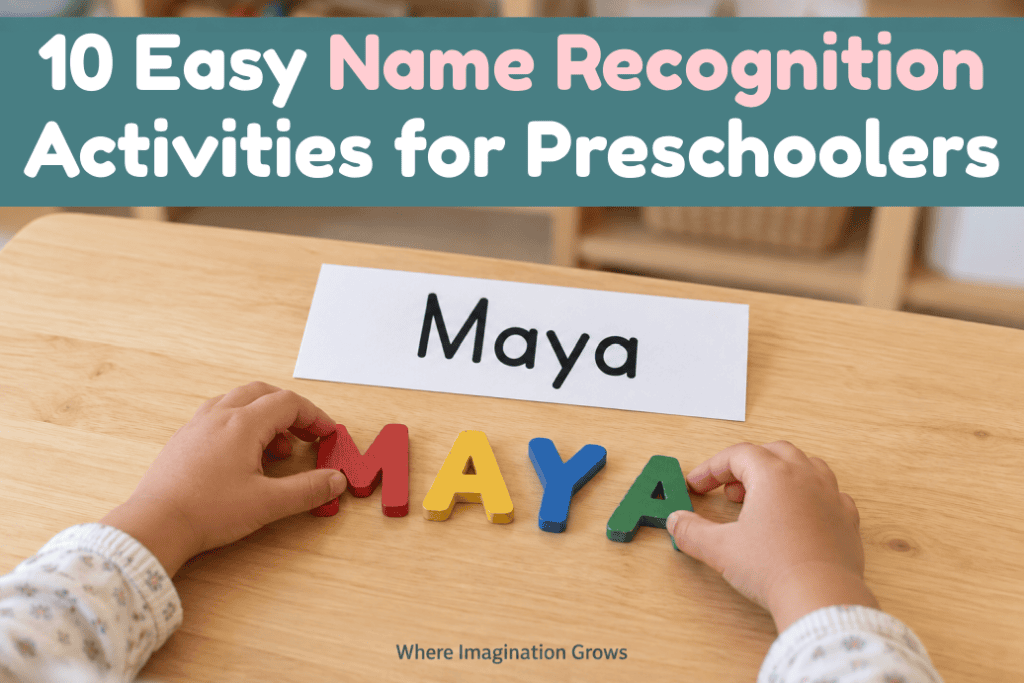
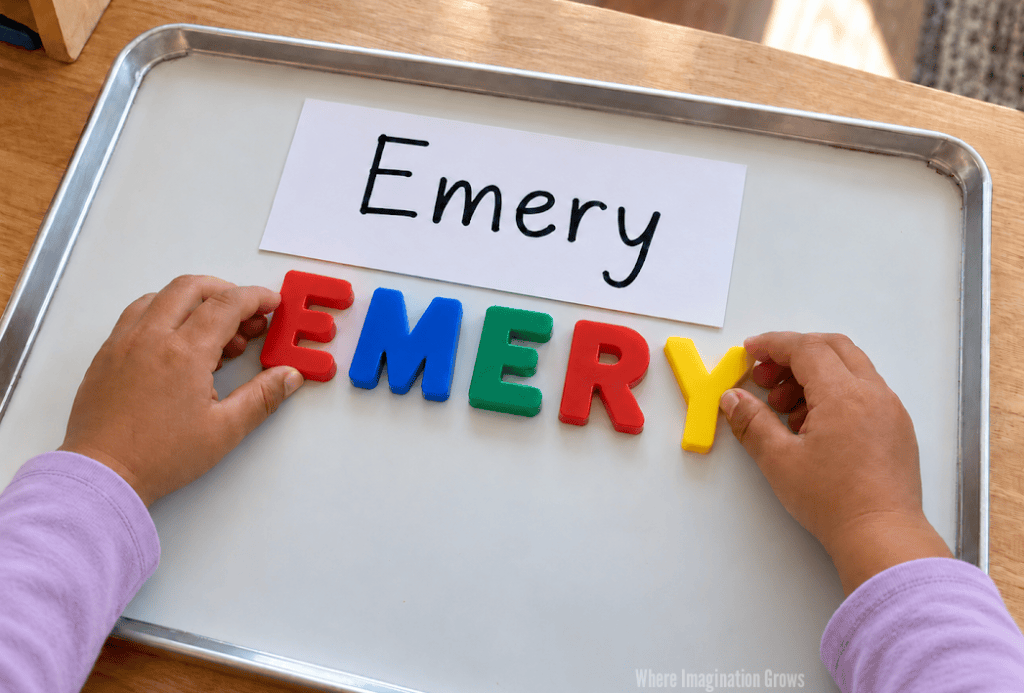
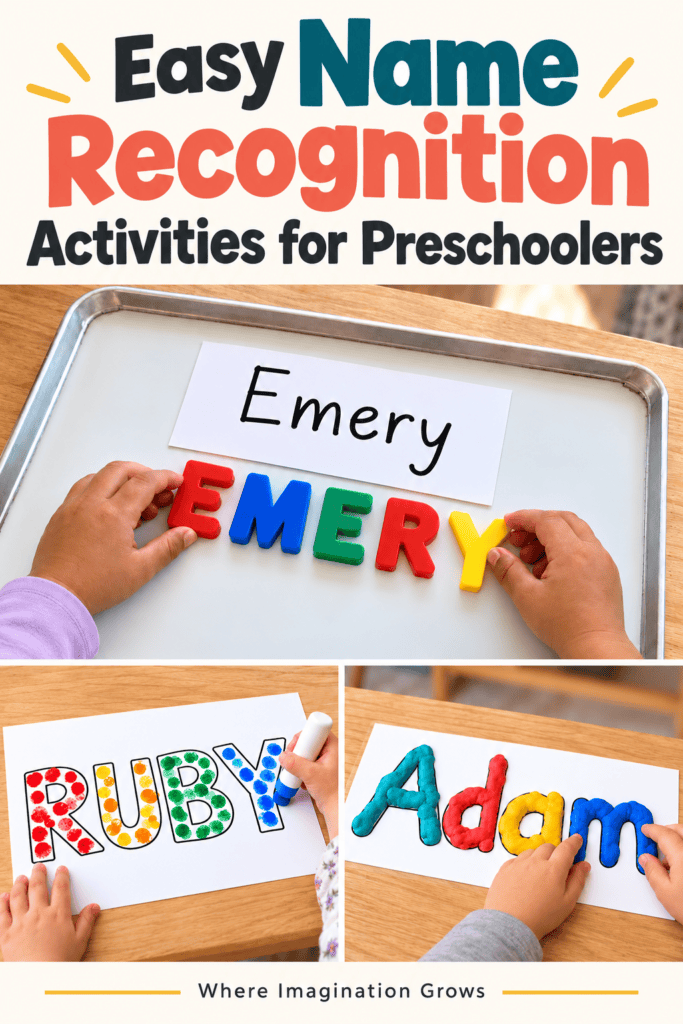
1. Build a Name with Magnetic Letters
Write the child’s name on a piece of paper or a name card. Set out the magnetic letters needed to build the name, along with a few extra letters for a gentle challenge.
Have the child find the matching letters and place them directly below the printed name. As you work together, say each letter aloud and slide your finger from left to right.
When children are ready for the next step, let them build their name without placing the letters on top of a model. This activity is an easy follow-up to other hands-on strategies for teaching letter recognition.
Tip: Check that every letter the child needs is available before beginning. Some names include two of the same letter.
2. Name Letter Sensory Bin
Hide magnetic letters, foam letters, or letter tiles in a shallow sensory bin filled with dry rice, pom-poms, shredded paper, or another child-safe filler.
Give the child a name card and invite them to search for the letters in their name. Children can place the letters on the card as they find them or collect them first and put the name together afterward.
For beginners, hide only the letters in the child’s name. For children who already recognize several letters, add extra letters to sort through.
This activity combines early literacy with sensory exploration and fine motor practice. It also pairs naturally with a letter-matching sensory bin.
3. Find Your Name Card
This is one of the simplest ways to introduce name recognition to a group of preschoolers.
Place several children’s name cards on a table or the floor. Invite each child to find their own card. At first, use only two or three cards so the choices do not feel overwhelming. Add more names as the children become confident.
Talk about the clues they notice:
- What letter does your name begin with?
- Is your name short or long?
- Does anyone else’s name begin with the same letter?
- Which letter comes next?
You can make this part of your arrival routine by having children find their names and place them on an attendance board.
4. Sticker Name Activity
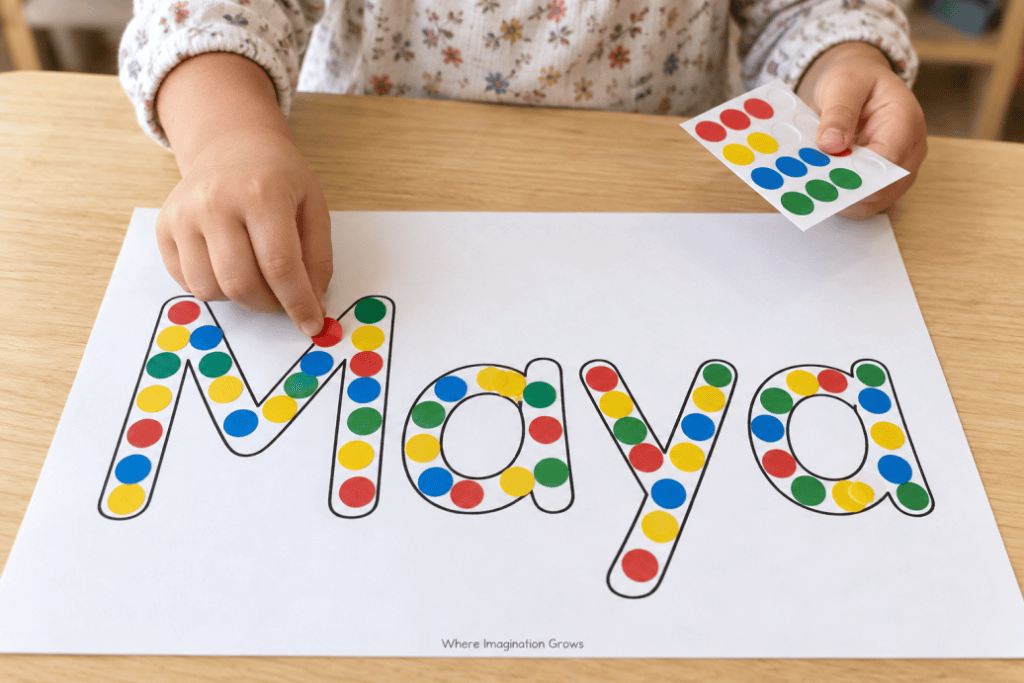
Write the child’s name in large letters on a sheet of paper. Invite the child to cover each line with small dot stickers.
Peeling and placing stickers gives little fingers useful fine motor practice while children become familiar with the shapes of the letters. Encourage them to begin at the first letter and work across the name, but do not worry if younger preschoolers place stickers in their own way.
For another playful way to combine stickers with alphabet practice, try this glow-in-the-dark ABC letter matching game.
5. Clip the Letters in Your Name
Write one letter from the child’s name on each wooden clothespin. Place a complete name card on the table and have the child clip each letter along the bottom of the card in the correct order.
Opening clothespins strengthens the small hand muscles children will later use for drawing and writing. If clothespins are difficult, children can simply place the letter pieces below the name.
For a matching version, write several letters around the edge of a paper plate and ask the child to clip a clothespin onto every letter that appears in their name.
6. Create a Daily Sign-In Routine
A preschool sign-in activity gives children a reason to interact with their names every day.
Place a basket of name cards near the entrance. As children arrive, they can find their card and move it to a “Here Today” board. Children who are ready to write can use the card as a model while signing in on paper or a dry-erase board.
The goal is not perfect handwriting. Scribbles, letter-like shapes, the first initial, and invented attempts are all part of early writing development. Keep the routine encouraging and let each child work at their own level.
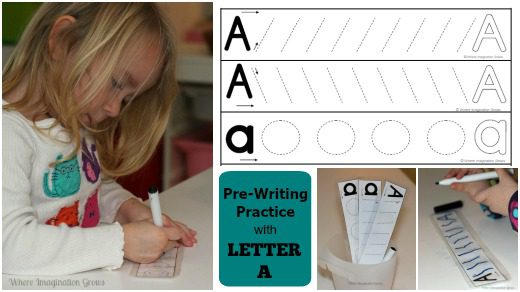
For children who are beginning to form letters, this reusable preschool prewriting practice with Letter A is an easy next step.
7. Make a Playdough Name
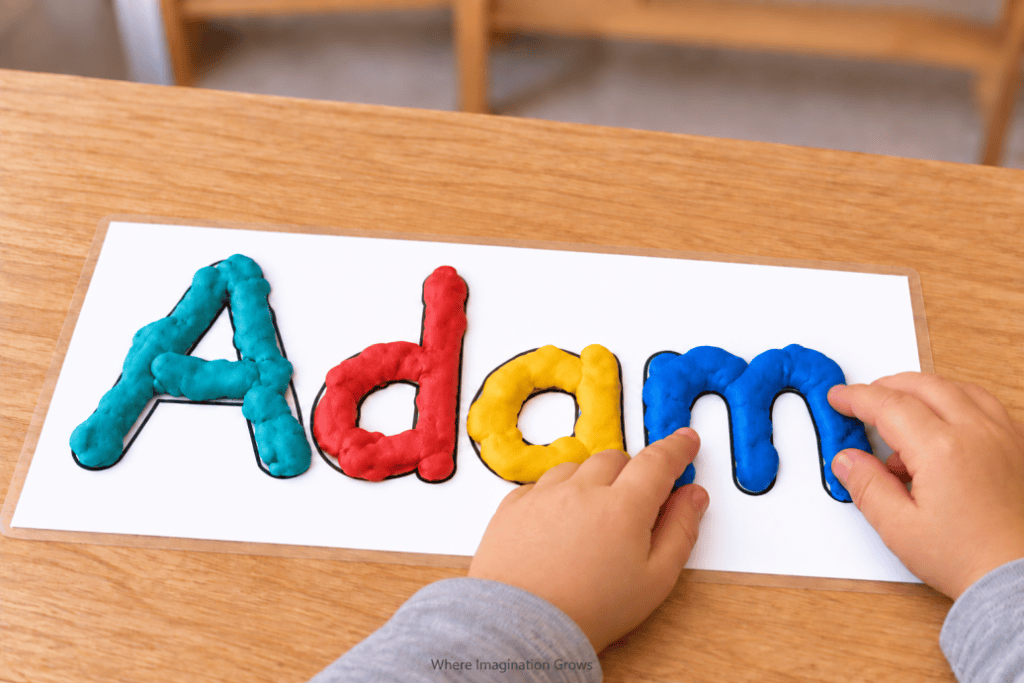
Print or write the child’s name in large letters. If you plan to reuse the page, laminate it or place it inside a dry-erase pocket.
Children can roll playdough into long ropes and shape the dough over each letter. Talk about the lines and curves they see as they work.
For an easier version, have children make small playdough balls and press them along the letters. Older preschoolers can try building the letters beside the name card instead of directly on top of it.
When children are ready to practice making lines and letter-like marks, a rainbow salt tray for prewriting offers another hands-on option.
8. Name Hunt Around the Room
Make several copies of the child’s name card and place them around the room at eye level. Add a few cards with other names or familiar words.
Invite the child to walk around and collect every card that shows their name. Each time they find one, ask what helped them recognize it. They may notice the first letter, the length of the word, or another familiar letter.
For a group activity, hide every child’s name once and let each child search for their own. Place the cards where children can find them safely without climbing or moving furniture.
Children who enjoy searching for familiar letters may also like this recycled newspaper letter hunt.
9. Put Together a Name Puzzle
Write the child’s name on a strip of sturdy paper, leaving plenty of space between the letters. Cut the strip into individual letter pieces. Keep the child’s name card nearby as a model.
Have the child put the pieces in order to rebuild the name. Begin with only the first two or three letters if the full name is too challenging.
To make the puzzle self-correcting, draw a simple colored line or small picture across the back before cutting it apart. When the pieces are in the correct order, the picture or line will match.
Store each puzzle in a labeled envelope or small resealable bag so the letters do not get mixed up.
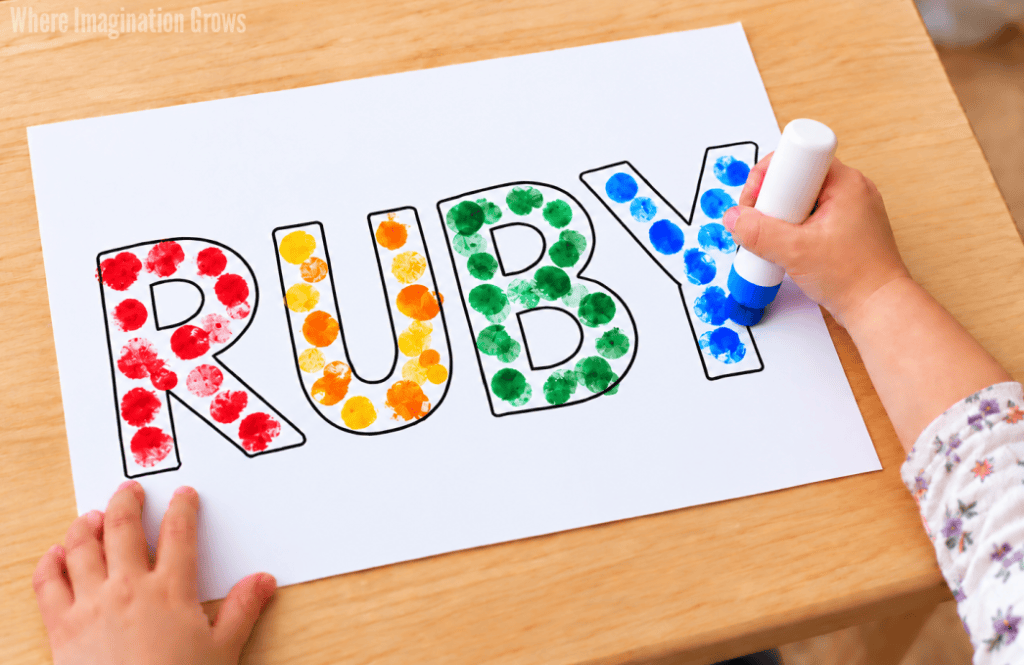
10. Dot-Marker Name Practice
Write or print the child’s name in large outlined letters. Let the child use a dot marker to stamp along each letter.
Say the letters together as the child works. You can also ask them to use a different color for the first letter or count how many letters are in their name.
No dot markers? Try washable paint with a cotton swab, fingerprints, small stickers, or crayons instead.
How to Adapt Name Activities for Different Skill Levels
Preschoolers develop at different rates, even when they are close in age. A simple activity can be adjusted without making a child feel singled out.
For children who are just beginning
- Pair the printed name with the child’s photo.
- Begin with the first letter instead of the entire name.
- Offer only two name cards at a time.
- Use large letters that are easy to handle.
- Build the name directly on top of a model.
For children ready for more challenge
- Mix the name letters with extra letters.
- Build the name without a model.
- Match uppercase letters to lowercase letters.
- Find shared letters in friends’ names.
- Try writing the name after building it.
- Sort names by first letter or number of letters.
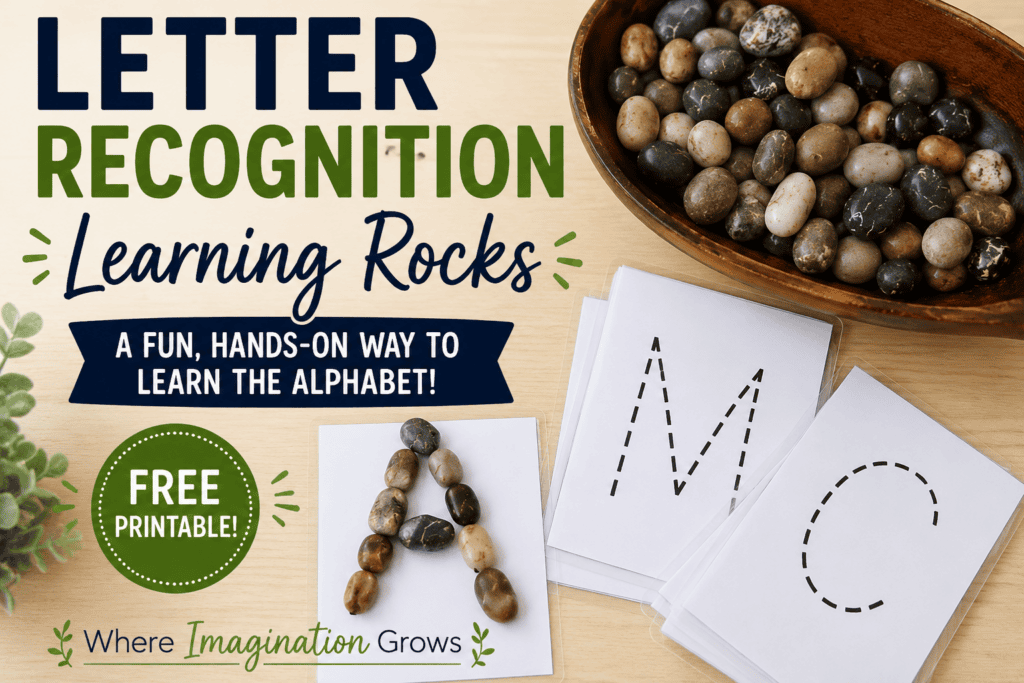
You can extend this learning with letter-recognition practice using rocks or the Spin and Stamp Alphabet Letter Recognition activity.
Tips for Teaching Preschoolers to Recognize Their Names
- Keep the printed name consistent. Use the same clear style on cubbies, artwork, sign-in cards, and activity materials.
- Start with recognition. Let children find and match their names before expecting them to write.
- Use names during real routines. Labels, attendance, artwork, and helper charts make print meaningful.
- Follow the child’s interest. Short, playful practice is more useful than turning the activity into a test.
- Say the letters aloud. Connect what the child sees with letter names and, when appropriate, letter sounds.
- Celebrate attempts. Early scribbles and letter-like forms are part of the learning process.
- Spell and pronounce names correctly. A child’s name is an important part of their identity, so always follow the child and family’s preferred spelling and pronunciation.
Frequently Asked Questions
At what age should a child recognize their name?
Many children begin noticing their printed names during the preschool years, but there is no single age when every child will master the skill. Regular exposure through labels, name cards, and playful activities can help without creating pressure.
Should preschoolers learn to recognize or write their names first?
Name recognition usually comes before independent name writing. Children can learn to find, match, and arrange the letters in their names while their hand strength and pencil control are still developing.
Should name cards use uppercase or lowercase letters?
Use a capital letter at the beginning followed by lowercase letters, just as the name normally appears in print. You can introduce an all-uppercase version separately if that is how the child currently writes their name.
What if two children have names that begin with the same letter?
Help them look beyond the first letter. Compare the second letter, the length of each name, and any letters that are different. A small photo on each beginner name card can also prevent frustration.
How long should a name activity last?
Follow the child’s attention and interest. A few enjoyable minutes repeated regularly is usually more valuable than one long practice session.
Make Name Learning Playful
Children’s names are one of the most meaningful words they can explore. With name cards and a few simple supplies, you can create activities that build letter recognition, print awareness, fine motor skills, and confidence.
Choose one or two ideas to begin, repeat them often, and add a new challenge when the child is ready. Keeping name practice playful helps preschoolers feel successful as they take their first steps toward reading and writing.
Looking for more crafts and activities? Check out our index for 100+ kids’ activities! Find activities by theme, materials, skills, age, and much more!
Leave a Reply