If you have an opening in your home daycare, you may be wondering how to advertise your program and connect with families who are looking for care. The most effective approach is usually a mix of clear information, local connections, and steady visibility- not trying every advertising platform at once.
After more than 15 years as a home daycare provider, I’ve learned that finding the right family takes time. You don’t need to accept every inquiry just to fill a spot. A good match matters for your program, the children in your care, and your household.
Use these home daycare advertising ideas to share what makes your program special, promote an opening, and help prospective families decide whether to contact you.

1. Get clear about the families you’re looking for
Before you write an ad, decide what kind of enrollment you can offer. Think about:
- The ages you accept
- Full-time, part-time, or drop-in availability
- Your days and hours
- Your start date
- Whether you have a current opening or a future one
- Any program features that are important to families
Be specific and honest. If you only have space for a toddler, say so. If you’re looking for a family who needs care three days a week, include that. Clear details help families quickly tell whether your program may work for them.
Make sure your advertising follows the licensing and advertising rules that apply where you live. Requirements can vary by state and locality, including how you describe your program and capacity.
2. Ask current and past families for referrals
Word of mouth can be a valuable way to find families. If your current or former families are happy with your care, let them know when you have an opening and ask whether they would be comfortable sharing your information.
You can also ask trusted friends, neighbors, and community contacts to pass along your website or program page. Give them a short description they can easily share, such as:
I have an opening for a preschool-age child in my licensed home daycare. We have a play-based program with outdoor time and hands-on activities. Families can contact me through my website for details.
Avoid sharing children’s personal information or asking families to promote you in a way that makes them uncomfortable.
3. Contact your local child care resource and referral agency
Many communities have a Child Care Resource and Referral (CCR&R) agency or another organization that helps families look for care. Contact the agency serving your area and ask:
- Whether providers can be listed in its referral database
- How families search for available care
- Whether it has a provider directory or referral service
- How to update your availability and contact details
Ask what information the agency needs and how often you should confirm that your listing is current. You can also check with your local licensing agency or child care association for other referral opportunities.
4. Create a simple webpage for your program
A basic webpage gives families one place to learn about your daycare before they contact you. It doesn’t need to be complicated. Include:
- Your program name and general location
- Ages served and current availability
- Hours and days of operation
- Your experience and approach to learning
- A few clear photos of the daycare space and activities
- How families can ask questions or schedule a visit
Use a business email address or contact form so you don’t have to put your personal email address in public listings. Don’t publish your exact home address unless you have considered your privacy and safety needs and confirmed that sharing it is appropriate.
If you use a Google Business Profile, review Google’s eligibility and address guidelines first. Home-based child care can raise privacy questions, and Google distinguishes between businesses customers visit and businesses that travel to customers.
5. Share your opening on social media
A public business page on Facebook or Instagram can help local families learn about your program. Share useful, current information such as:
- A daycare opening and the ages you accept
- A photo of your play space
- An activity or project
- Your daily routine or outdoor play area
- A reminder about how families can contact you
You can also look for local parent groups where businesses are allowed to share services. Read each group’s rules before posting; some allow promotional posts only on certain days or in designated threads.
Don’t assume that a platform’s advertising features or rules are the same as they were a few years ago. Check the current policies before paying to promote a post. For more guidance, see my post on social media etiquette for daycare providers.
6. Consider current child care directories and marketplaces
Families may use online directories, local community boards, or child care marketplaces to find providers. The sites available and their features can change, so check whether a service is active in your area before spending time or money on a listing.
Before creating an account, review:
- Whether the site serves families looking for ongoing child care
- Whether it has listings in your location
- What information will be public
- Whether the site charges providers
- How inquiries and messages are handled
- The platform’s current safety and privacy settings
Keep your profile consistent with the information on your website and referral listings. Remove or update old availability so families don’t contact you about a spot that has already been filled.
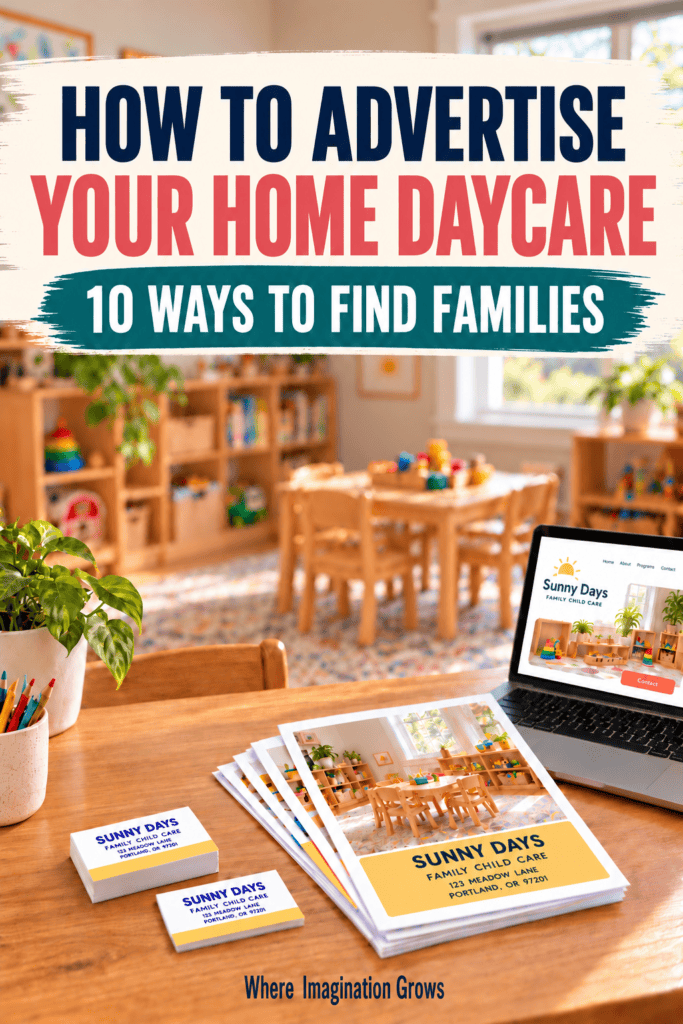
7. Put up flyers or business cards where families may see them
Ask permission before leaving flyers or business cards at places such as libraries, community centers, children’s activity spaces, or family-focused businesses. Some locations have a community bulletin board or a process for posting local services.
Make the flyer easy to scan. Include your program name, general location, ages served, hours, how to inquire, and a link or QR code to your webpage. Don’t crowd it with every policy or detail; the goal is to help interested families take the next step.
8. Make your advertising show what makes your program different
Families want to understand what daily life in your daycare is like. Choose a few real strengths to highlight, such as:
- Your experience with infants, toddlers, or preschoolers
- A play-based or outdoor-focused routine
- Small-group care
- Your schedule or meal program
- A welcoming, home-like environment
- Your approach to communication with families
Use clear, current photos of your space and activities. Don’t use AI-generated photos of a space that isn’t yours. If you share images that include children, follow applicable laws and licensing rules and get any required written permission from families. You can also show materials, children’s artwork, or hands at work without identifying a child.
9. Respond to inquiries with a consistent process
A quick, professional response makes it easier for families to decide what to do next. Prepare a short reply that answers basic questions and explains your next step, such as a phone call, interview, or visit.
You might ask families about:
- Their child’s age
- The care schedule they need
- Their desired start date
- Any questions they have about your program
Keep your own screening questions focused on whether your program and the family’s needs are a good fit. Avoid sharing private details about your household before you’re comfortable doing so. My guide to interviewing daycare clients can help you plan those conversations.
10. Keep your information up to date
Advertising works best when families can trust what they find. Review your website, directory listings, and social media pages whenever your availability, hours, or program details change.
If you have no openings, you can say that you’re accepting inquiries for a future date or waitlist—if that’s accurate. When a spot is filled, update or pause listings so families don’t spend time asking about unavailable care.
What to include in a home daycare ad
A clear ad answers the questions families are likely to have. Include:
- The type of child care you offer
- Your general location
- Ages served
- Days and hours
- Current or upcoming availability
- Your experience or a distinctive program feature
- A safe, professional way to contact you
Here’s a simple example you can adapt:
Home daycare opening in [neighborhood or area]
I have an opening for a [age range] child beginning [date]. My [licensed, if applicable] home daycare offers [brief description of your program]. Care is available [days and hours]. To learn more or ask about a visit, contact me at [business email, contact form, or other preferred method].
Home daycare advertising tips: what to avoid
When promoting your program:
- Don’t advertise a space or schedule you can’t offer.
- Don’t claim a credential, license, or program feature you don’t have.
- Don’t post your exact home address or personal schedule in public ads.
- Don’t share identifiable photos of children without following consent and privacy requirements.
- Don’t describe your rates as “cheap” just to attract inquiries; explain what your program offers and share your rates directly with interested families.
- Don’t feel pressured to enroll a family before you’ve had a chance to decide whether the arrangement is right for both of you.
A successful ad should help the right families find you—not convince every family to enroll.
Frequently asked questions about advertising a home daycare
How do I get families to enroll in my home daycare?
Start by making your availability and program details easy to find. Share your opening with your local child care referral agency, ask satisfied families to pass along your information, and use a clear webpage or current local listings. Respond promptly and use a consistent process to talk with prospective families.
What should I say in a daycare advertisement?
State the ages you accept, your schedule, general location, availability, and one or two features that describe your program. Include a safe way to contact you. Keep the ad accurate and easy to read.
Should I advertise my home daycare on Facebook?
A public business page or a permitted post in a local parent group may help families discover your program. Check each group’s rules and the platform’s current advertising policies. Don’t share private information or photos of children unless you have followed the applicable consent and privacy requirements.
Should I put my home address in my daycare ad?
Think carefully before posting your exact address publicly. You can share a general neighborhood or area and provide more details to families you’re speaking with. If you’re considering a business listing that asks for an address, review the platform’s current rules and consider your household’s privacy and safety.
More resources for running a home daycare
Finding families is one part of running a child care business. You’ll also want clear policies, a thoughtful enrollment process, and a plan for managing your program.
- Read my guide to starting or running a home daycare.
- Review these tips for creating a home daycare contract.
- Explore my guide to interviewing daycare clients.
- Visit the home daycare resource page for more provider resources.
Finding the right family may take some time. Keep your information accurate, make it easy for families to learn about your program, and choose enrollment arrangements that work for your daycare.

Looking for more posts about running a daycare? Check out my daycare page to learn about starting or running an in-home daycare.
What do you think about posting a website link on craigslist. I feel it makes me look more professional. It doesn’t contain my physical address but it does my daycare email
I think it’s a great idea, I post a link to mine as well! I don’t get a fourth of the spam to my daycare email address if I do it that way rather listing it in my CL ad. I added a contact form to my website rather than just my email and now I very rarely get any spam. 🙂
Don’t forget to locate and contact your local Child Care Resource & Referral Organization. Most states have one and most of them provide a referral service for families looking for child care and will refer your child care program to those families. Most of these are non profit agancies and will provide this service for free to families and for the child care programs. Child Care Aware has a pretty solid list of all the CCR&Rs throughout the US.
http://www.childcareaware.org/child-care-providers/resources/local-ccrrs