Should home daycare providers receive paid vacation days, holidays, and sick time?
Yes! Home daycare providers can include paid closures in their tuition policies. The key is explaining those closures clearly, putting them in your daycare contract, and discussing them with families before enrollment.
After more than 15 years of running a home daycare, I know how difficult it can feel to charge tuition when your program is closed. During my first year, I worked nearly every holiday and didn’t take a single vacation day. I scheduled appointments, family activities, and short trips around evenings and weekends.
That was a mistake.
Home daycare providers frequently work 10- to 12-hour days without coworkers, scheduled breaks, or paid benefits from an employer. We are also responsible for planning activities, preparing meals, cleaning, communicating with families, keeping records, and managing every other part of the business.
Planned time away is not an unreasonable perk. It is one part of building a home daycare business that you can continue operating for years without burning out.
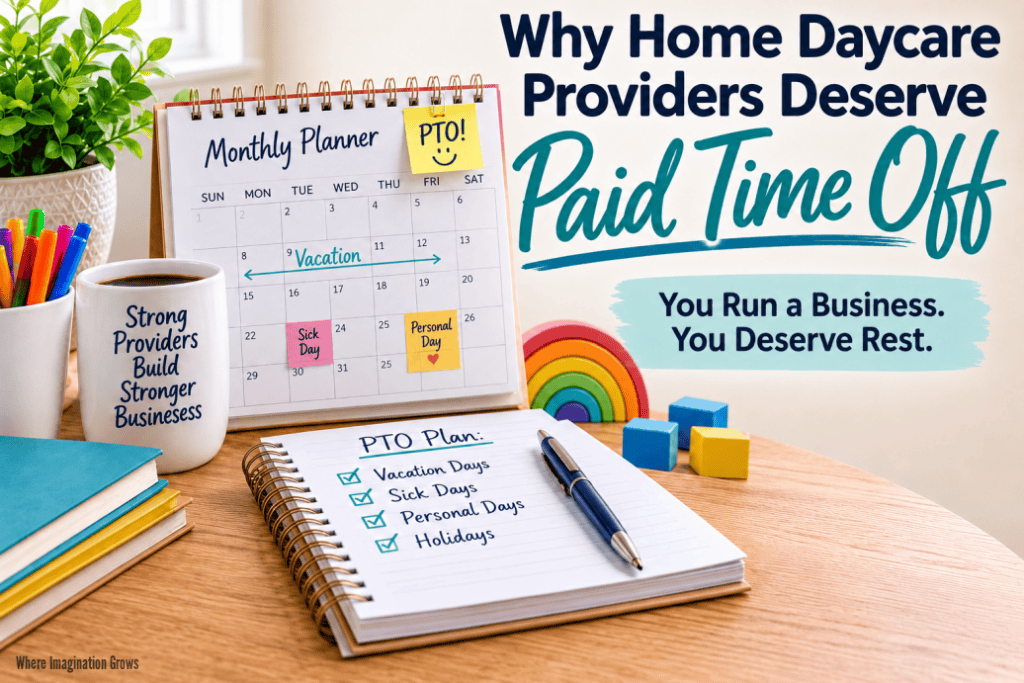
What Does Paid Time Off Mean in a Home Daycare?
Home daycare providers are generally self-employed business owners, not employees of the families they serve. Parents are not your employers and are not providing you with traditional employee benefits.
Instead, you create a tuition structure that supports your program throughout the year. That structure may include paid closures for:
- Holidays
- Provider vacation days
- Sick or personal days
- Professional development
- Licensing or training requirements
- Emergency or weather-related closures
Although these closures are commonly referred to as paid time off or PTO, the tuition families pay is for continued enrollment in your program—not simply for each individual day their child attends.
Should Parents Pay When a Home Daycare Is Closed?
Parents can be required to pay regular tuition during provider closures when that requirement is clearly stated in the signed daycare contract and allowed under applicable laws and subsidy rules.
Families are paying to reserve their child’s limited enrollment space. Your operating expenses also continue when your daycare is closed. Insurance, licensing fees, supplies, utilities, food preparation costs, taxes, training expenses, and household expenses do not disappear because you take a vacation day.
A consistent weekly or monthly tuition amount also makes income and child care expenses more predictable for everyone.
However, parents should never be surprised by a paid closure. A fair policy clearly explains:
- Which closures are paid
- How many paid closure days you may take
- How much notice families will receive
- Whether tuition credits are given for additional closures
- How unexpected illnesses or emergencies are handled
- Whether parents pay when their own child is absent
The worst time to explain your paid time off policy is after you have already closed. Include it in your contract and review it during the enrollment process.
Ways to Structure Home Daycare Paid Time Off
There is no single PTO structure that works for every home daycare. You can organize your tuition and closures in several ways.
Charge the Same Tuition Throughout the Year
With this arrangement, families pay the same weekly or monthly tuition throughout the year. Tuition is based on the child’s enrollment space and includes the paid closures listed in the daycare contract.
This is the structure I prefer because it gives both the provider and families a predictable payment schedule.
List a Specific Number of Paid Closures
Another option is to state the exact number of paid holidays, vacation days, sick days, and professional development days included each year.
If you close for more than the allowed number of days, your policy can explain whether families will receive a credit.
Take Unpaid Closures
Some providers choose not to charge for days when their daycare is closed. If you choose this option, make sure your regular rates are high enough to cover the income you will lose during vacations, holidays, illnesses, and training days.
There is no universal answer. Your policy must work for your finances, your family, and the daycare program you want to operate.
How Much Paid Time Off Should a Home Daycare Provider Take?
There is no required or universally accepted number of paid days for home daycare providers.
When deciding how much time to include, consider:
- How many hours you work each week
- The amount of vacation time your family needs
- Major holidays you want to observe
- Licensing and training requirements
- How you will handle unexpected illness
- The child care market in your area
- How much notice you can provide
- The effect closures have on your daycare families
- What is financially sustainable for your business
One possible annual PTO package could include:
- 8–10 paid holidays
- 10 paid vacation days
- 3–5 paid sick or personal days
- 1–2 paid professional development days
This is only an example. You may decide that you need more or fewer days.
A provider who closes for two full weeks during the summer may structure vacation time differently from someone who takes several long weekends throughout the year. The most important thing is to decide in advance and communicate it clearly.
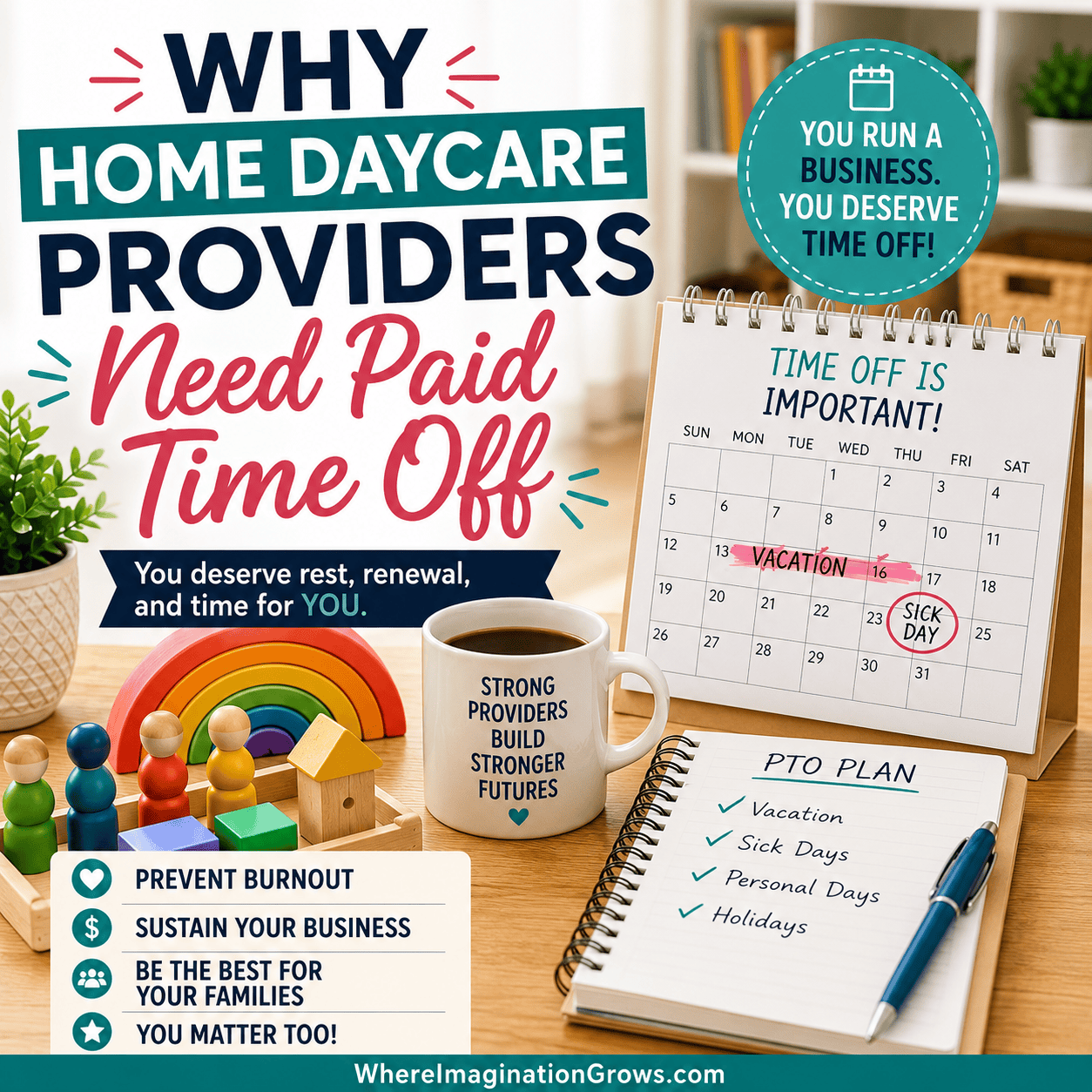
What to Include in Your Home Daycare PTO Policy
A complete policy should address more than the number of days you plan to take.
Paid Holidays
List each paid holiday rather than simply saying you will be closed for “major holidays.”
Explain what happens when a holiday falls on a weekend. Will you observe it on Friday or Monday? Will Christmas Eve or the day after Thanksgiving also be included?
Provide families with an annual closure calendar whenever possible.
Provider Vacation Days
State:
- How many vacation days or weeks are included
- Whether those days are paid
- Whether vacation days are counted as calendar days or business days
- How much notice families will receive
- Whether the days may be taken consecutively
- What happens if you take more than the allotted number
I try to give families as much notice as possible. When I know my vacation schedule at the beginning of the year, I provide all the dates at once. I also send reminders as each closure approaches.
Provider Sick and Personal Days
Even the healthiest provider will eventually need an unexpected day off.
Your policy should explain:
- How many sick or personal days are paid
- How families will be notified
- Whether additional sick days will be credited
- What happens during an extended illness
- Whether personal appointments are included
Do not promise that you will never close unexpectedly. Create a reasonable policy before you need it.
Professional Development Days
Providers may need time for CPR renewal, licensing classes, conferences, required training, inspections, or program planning.
Decide whether these days are included in your regular paid closures and how much notice you will give families.
Weather and Emergency Closures
Explain how you handle:
- Snow and ice
- Power outages
- Unsafe road conditions
- Wildfire smoke or other local hazards
- Water or heating problems
- Household emergencies
- Closures required by licensing or public health officials
Do not assume families will know whether an emergency closure is paid. State it in writing.
Parent Vacations and Child Absences
Your policy should also address what happens when a family chooses not to use care.
Most home daycare programs require regular tuition when a child is absent due to vacation, illness, appointments, or a parent’s day off. The child’s enrollment space is still reserved and cannot temporarily be given to another family.
Make sure this is stated separately from your provider closure policy.
Sample Home Daycare Paid Time Off Policy
The following is an example that you can customize for your program. Review your licensing requirements, subsidy agreements, and applicable local laws before adding it to your contract.
Tuition and Enrollment
Tuition is based on enrollment in the program rather than daily attendance. Regular tuition is due 52 weeks per year and remains due during child absences and the paid program closures listed below.
Paid Program Closures
The daycare will be closed with regular tuition due for:
- Holidays listed on the annual closure calendar
- Up to 10 provider vacation days per calendar year
- Up to 5 provider sick or personal days per calendar year
- Up to 2 professional development days per calendar year
Vacation dates will be announced as early as possible. Families will receive at least 30 days’ notice for planned vacation days whenever possible. Sick days and emergencies may require shorter notice.
No make-up days, refunds, or tuition credits will be provided for the paid closures included in this policy.
If the provider exceeds the number of paid vacation, sick, or personal days listed above, families will receive a tuition credit unless otherwise required by the contract or applicable emergency closure policy.
Family Vacations and Absences
Regular tuition remains due when a child is absent because of illness, vacation, appointments, a parent’s day off, or any other family-scheduled absence. Payment reserves the child’s enrollment space and is not based on daily attendance.
Emergency and Weather Closures
Tuition [will/will not] remain due when the daycare must close because of severe weather, a power outage, a household emergency, a licensing order, or another circumstance outside the provider’s control.
Families will be notified as soon as reasonably possible through [text/email/child care app].
Choose the emergency-closure wording that fits your program instead of leaving both options in your finished contract.
How to Explain Paid Time Off to Daycare Families
Discuss your paid closure policy during every daycare interview. Do not rely on families to find and understand it on their own.
You can explain it simply:
“Tuition reserves your child’s space in my program and is calculated across the entire year. The weekly rate remains the same during the paid holidays, vacation days, sick days, and professional development days listed in my contract. I provide an annual closure calendar and as much advance notice as possible.”
Then show the family the relevant section of your contract and give them an opportunity to ask questions.
A professional PTO policy does not need an apology or a lengthy defense. Present it as one of your normal business policies, just as you would explain payment due dates, operating hours, late fees, or your illness policy.
Not every policy will work for every family. A parent who needs child care every weekday of the year may decide that a program with scheduled closures is not the right fit. It is better to discover that during the interview than after care begins.
How to Add Paid Time Off to an Existing Daycare Contract
If your current contract does not include paid closures, avoid announcing the change immediately before taking a vacation.
Instead:
- Decide exactly which closures will be paid.
- Review your current contract’s policy-change requirements.
- Give families written notice.
- Explain when the new policy takes effect.
- Provide an updated closure calendar.
- Have each family sign the revised contract or policy acknowledgment.
- Apply the policy consistently to every family covered by it.
Depending on your current agreement, it may be easiest to introduce the new policy at your next annual contract renewal. Some providers give families 30–60 days’ notice before changing tuition or closure policies.
Licensing, contract, and child care subsidy requirements vary by location. Check with your licensing specialist or your state child care licensing agency if you are unsure what rules apply to your program.
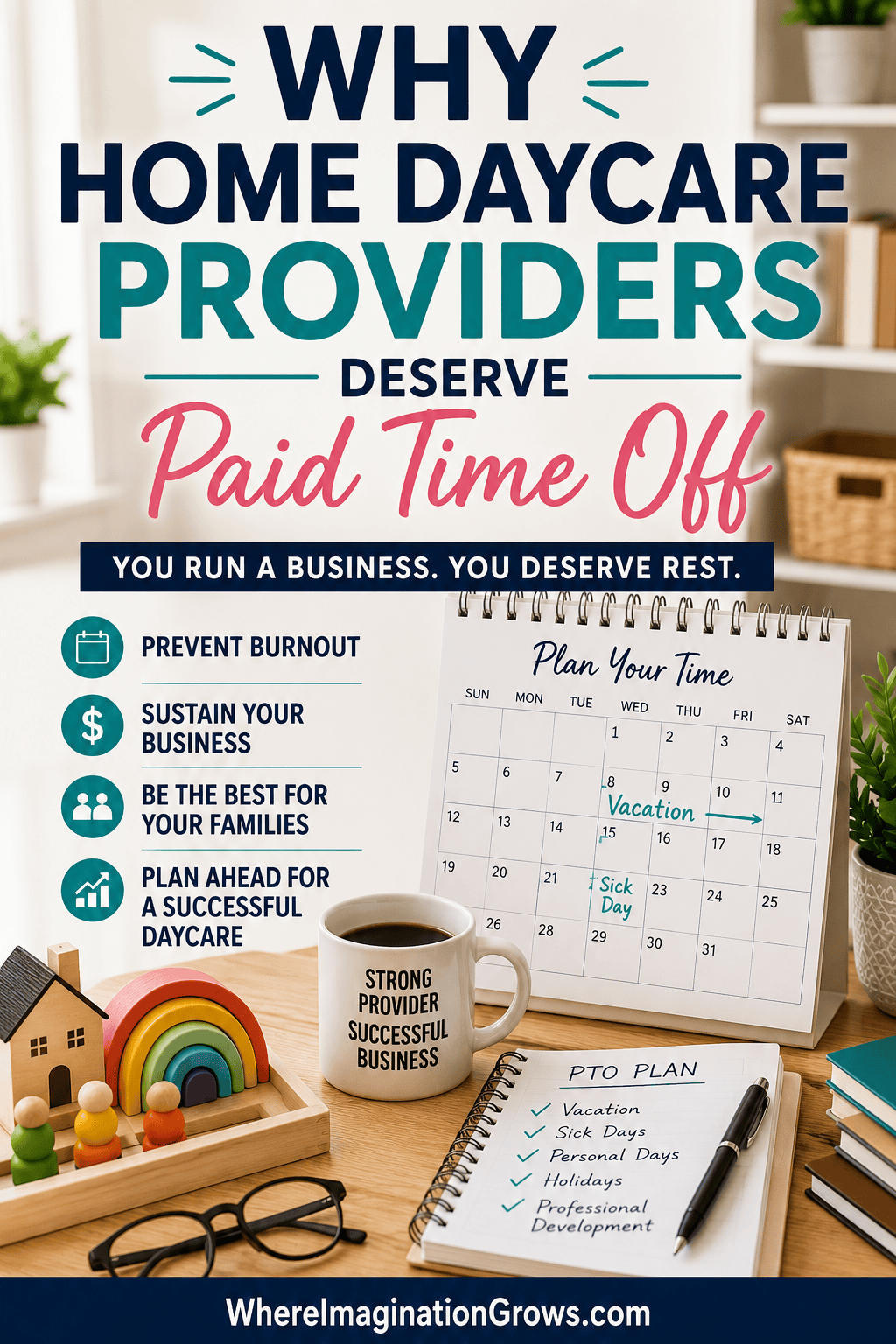
Frequently Asked Questions
Do parents have to pay when an in-home daycare is closed?
Parents may be required to pay during closures when the signed daycare contract says tuition remains due and the policy complies with applicable laws and program requirements. The contract should identify which closures are paid and whether there is a limit.
Should parents pay when their child goes on vacation?
Most enrollment-based tuition policies require payment when a family takes a vacation because the child’s space is still reserved. Clearly state this in your contract.
What happens when the daycare provider gets sick?
Your contract should explain how many provider sick days are paid, how families will be notified, and whether additional closure days will be credited. Families should also have a plan for emergency backup care.
Can a home daycare provider charge for professional development days?
Professional development days can be included as paid closures when they are listed in the contract. These days may be used for licensing classes, CPR certification, conferences, or other training that supports the daycare program.
Should part-time families pay for holidays?
Your contract should explain how holidays affect every enrollment schedule. Some providers charge part-time families when a paid holiday falls on one of the child’s regularly contracted days. Others use a flat weekly or monthly tuition amount that already accounts for annual closures.
What if a parent says it is unfair to pay when daycare is closed?
Listen to the concern and calmly explain how your tuition is structured. Families may need to arrange and pay for backup care, so providing ample notice is important.
However, you should not change a clearly written business policy for one family. Making exceptions can cause confusion and resentment and make the policy difficult to enforce consistently.
Is home daycare PTO required by law?
PTO rules depend on how the provider is classified, the child care program, the state, and any subsidy agreements involved. Independent home daycare providers generally establish their closure and tuition terms through their contracts, but you should verify the requirements that apply where you operate.
Paid Time Off Helps Create a Sustainable Daycare Business
Taking time off does not make you less dedicated to the children in your care. It gives you time to rest, spend time with your family, complete training, and return ready to provide patient, dependable care.
I learned early in my home daycare career that trying to work every holiday and never taking a vacation was not sustainable. Your business should support your life—not require you to give up every break to keep it running.
Create a policy that is fair, specific, and financially realistic. Put it in writing, discuss it before enrollment, give families advance notice, and enforce it consistently.
For more help creating clear policies, read my tips for creating a home daycare contract and interviewing daycare families.
You can also find editable policies and forms in my Home Daycare Contract and Parent Handbook Template.
More Home Daycare Provider Resources
- Things I Wish I Knew Before Starting a Home Daycare
- How to Avoid Home Daycare Provider Burnout
- Tips for Starting and Running a Home Daycare
Originally published January 2024; updated August 2026

This is is music to my ears and I completely agree with you. I think that if the federal government can get on board with this and provide paid vacation time to providers who work with families who have vouchers , it wouldn’t be as hard as it is for providers in this area. It’s shocking to me that they don’t pay knowing how real BURNOUT is.