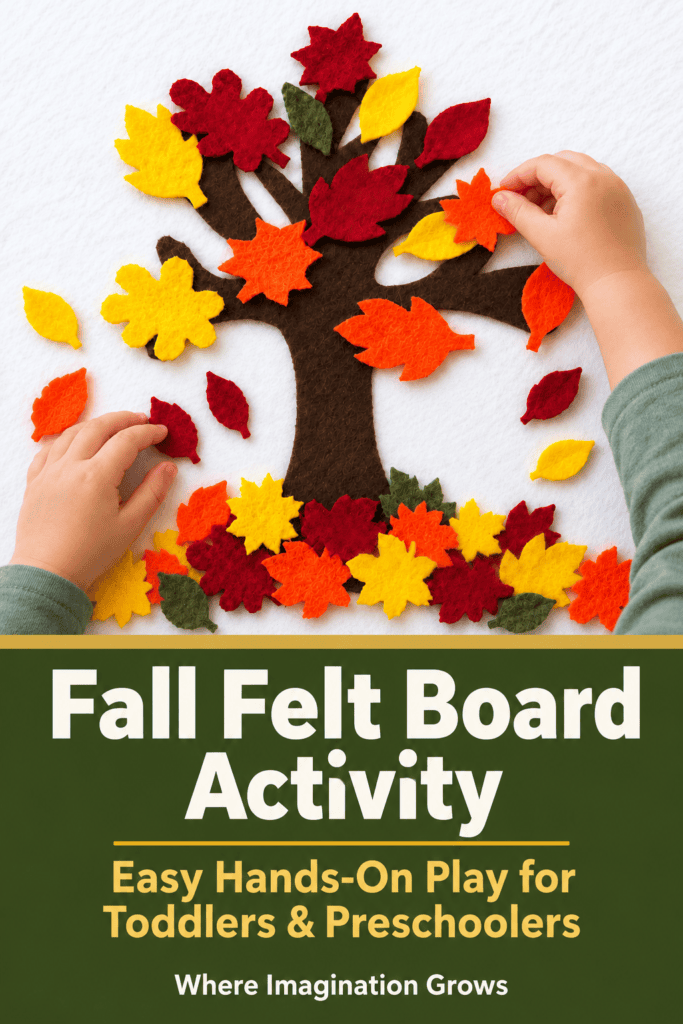
This easy fall felt board activity is a fun way for toddlers and preschoolers to explore colorful leaves and the changing seasons through hands-on play.
After noticing the leaves changing around our neighborhood and at local parks, I decided to create a simple fall tree for our felt board. The children could add leaves to the branches, make them “fall” from the tree, and gather them into piles.
It was an easy activity to prepare, but it inspired plenty of conversation, fine motor practice, counting, and imaginative play.
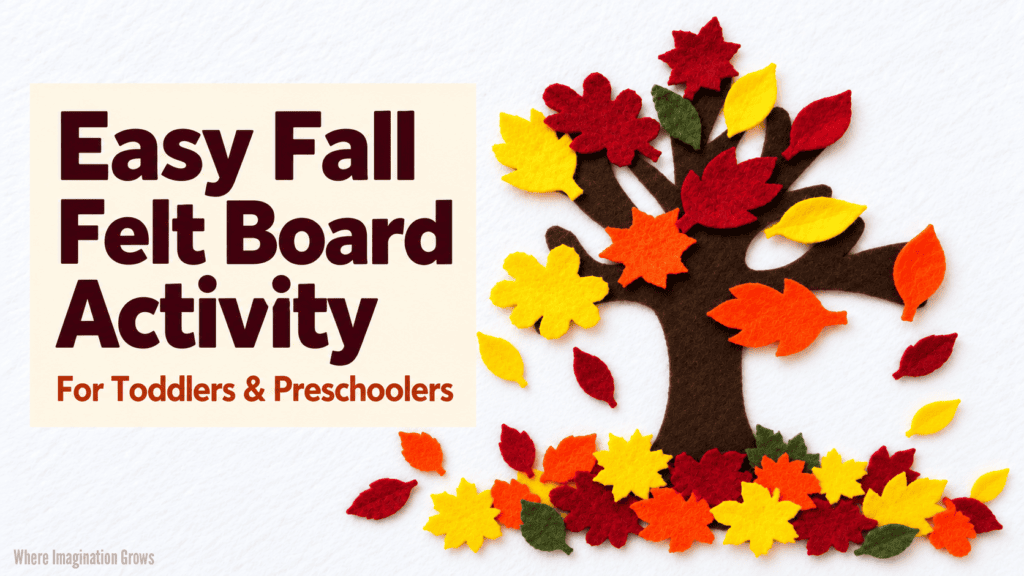
Fall Tree Felt Board Activity
One of the things I love about felt board activities is how simple and reusable they are. Once you cut out the pieces, you can bring the activity out year after year or add it to your fall preschool centers.
Children can arrange and rearrange the pieces as many times as they want. There is no single finished product, so they are free to create their own fall scenes and stories.
This activity works well for:
- A fall or leaves preschool theme
- Circle time
- A quiet-time activity
- A home daycare learning center
- Independent or small-group play
- Practicing colors and counting
- Encouraging conversations about the changing seasons
Supplies for a Fall Felt Board Tree
You only need a few basic materials:
- A felt board or flannel board
- Brown felt for the tree trunk and branches
- Red, orange, yellow, green, and brown felt for the leaves
- Scissors
- Paper and a pencil for making patterns, if desired
- (Optional) Felt people, woodland animals, or other small felt pieces for pretend play
If you do not already have a felt board, you can make your own using a lightweight board and a large piece of felt. Follow my instructions for making a simple DIY felt board.
For toddlers, make the leaves large enough to be handled easily. Always supervise young children when using small play pieces.
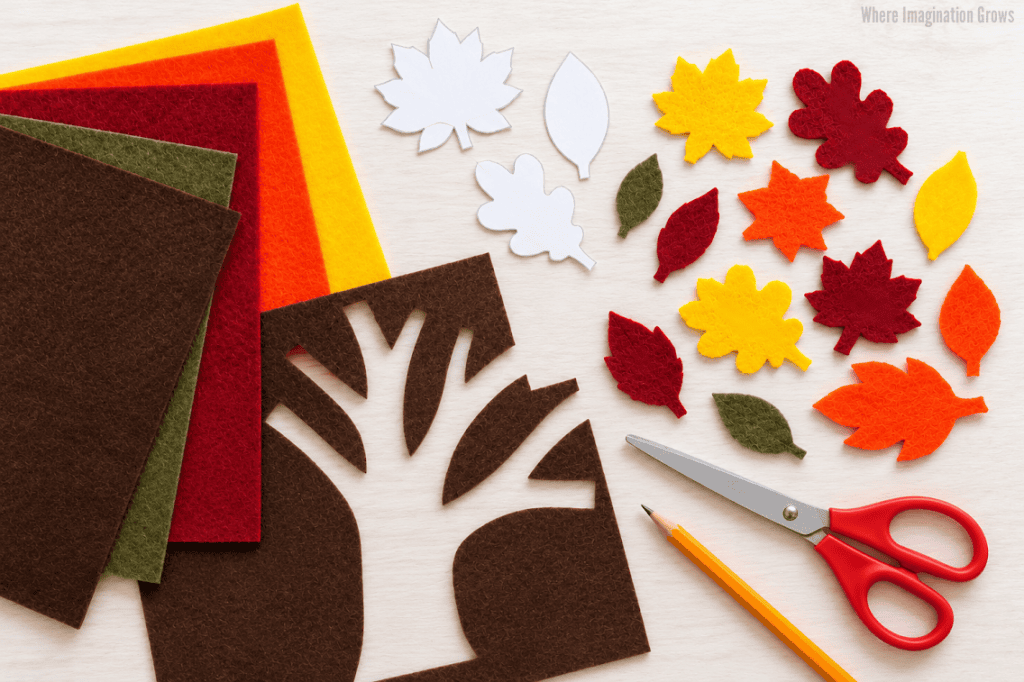
How to Make a Fall Tree Felt Board
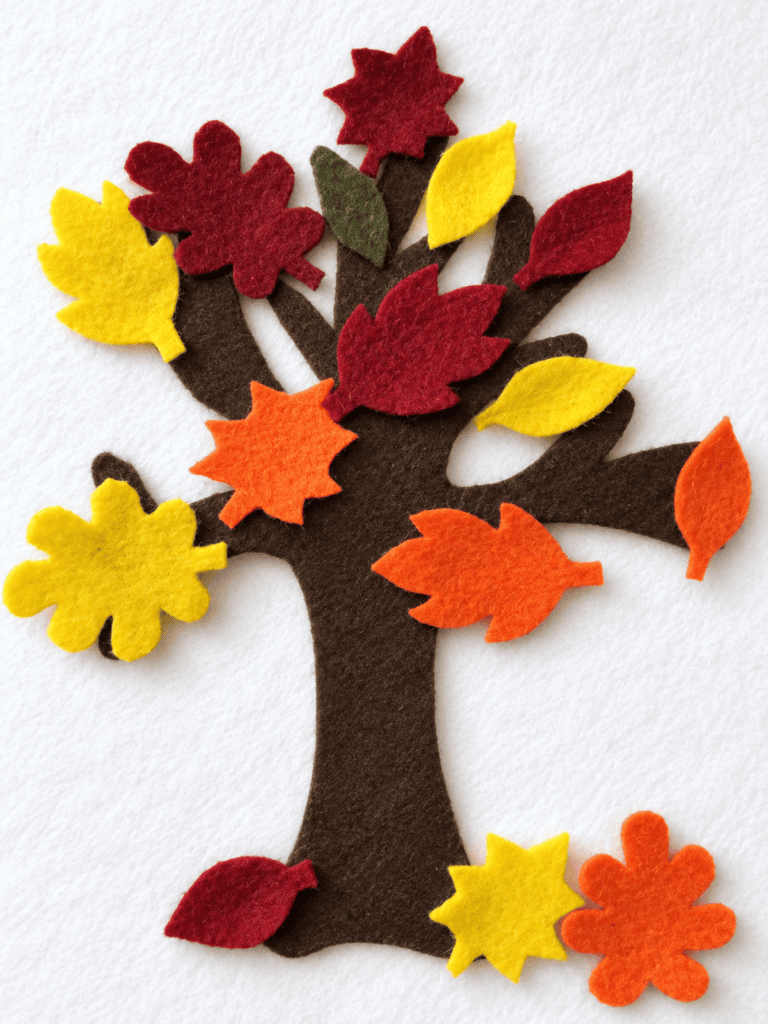
Begin by cutting a large tree trunk and several branches from brown felt. The tree does not need to be perfect. A simple trunk with a few wide branches works well.
Next, cut leaf shapes from several fall colors. You can draw the leaves freehand, make a simple paper pattern, or trace around real leaves collected during a nature walk.
Create leaves in different colors and sizes to give children more ways to sort, compare, and play. I recommend making plenty of leaves because preschoolers love filling the entire tree and creating big piles underneath it.
Place the tree on your felt board and arrange a few leaves on the branches to introduce the activity. Set the remaining leaves nearby and invite the children to explore.
No glue or Velcro is necessary. The felt pieces will cling to the felt board and can be moved again and again.
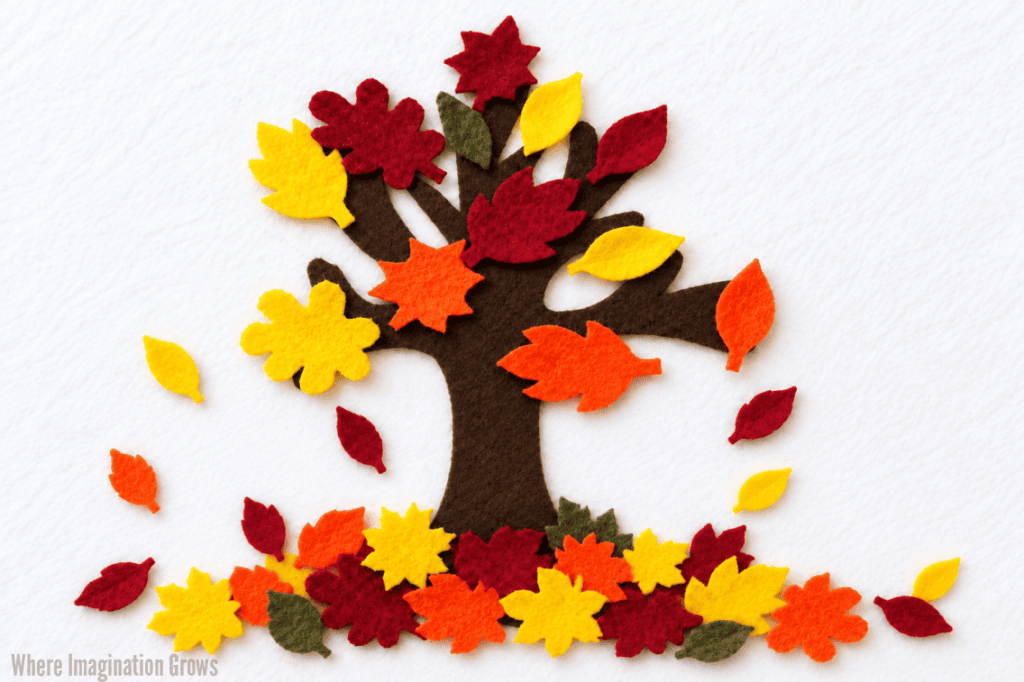
Ways to Play with a Fall Felt Board
At first, I let the children explore the felt tree without giving them specific directions. They placed leaves on the branches, moved them around, and made the leaves fall to the ground.
Their favorite part was creating piles of leaves for our felt-board people to jump into!
Open-ended play is often all that is needed, but you can also introduce a few simple learning ideas.
Practice Fall Colors
Invite children to name the different leaf colors as they place them on the tree.
Try prompts such as:
- Can you find a red leaf?
- Which colors do you see on our tree?
- Can you put all the yellow leaves together?
- Which color has the most leaves?
- Do any of these colors match the leaves outside?
Younger toddlers can begin by matching two or three colors. Older preschoolers may enjoy sorting all the leaves into separate groups.
Count the Felt Leaves
Turn this into a simple fall counting activity by asking children to place a specific number of leaves on the tree.
Start with small amounts for younger children:
- Put one leaf on the tree.
- Can you find three orange leaves?
- How many leaves are on this branch?
- What happens if one leaf falls?
- Can you make a pile with five leaves?
This gives children hands-on counting practice without making the activity feel like a worksheet or formal lesson.
For another fall felt-board math activity, try our felt apple tree counting game for toddlers.
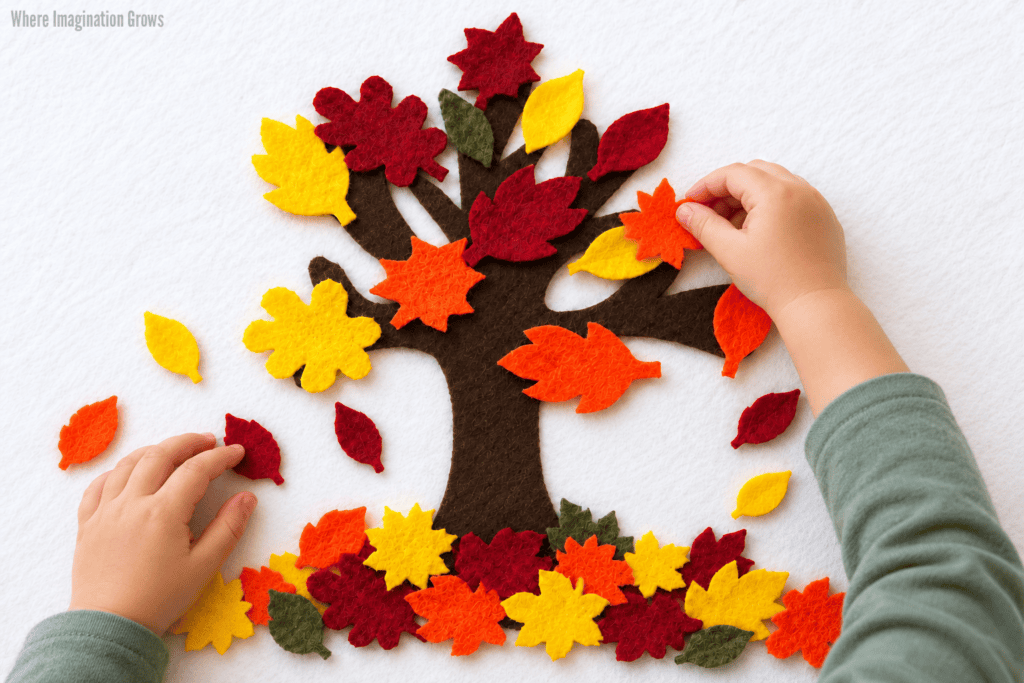
Make Simple Patterns
Older preschoolers can use the felt leaves to create color patterns.
Begin a simple pattern, such as red-yellow-red-yellow, and ask your child what comes next. You can also make patterns using different sizes or shapes of leaves.
Keep the patterns short and playful. Children can copy your pattern or create one of their own.
Talk About the Changing Seasons
Use the felt tree to begin a simple conversation about what children are observing outside.
Ask questions such as:
- What colors are the leaves outside?
- Are all the leaves still on the trees?
- What happens when the wind blows?
- How do the leaves feel when they are dry?
- What do you like to do with fallen leaves?
Afterward, head outside for a short leaf walk. Children can look for real leaves that match the colors on the felt board.
You can continue exploring real leaves with this fall leaf painting activity for toddlers and preschoolers.
Encourage Fall Pretend Play
Add felt people, animals, acorns, apples, pumpkins, or a small felt basket to expand the activity.
Children might pretend to:
- Rake the leaves into piles
- Jump into the leaves
- Collect leaves in a basket
- Watch the wind blow the leaves away
- Build a home for a woodland animal
- Take a pretend walk through the park
These simple additions encourage children to tell stories and use seasonal vocabulary as they play.
What Children Learn from Felt Board Play
Although it looks simple, this fall tree activity gives young children opportunities to practice several early learning skills.
Moving and positioning the felt leaves supports fine motor control and hand-eye coordination. Sorting and counting introduce early math concepts, while conversations about colors, trees, weather, and seasonal changes help build vocabulary.
Because the pieces can be moved freely, felt boards are also wonderful for storytelling and imaginative play. Children can change the scene, act out ideas, and tell a different story each time they use it.
Easy Ways to Extend the Activity
Keep your fall tree available for several days and add new materials as the children’s interest changes.
You could:
- Add number cards for counting practice
- Hide the leaves for a fall color hunt
- Add felt apples to turn it into an apple tree
- Include woodland animals for storytelling
- Pair it with a favorite fall picture book
- Sing a song about leaves falling from the trees
- Let children compare felt leaves with real leaves
If your children enjoy exploring fall materials, they may also like these fall sensory bin ideas for preschoolers.
You can also make these colorful tissue paper tree collages.
A Simple Fall Preschool Activity to Use Again and Again
This fall felt board tree was easy to put together and became a favorite seasonal activity in our playroom. The children loved moving the leaves, making them fall from the branches, and building big leaf piles for their felt people.
It is a simple, low-prep way to bring children’s real-life observations about fall into the classroom or playroom. The reusable pieces also make it an activity you can enjoy throughout the season.

Looking for more crafts and activities? Check out our index for 100+ kids activities! Find activities by theme, materials, skills, age, and much more!
Originally Published October 2013; Updated October 2026