No matter how careful you are, illnesses are bound to make their way into your home daycare from time to time. Young children naturally share toys, explore their environment with their hands, and are still developing healthy hygiene habits. While you can’t prevent every illness, you can have a plan in place to reduce the spread of germs and protect the children in your care when you do have an illness outbreak in your home daycare.
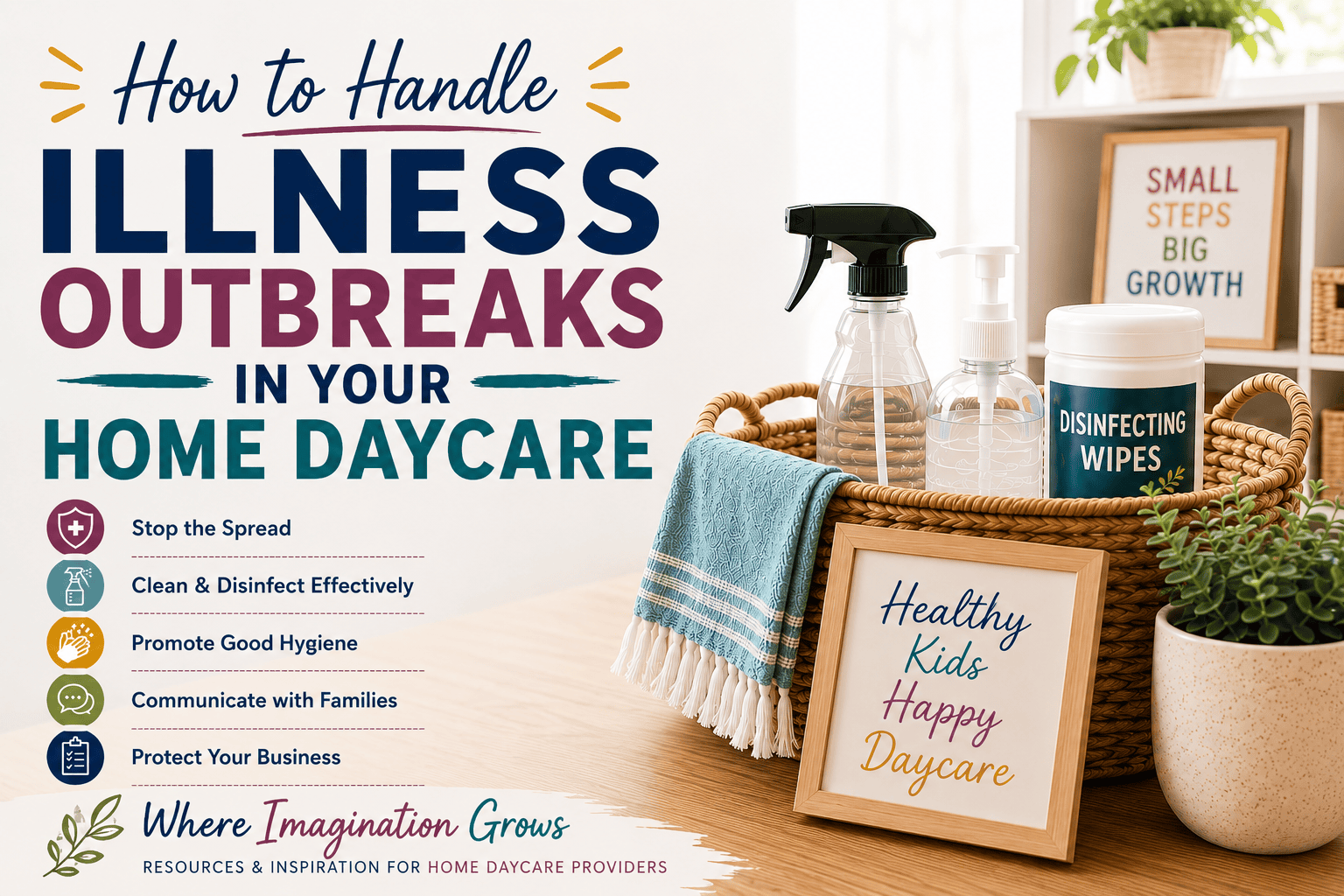
How to Handle an Illness Outbreak in Your Home Daycare
Having clear procedures not only helps keep your daycare running smoothly but also gives parents confidence that you’re taking every reasonable step to provide a safe and healthy environment.
Recognize an Outbreak Early
An illness outbreak doesn’t necessarily mean every child is sick. If you notice several children or staff members experiencing similar symptoms within a short period of time, it’s time to increase your cleaning procedures and monitor everyone closely.
Watch for common symptoms such as:
- Fever
- Vomiting or diarrhea
- Persistent coughing
- Sore throat
- Unexplained rash
- Eye drainage or redness
- Excessive fatigue
Consistently following the illness policy you created as part of your daycare contract is one of the best ways to stop an outbreak from growing.
Isolate Affected Areas
If a child becomes ill while in your care, limit access to any areas they used until you have had an opportunity to clean and disinfect them thoroughly.
If possible:
- Close off play areas that were heavily used.
- Remove toys the child handled.
- Keep other children away from contaminated spaces until cleaning is complete.
Taking a few extra minutes to isolate affected areas can significantly reduce the spread of germs throughout your daycare.
Use the Right Cleaning Products
Not all cleaners disinfect germs. During an illness outbreak, use an EPA-approved disinfectant that is effective against viruses and bacteria, and always follow the manufacturer’s directions for contact time.
Pay extra attention to high-touch surfaces, including:
- Doorknobs
- Light switches
- Tabletops
- Bathroom fixtures
- Toys
- High chairs
- Shared learning materials
- Play equipment
Remember that cleaning removes dirt, while disinfecting kills many of the germs left behind. Both steps are important.
Wash Linens and Soft Items
Viruses and bacteria can remain on fabrics longer than many people realize.
Wash all items that may have been exposed, including:
- Blankets
- Nap bedding
- Washcloths
- Bibs
- Dress-up clothes
- Plush toys (when washable)
Use the hottest water temperature recommended for each item and dry everything completely before putting it back into use.
Encourage Healthy Hygiene Habits
Handwashing remains one of the most effective ways to reduce the spread of illness.
Remind children and adults to wash their hands:
- When arriving at daycare
- Before meals and snacks
- After using the bathroom or diaper changes
- After wiping noses
- After coughing or sneezing
- After outdoor play
- Before going home
If soap and water aren’t immediately available, use hand sanitizer for adults and older children when appropriate. However, handwashing should always be the preferred method whenever possible.
Increase Toy Sanitizing
During an outbreak, increase how often toys are cleaned.
Focus especially on:
- Toys children place in their mouths
- Shared sensory materials
- Dramatic play items
- Building blocks
- Manipulatives
- Outdoor play equipment
Consider rotating toys so one set can be sanitized while another is being used.
Communicate with Families
Parents appreciate honest, timely communication.
If multiple children become ill with similar symptoms, notify families without identifying any specific child. Explain what symptoms have been observed, what additional cleaning measures you’re taking, and remind parents to keep sick children home according to your illness policy.
Clear communication builds trust and helps reduce the spread of illness outside of daycare.
Document Serious Incidents
If an illness outbreak results in a significant illness, emergency medical care, or another reportable event, complete a formal daycare incident report.
Accurate documentation:
- Creates a written record of what occurred.
- Helps keep families informed.
- Supports your licensing records if required.
- Protects your business should questions arise later.
Having a standardized incident report form readily available can save valuable time during stressful situations.
Review Your Policies
After an outbreak has ended, take a few minutes to evaluate how everything was handled.
Ask yourself:
- Did my illness policy work well?
- Were parents cooperative?
- Did I have enough cleaning supplies on hand?
- Are there any procedures I should improve?
Every illness season provides an opportunity to strengthen your daycare contract and better prepare for the future.
Final Thoughts
Illness outbreaks can be stressful, but they don’t have to become overwhelming. By responding quickly, increasing your cleaning procedures, communicating openly with families, and following your daycare policies consistently, you can help minimize the spread of germs and create a healthier environment for everyone.
No daycare can eliminate illness completely, but having a clear plan in place allows you to respond confidently when sickness does occur.
Related Reading:
- The Ultimate Home Daycare Cleaning Checklist
- Tips for Creating a Home Daycare Contract & Handbook
- Big List of Home Daycare Tips & Advice
Looking for more crafts and activities? Check out our index for 100+ kids’ activities! Find activities by theme, materials, skills, age, and much more!