Nature is full of things for preschoolers to notice, touch, wonder about, and explore. A walk around the yard can lead to questions about a tiny seed, a busy bee, a changing leaf, or an earthworm hiding beneath the soil.
Picture books are a wonderful way to build on that natural curiosity. The best nature books for preschoolers introduce new vocabulary and simple science concepts while encouraging children to slow down and pay attention to the world around them.
After more than 20 years of working with young children, I have found that nature books are especially meaningful when they are paired with something hands-on. Read a story before a nature walk, place a few books near a science center, or use one to introduce a preschool theme about plants, insects, weather, or the seasons.
The picture books below include gentle stories, lively read-alouds, and beautifully illustrated nonfiction. They are excellent choices for preschool classrooms, home daycare programs, and family reading.
Nature Books for Preschoolers
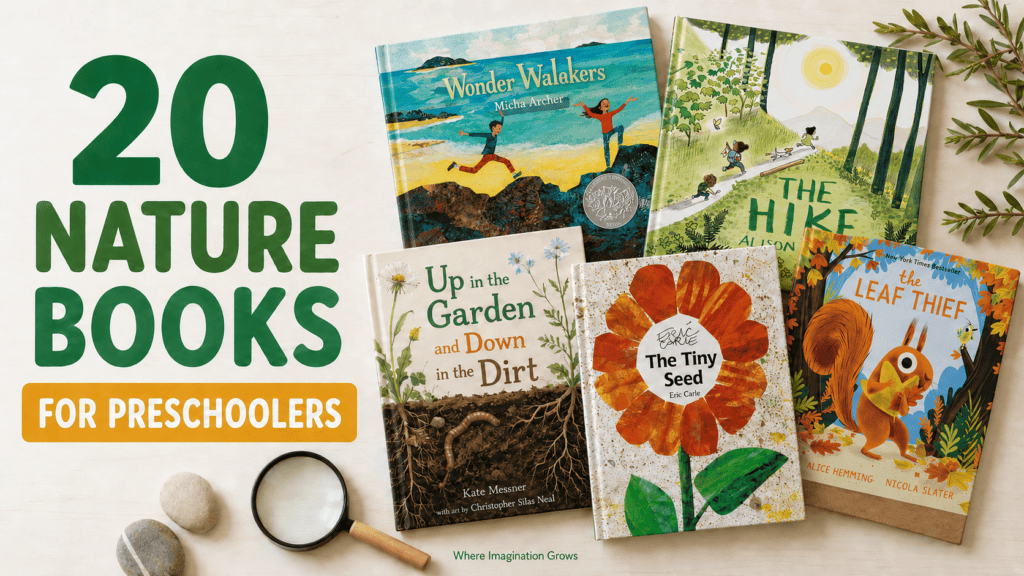
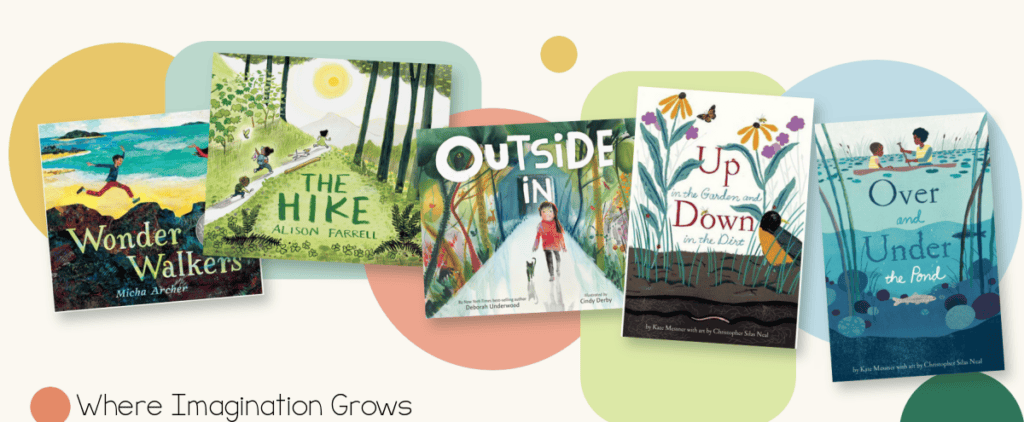
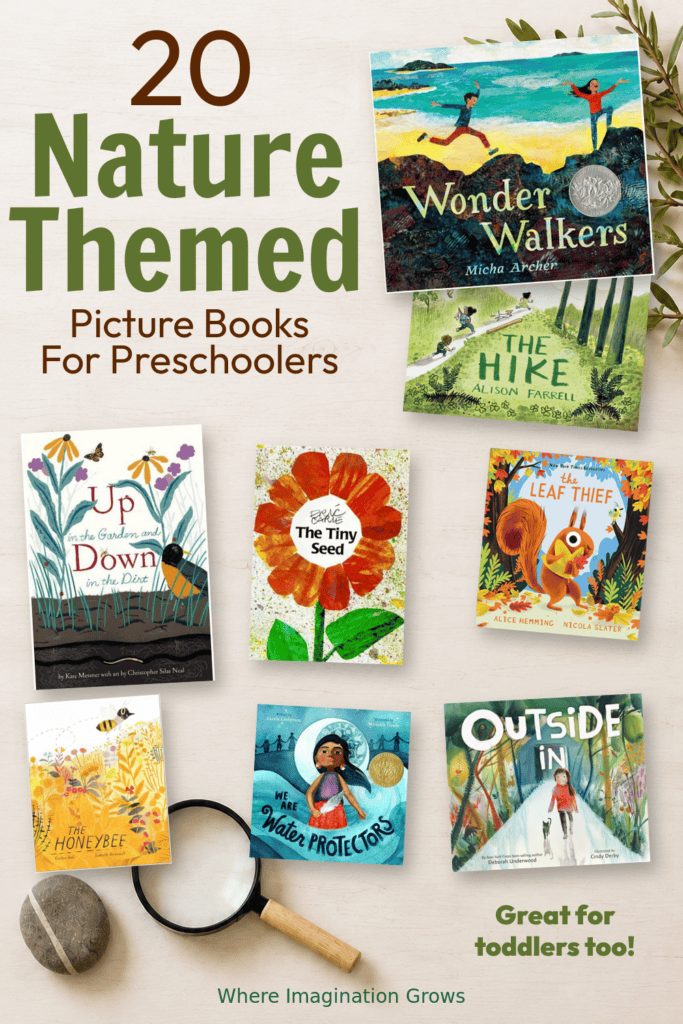
1. Wonder Walkers by Micha Archer
Two children explore the outdoors and ask imaginative questions about everything they see. The story does not rush to give children all the answers. Instead, it celebrates curiosity, observation, and the kinds of big questions that often come up on a nature walk.
Try this: Take a “wonder walk” and write down the children’s questions about what they notice.
2. The Hike by Alison Farrell
Three friends head into the woods for a hike filled with discoveries, small challenges, and plenty of adventure. Labels throughout the illustrations introduce the names of plants and animals, while a character’s sketchbook adds even more details for curious children to examine.
Try this: Let preschoolers carry small notebooks and draw one thing they find outdoors.
3. Outside In by Deborah Underwood, illustrated by Cindy Derby
This poetic picture book reminds children that nature is always around us—even when we are indoors. Light, shadows, sounds, and changing seasons help show the connection between people and the natural world.
Try this: Sit quietly near an open window and make a list of the nature sounds the children can hear.
4. Up in the Garden and Down in the Dirt by Kate Messner, illustrated by Christopher Silas Neal
Above the soil, a garden grows and changes through the seasons. Beneath it, worms, insects, and other small creatures are busy too. This book gives preschoolers an engaging look at the living world both above and below the ground.
Try this: Fill a clear container with soil and invite children to compare what they see on top with what is hidden underneath.
5. Over and Under the Pond by Kate Messner, illustrated by Christopher Silas Neal
A child and mother paddle across a pond while discovering the animals that live above the water, on its surface, and below it. The calm story introduces pond habitats and encourages children to think about the many living things sharing one environment.
Try this: Create a pond sensory bin with toy frogs, fish, turtles, plants, and smooth rocks.
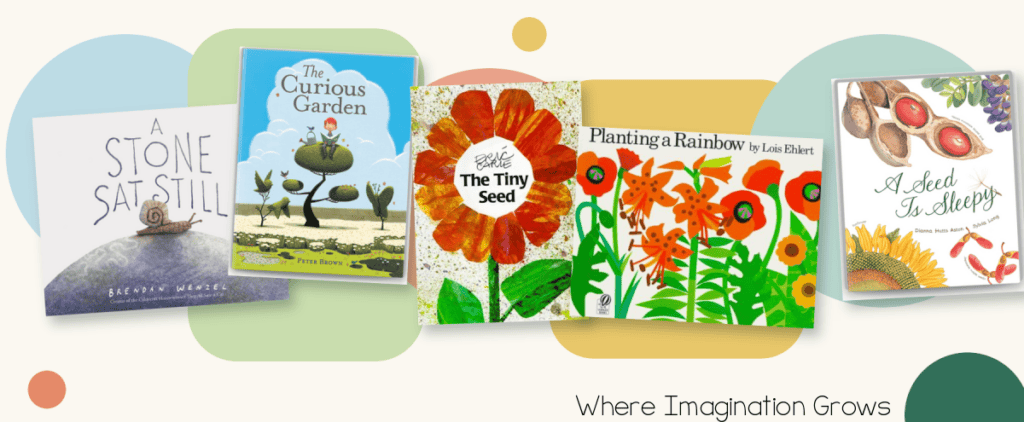
6. A Stone Sat Still by Brendan Wenzel
A single stone can feel rough or smooth, tiny or enormous, depending on who encounters it. The lyrical text and detailed illustrations invite children to look at an ordinary natural object from many different perspectives.
Try this: Collect several rocks and compare their size, color, shape, weight, and texture.
7. The Curious Garden by Peter Brown
A child named Liam discovers a struggling garden in a gray city and decides to care for it. As the plants spread, the city begins to change. This imaginative story is a lovely introduction to gardening, persistence, and the effect one caring person can have on a place.
Try this: Plant a few hardy seeds or flowers in an overlooked part of your outdoor space.
8. The Tiny Seed by Eric Carle
A group of seeds travels through the seasons, but only one tiny seed survives long enough to grow into a beautiful flower. Eric Carle’s colorful illustrations make the plant life cycle easy for young children to follow.
Try this: Act out the journey from seed to flower using simple movements.
9. Planting a Rainbow by Lois Ehlert
A child and mother plant bulbs, seeds, and seedlings, then wait for a colorful garden to grow. The bold illustrations help preschoolers learn flower names, color words, and the basic steps involved in planting a garden.
Try this: Sort flower pictures, silk flowers, or seed packets by color to make a classroom rainbow.
10. A Seed Is Sleepy by Dianna Hutts Aston, illustrated by Sylvia Long
This beautifully illustrated book introduces children to the many sizes, shapes, colors, and clever features of seeds. There is enough simple text to enjoy as a read-aloud, along with additional facts that can be explored with older or especially curious preschoolers.
Try this: Place several types of seeds in a divided tray and provide magnifying glasses for closer observation.
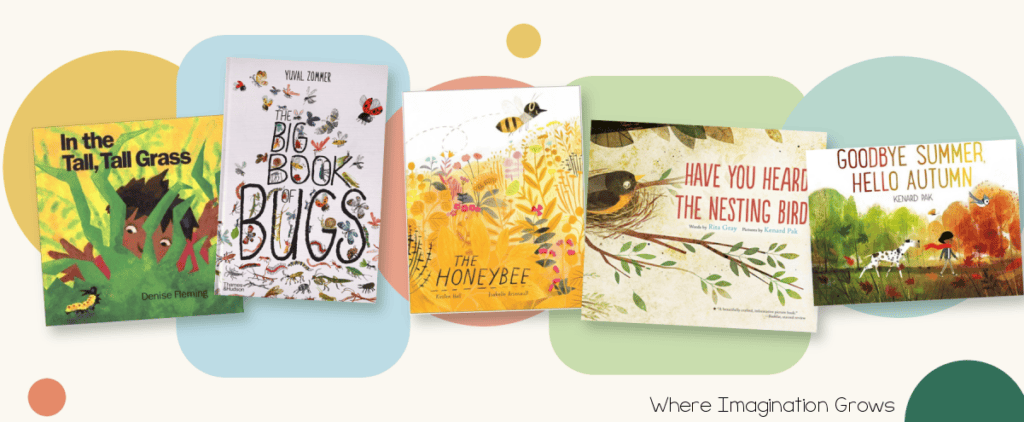
11. In the Tall, Tall Grass by Denise Fleming
A child watches caterpillars, hummingbirds, bees, ants, and other creatures moving through tall grass from morning until night. The rhythmic language, repetition, and playful sound words make this an especially engaging preschool read-aloud.
Try this: Invite children to move like one of the animals or insects in the story.
12. The Big Book of Bugs by Yuval Zommer
This oversized nonfiction book is packed with detailed illustrations and fascinating facts about insects and other small creatures. Preschoolers can browse the pictures, search for specific bugs, and learn a few facts at a time rather than reading the entire book in one sitting.
Try this: Go on a bug hunt and make tally marks for each type of creature the children spot.
13. The Honeybee by Kirsten Hall, illustrated by Isabelle Arsenault
Energetic rhymes follow honeybees as they fly between flowers, collect nectar, and work together inside the hive. The lively rhythm makes this book fun to read aloud while introducing pollination and the important work of bees.
Try this: Dust artificial flowers with yellow chalk or powder paint and let children transfer the “pollen” with cotton swabs.
14. Have You Heard the Nesting Bird? by Rita Gray, illustrated by Kenard Pak
Many backyard birds sing, call, and chatter, but a nesting robin remains quiet. The story encourages careful listening and introduces children to bird sounds, nests, eggs, and the patient work of a mother bird.
Try this: Listen for birds outdoors and imitate the different calls you hear.
15. Goodbye Summer, Hello Autumn by Kenard Pak
A child walks through the neighborhood and notices plants, animals, and weather changing as summer turns to fall. The gentle call-and-response style helps preschoolers recognize seasonal changes in the world around them.
Try this: Make a seasonal change chart using observations from the same outdoor spot each week.
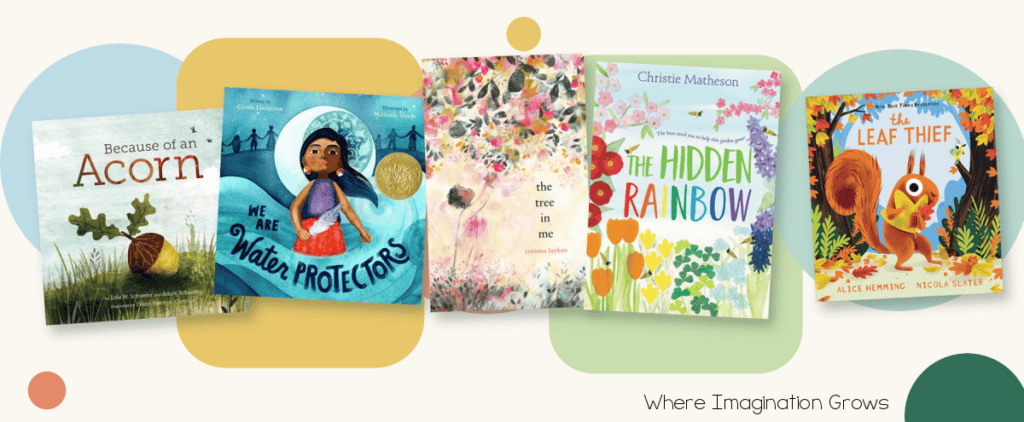
16. Because of an Acorn by Lola M. Schaefer and Adam Schaefer, illustrated by Frann Preston-Gannon
Beginning with one small acorn, this book shows how trees, plants, animals, and habitats are connected. Its simple cause-and-effect structure makes the idea of an ecosystem more understandable for young children.
Try this: Arrange an acorn, leaf, flower, and toy woodland animals in a circle and talk about how they might be connected.
17. We Are Water Protectors by Carole Lindstrom, illustrated by Michaela Goade
Inspired by Indigenous-led movements to protect water, this powerful picture book introduces the idea that water is precious and that people have a responsibility to care for it. The illustrations and repeating language make it a memorable group read.
Try this: Brainstorm simple ways children can protect water, such as turning off the faucet while soaping their hands.
18. The Tree in Me by Corinna Luyken
This warm, poetic story celebrates the connection between children, trees, and one another. It compares the strength, growth, and joy found in nature with those same qualities found within people.
Try this: Make tree poses, sway like branches, and talk about what helps people and trees grow strong.
19. The Hidden Rainbow by Christie Matheson
Children search for the colors of the rainbow as they follow bees through flowers and a garden. Interactive prompts invite preschoolers to point, count, and look closely while learning about flowers, pollination, and color.
Try this: Search outdoors for something from each color of the rainbow without picking living plants.
20. The Leaf Thief by Alice Hemming, illustrated by Nicola Slater
Squirrel is alarmed when the leaves on the tree begin to disappear, while Bird gently explains what happens in autumn. This funny seasonal story is an easy way to begin a conversation about falling leaves and changes in nature.
Try this: Gather fallen leaves and sort them by color, size, or shape.
How to Use Nature Picture Books With Preschoolers
You do not need a complicated lesson plan to make these books meaningful. A few simple additions can turn story time into a hands-on learning experience:
- Place real nature items beside the book for children to observe.
- Pause to let children describe details they notice in the illustrations.
- Introduce just two or three new vocabulary words during each reading.
- Read the same book more than once. Preschoolers often notice new details with each reading.
- Follow the story with a walk, sensory bin, science activity, art invitation, or movement game.
- Keep a few seasonal nature books available where children can revisit them independently.
The goal is not to memorize every fact. It is to encourage children to observe, ask questions, and feel connected to the living world around them.
Choosing Nature Books for Young Children
When selecting nature books for preschoolers, look for engaging illustrations, clear language, and topics children can connect to their own experiences. A mix of fiction, nonfiction, poetry, and interactive books works well.
Some preschoolers enjoy a detailed nonfiction book from beginning to end. Others are happiest exploring one page, studying an illustration, or listening to a few interesting facts. It is perfectly fine to shorten a book, revisit it in small sections, or let the children’s questions guide the reading.
Frequently Asked Questions
What nature topics are good for preschoolers?
Good preschool nature topics include seeds, flowers, trees, leaves, rocks, weather, ponds, birds, bugs, animal homes, and seasonal changes. The best place to begin is often with something children can observe in their own yard, neighborhood, or local park.
How do nature books support preschool learning?
Nature books build vocabulary, listening comprehension, background knowledge, and early science skills. They also encourage children to compare, classify, predict, ask questions, and pay closer attention to their surroundings.
Are nonfiction nature books appropriate for preschoolers?
Yes. Choose books with strong photographs or illustrations and read them flexibly. You can summarize longer sections, focus on one page at a time, or use the book as a reference when a child asks a question.
What can I do after reading a nature book?
Take a walk, examine an item with a magnifying glass, draw an observation, plant a seed, make a nature collection, or recreate a habitat in a sensory bin. The follow-up activity can be simple and child-led.
Encourage Children to Look Closer
Nature picture books can help preschoolers see that even familiar places are filled with discoveries. A stone, seed, leaf, or patch of grass becomes more interesting when children are given time to study it and wonder about it.
Choose a book that connects with the current season or with something your children have noticed recently. Then head outside and let their questions guide the next part of the learning experience.
More Nature Books and Activities for Preschoolers
Nature picture books are a wonderful way to help young children slow down, observe the world around them, and become curious about plants, animals, weather, and the changing seasons.
Continue exploring with these related books and activities:
- Picture Books About Trees for Preschoolers
- 12 Awesome Fall Picture Books for Preschoolers
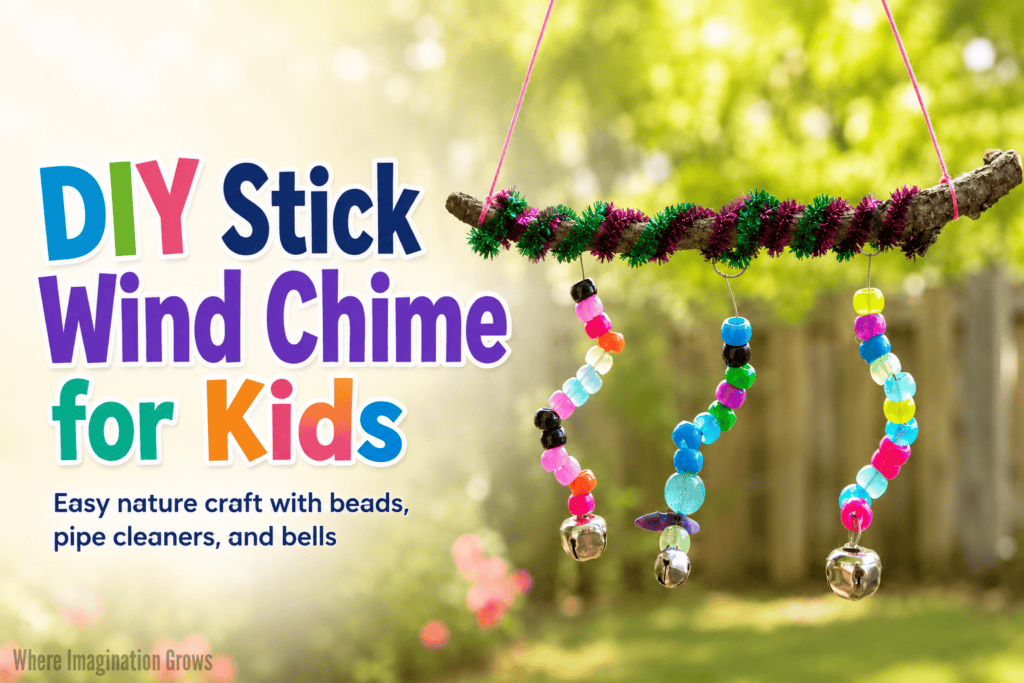
- DIY Nature Suncatcher Craft for Kids
- DIY Nature Slides for the Light Table or Window
- Preschool Counting Practice with Nature
What nature book does your preschooler ask you to read again and again? Share your favorite in the comments so we can add it to our reading list!
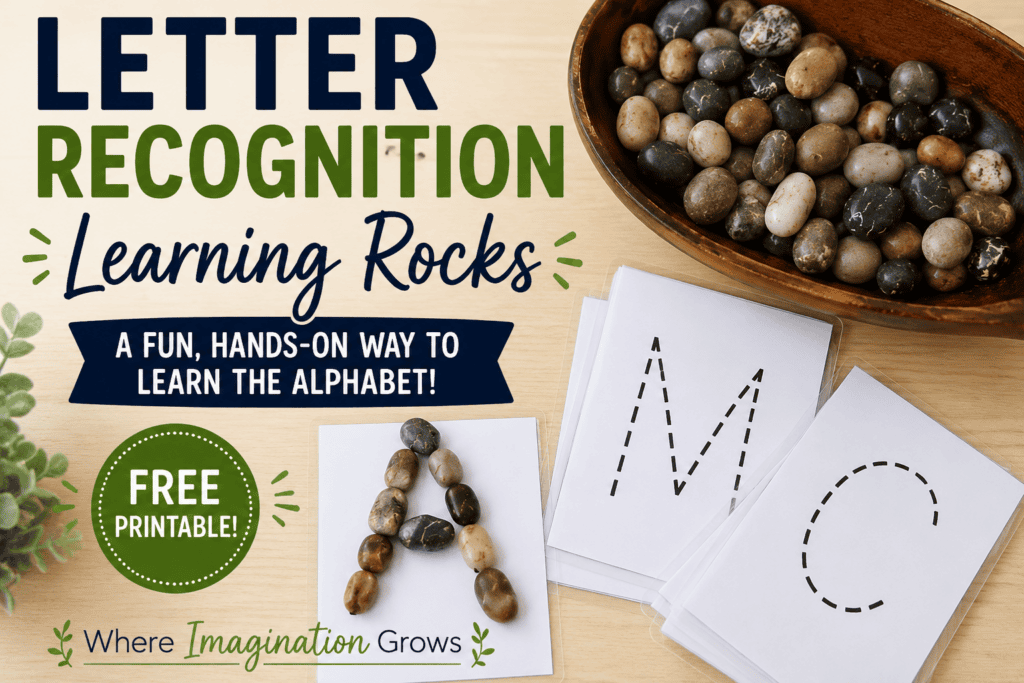
Looking for more crafts and activities? Check out our index for 100+ kids’ activities! Find activities by theme, materials, skills, age, and much more!
Leave a Reply