Pinecones are easy to find during a fall nature walk, but did you know they can also be used for a simple preschool science experiment? With just pinecones, water, and two containers, children can investigate what happens when pinecones get wet—and then watch the change happen all over again as they dry.
This pinecone science experiment is an easy way to introduce preschoolers to observing, predicting, comparing, and recording changes. It requires very little setup, making it a great addition to a fall preschool theme, nature study, or home daycare science center.
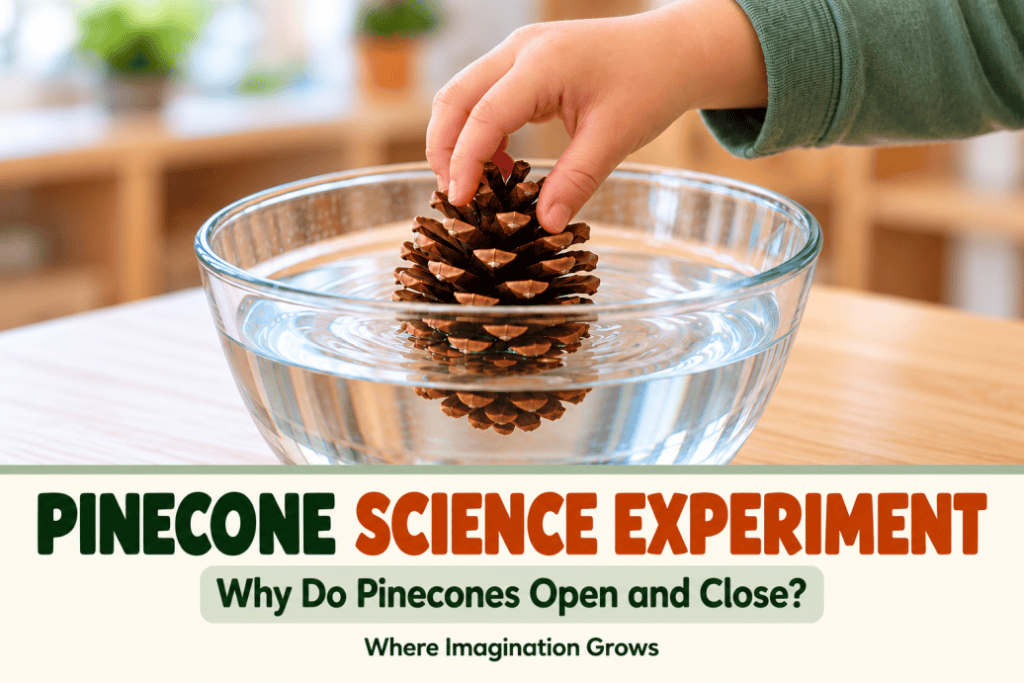
A Simple Fall Science Experiment for Preschoolers
We often collect pinecones during our fall walks. The children notice the different sizes, textures, and shapes of the pinecones, so I like to give them time to explore them before beginning the experiment.
For this activity, we compared a dry pinecone with a pinecone placed in water. Before adding the water, I asked the children to look closely at the scales and predict what they thought might happen.
Some children thought the pinecone would float. Others predicted that it would get soft, change color, or fall apart. The best part of a preschool science activity is hearing all of their ideas before testing them!
Supplies for the Pinecone Experiment
You only need a few simple materials:
- Two open, dry pinecones that are similar in size
- Two clear bowls, jars, or containers
- Water
- A small plate or tray
- Paper and crayons for recording observations, optional
- Magnifying glasses, optional
Choose mature pinecones with scales that are already open. If both pinecones are tightly closed when you begin, children will not be able to see the change as clearly.
Before You Begin
Let the children hold and observe the dry pinecones. Encourage them to describe what they notice.
You might ask:
- How does the pinecone feel?
- Are its scales open or closed?
- Do both pinecones look the same?
- What do you think will happen when we add water?
- Do you think the pinecone will change right away?
Write down the children’s predictions or invite them to draw a picture showing what they think the wet pinecone will look like.
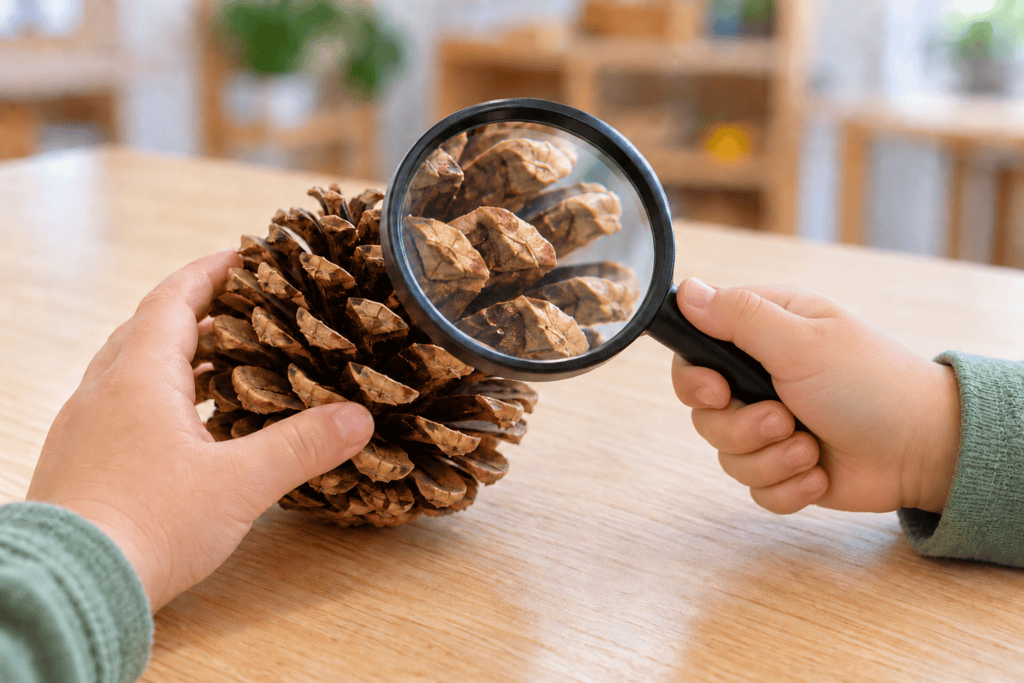
How to Do the Pinecone Science Experiment
- Place one dry pinecone in each clear container.
- Leave one container dry. This pinecone will be your comparison pinecone.
- Fill the second container with enough water to cover the pinecone. If it floats, gently turn it occasionally so all sides become wet.
- Ask the children to observe both pinecones every 15 to 30 minutes.
- Compare the wet pinecone with the dry pinecone. The scales on the wet pinecone should gradually begin to close.
- Remove the wet pinecone from the water and place it on a plate or tray.
- Leave it in a dry place and check it again later that day and the following day. As the pinecone dries, its scales should begin opening again.
The amount of time the change takes will depend on the type, size, and condition of the pinecone. Some begin closing within about 30 minutes, while others need an hour or longer. Reopening usually takes much longer, so this is a fun experiment to observe throughout the day or revisit the next morning.
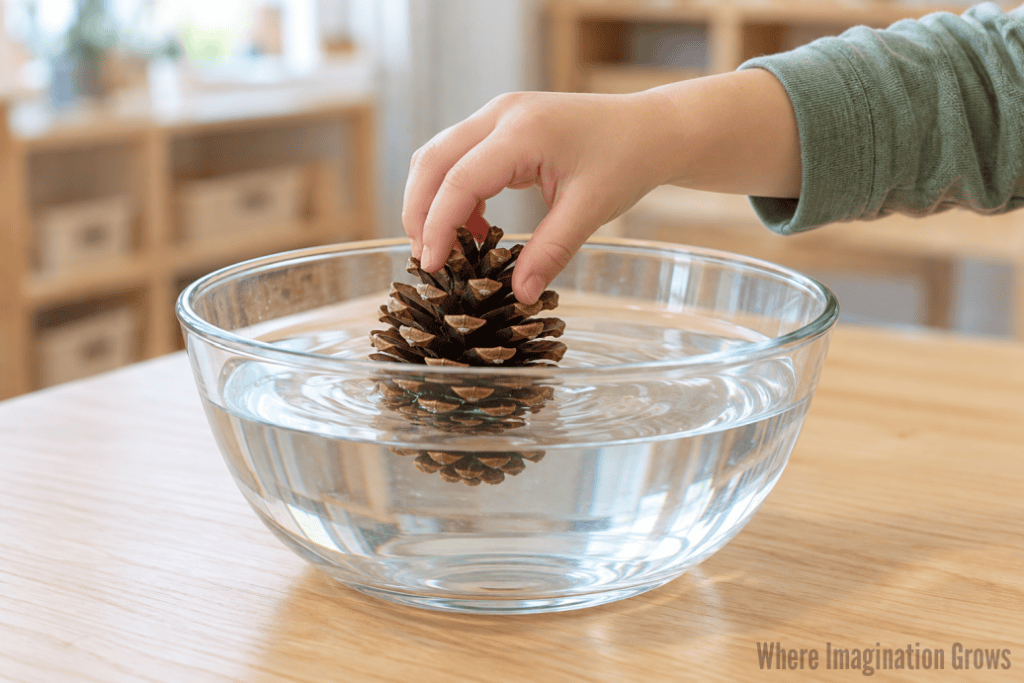
What Happens When a Pinecone Gets Wet?
When a mature pinecone is dry, its scales spread open. This helps the seeds inside escape and travel away from the tree when conditions are dry enough for the wind to carry them.
When the pinecone gets wet, its scales bend inward and close. The layers within each scale absorb moisture differently, causing the scale to move. The pinecone does not need to be alive for this to happen.
For preschoolers, you can explain it simply:
Pinecones open when they are dry and close when they are wet. Closing helps protect the seeds during damp weather. When the pinecone dries, it can open again.
Watching the same pinecone close and reopen helps children see that some changes can be reversed.
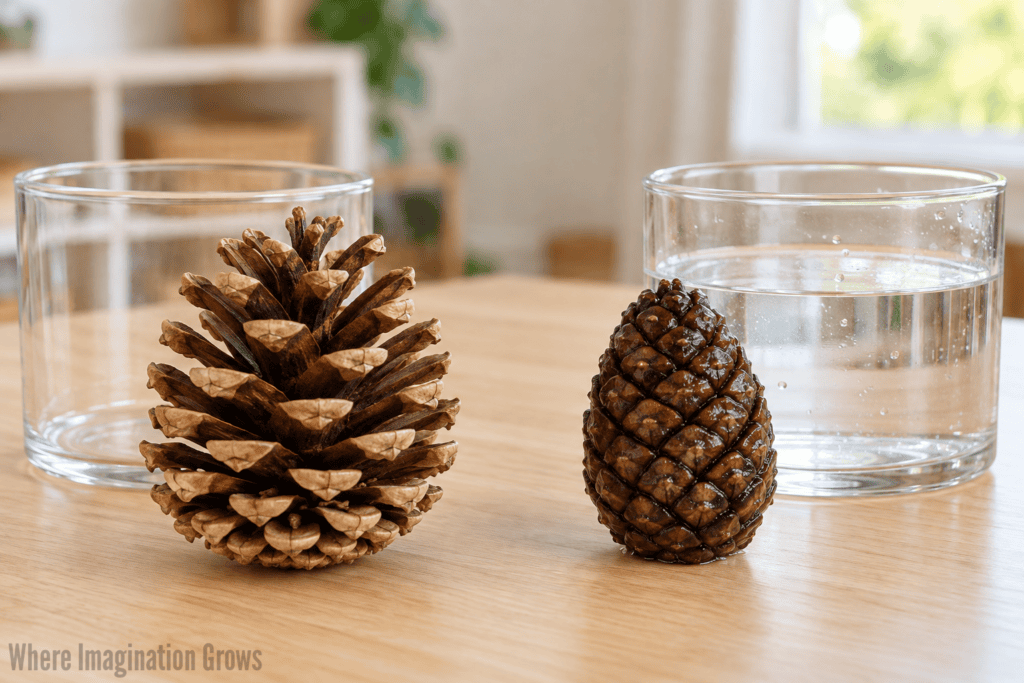
What Preschoolers Learn From This Activity
This simple fall nature experiment encourages children to practice:
- Making predictions
- Observing changes over time
- Comparing wet and dry objects
- Using descriptive vocabulary
- Asking questions
- Understanding cause and effect
- Recording results through drawing
It also introduces the idea that plants have structures that help them survive and reproduce. Preschoolers do not need to remember all of the scientific terms. The goal is to encourage curiosity and help them connect what they observe with what is happening in nature.
Ways to Extend the Pinecone Experiment
Make a Pinecone Observation Chart
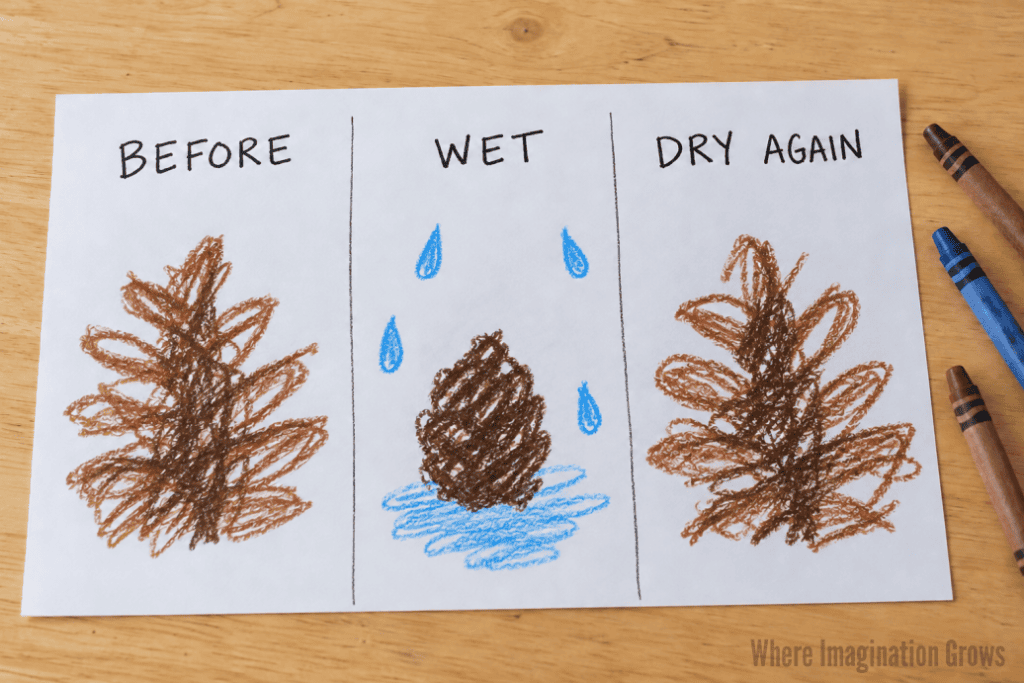
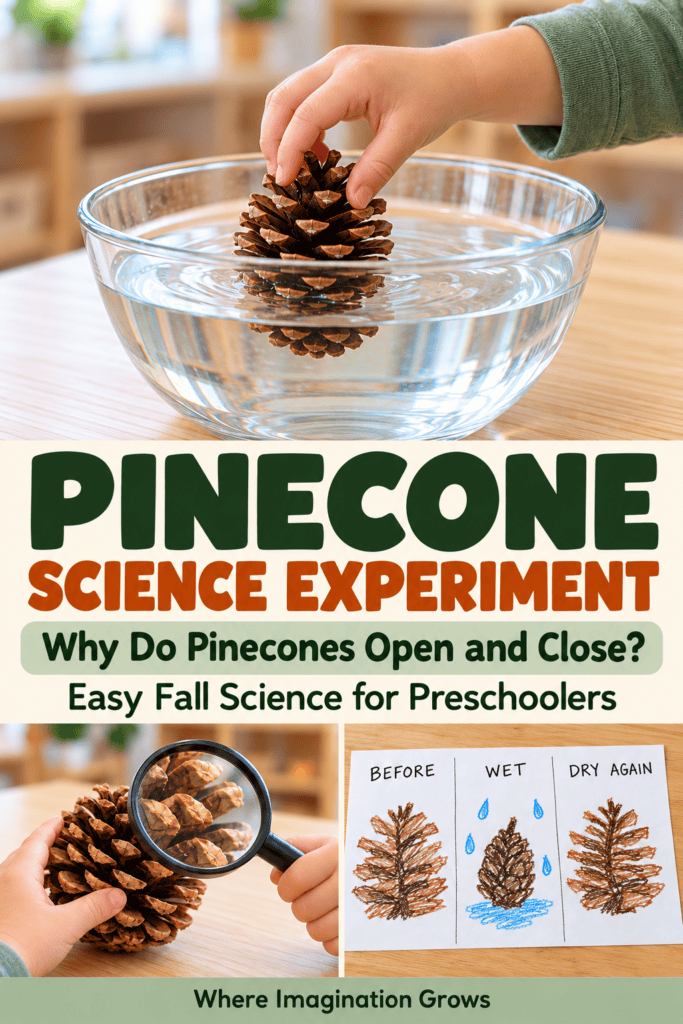
Divide a paper into three sections labeled before, wet, and dry again. Invite children to draw the pinecone during each stage. Younger preschoolers can dictate their observations for an adult to write.
Compare Different Pinecones
Collect pinecones in several sizes or from different types of trees. Place them in water at the same time and observe whether they close at the same speed.
Ask:
- Which pinecone started closing first?
- Did the smallest pinecone change fastest?
- Do all of the pinecones look the same when wet?
Try a Water Temperature Investigation
After completing the basic experiment, place similar pinecones in separate containers of cool and warm water. Ask children to predict whether water temperature will affect how quickly the scales close.
Adult supervision is important when using warm water. It should feel comfortably warm, never hot.
Add the Pinecones to Your Science Center
Once the pinecones are completely dry, place them in a science or nature area with magnifying glasses, tweezers, pine needles, pieces of bark, and photographs of evergreen trees. This gives children more time to investigate the natural materials at their own pace.
Tips for Doing This Experiment With Preschoolers
- Use clear containers so children can see the pinecone from every angle.
- Keep one dry pinecone nearby for an easy side-by-side comparison.
- Take a photo at the beginning, after the wet pinecone closes, and after it reopens.
- Do not worry if the change is slow. Observing the experiment over time is part of the learning process.
- Inspect collected pinecones outdoors and gently tap or shake away loose dirt and insects before bringing them inside.
- Remind children that pinecones are for observing, not tasting.
Pinecone Science Experiment Questions
Use open-ended questions to encourage children to think and talk about what they observe:
- What changed after we added water?
- What stayed the same?
- Why do you think the scales moved?
- How is the wet pinecone different from the dry pinecone?
- What do you think will happen when the pinecone dries?
- How could we test another idea?
There is no need to correct every prediction. Let children compare their original ideas with the final result and talk about what surprised them.
Frequently Asked Questions
How long does it take a pinecone to close in water?
Some pinecones begin closing within 30 minutes, but others can take an hour or longer. The timing depends on the pinecone’s size, species, dryness, and condition.
Will the pinecone open again after it dries?
Yes. A mature pinecone will usually reopen as it dries. It may take several hours or overnight, so place it on a tray and check it again the next day.
Why did my pinecone stay closed?
It may still be holding moisture. Give it more time in a warm, dry location. Very young, damaged, or weathered cones may not respond as clearly as mature pinecones.
Can we repeat the experiment?
Yes! Pinecones can open and close more than once as moisture levels change. Repeating the investigation is a wonderful way for preschoolers to see whether they get the same result.
Explore More Fall Preschool Activities
Pair this pinecone science experiment with more hands-on fall learning:
- Fall Sensory Bin Ideas for Preschoolers
- Leaf Painting and Preservation With Toddlers
- Fall Color Mixing Ice Activity for Preschoolers
- September Preschool Themes and Activities
This easy pinecone experiment turns an ordinary nature find into an engaging fall science activity. It is simple enough for toddlers and preschoolers to observe, but interesting enough to inspire plenty of questions, predictions, and repeat investigations.
Leave a Reply