Indoor gross motor activities for preschoolers are helpful on rainy days, during long stretches inside, or anytime children need a chance to move. You don’t need a gym or special equipment. A clear patch of floor and a few simple ideas can turn an ordinary afternoon into an active one.
In my home daycare, indoor movement games work best when the directions are simple and the play can stop and start easily. Here are some easy activities to try at home, in a classroom, or with a mixed-age daycare group.
A Quick Safety Check Before You Start
Before playing, move toys and furniture out of the way and check that the floor isn’t slippery. Show children where the movement space begins and ends. Remind them to watch where they’re going and give others room.
Choose movements that fit your space. Walking, stretching, dancing, and moving in place may work better than running or jumping in a crowded room. Stay nearby and adapt activities to the children in your care.
12 Indoor Gross Motor Activities for Preschoolers
1. Freeze Dance
Play music and invite children to dance. Pause the music every so often and ask everyone to freeze in place. Try freezing in a silly pose, standing on tiptoe, or making a shape with your arms.
For a quieter version, ask children to move slowly like turtles or gently sway like trees.
2. Follow the Leader
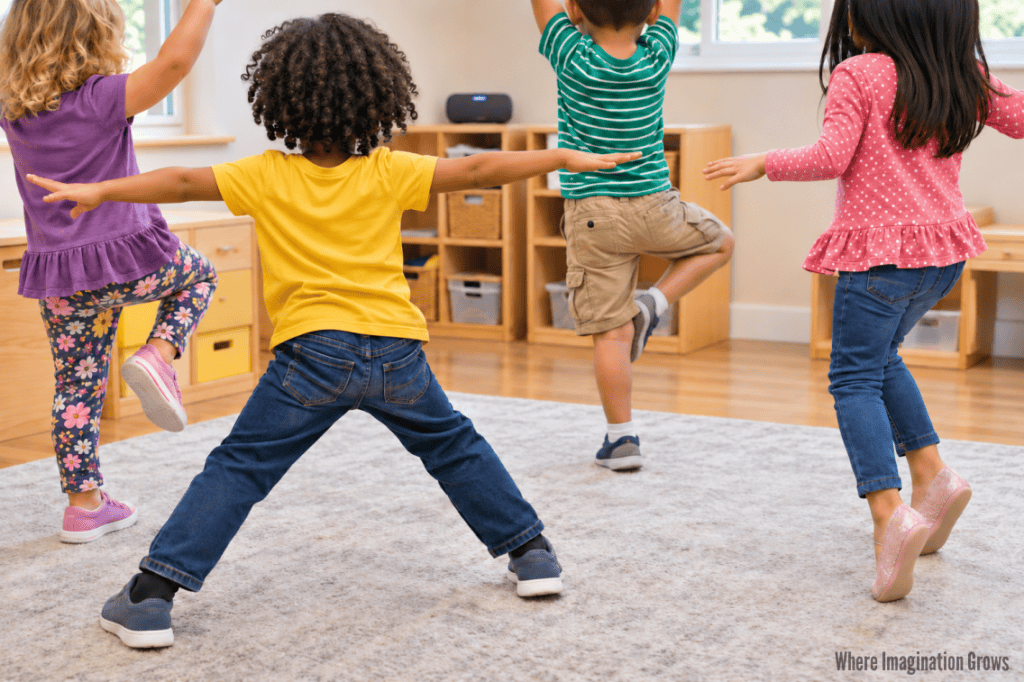
Take turns leading a short movement parade across the room. The leader might march, tiptoe, stretch, walk backward slowly, or flap their arms like a bird. The rest of the group copies.
Keep the route simple, especially when several children are playing. You can also lead from one spot and have everyone copy the movements in place.
3. Animal Moves
Call out an animal and invite children to move like it. They might take big elephant steps, stretch tall like a giraffe, waddle like a penguin, or crawl slowly like a bear.
If the room is small, stay in one place and make the animal movements without traveling across the floor.
4. Walk the Tape Path
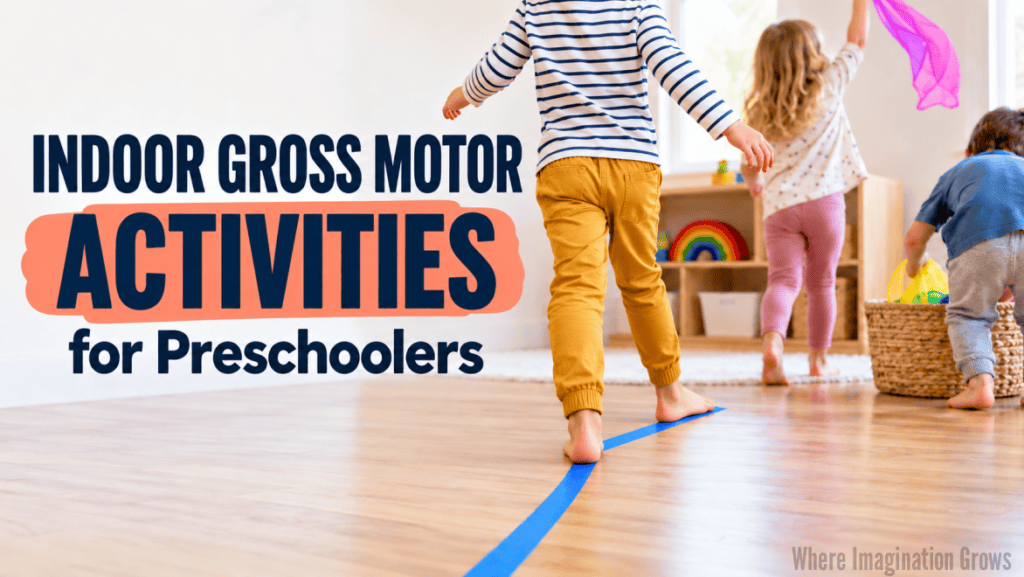
Use painter’s tape to make a straight line or gentle path on the floor. Children can walk along it, step over it, or turn around and follow it back.
For a simple challenge, try walking heel-to-toe or carrying a soft toy while following the line. Check that the tape stays flat and doesn’t make the floor slippery.
5. Red Light, Green Light
Choose one child or adult to call “green light” and “red light.” Children walk when they hear green and stop when they hear red.
In a tight space, play with everyone standing near their own spot. Green light can mean marching in place, and red light means freezing.
6. Movement Cards
Write simple actions on cards or pieces of paper: reach up high, touch your toes, march in place, stretch like a cat, or turn around. Put the cards in a basket and let children choose one at a time.
Preschoolers can take turns drawing a card and showing the movement. For children who aren’t reading yet, draw a quick picture or demonstrate the action.
7. Scarf Dancing
Give each child a lightweight scarf or piece of fabric. Put on music and invite them to move it up high, down low, side to side, or in a circle.
You can call out a speed or direction: “Move it slowly,” “Reach up,” or “Make a tiny circle.” This activity is easy to adapt for children who prefer smaller movements.

8. Soft-Toy Delivery
Place a basket on one side of the room and a few soft toys on the other. Children carry one toy at a time to the basket, then return for another.
Change the way they travel between trips: walk on tiptoe, take large steps, or march. Keep the pace comfortable and use a short path so children don’t bump into one another.
9. Roll the Ball
Sit or stand facing a partner and gently roll a soft ball back and forth. Encourage children to bend, reach, and shift their weight as they send and receive the ball.
For a group, sit in a circle and roll the ball to someone across from you. Name the child before rolling so everyone has time to get ready.
10. Pretend Walk
Take an imaginary walk together without leaving the room. Call out things you might see along the way: a puddle to step over, a hill to climb, a bird to watch, or a flower to smell.
Children can make up the next part of the walk. “What do we see now?” gives them a chance to add their own ideas and movements.
11. Copy My Shape
Make a simple shape with your body and invite children to copy it. Stretch both arms up, bend to one side, make a wide shape, or balance briefly on one foot.
Children can take turns choosing a shape for the group to try. Keep the poses comfortable, and let children participate in their own way.
12. Indoor Obstacle Path
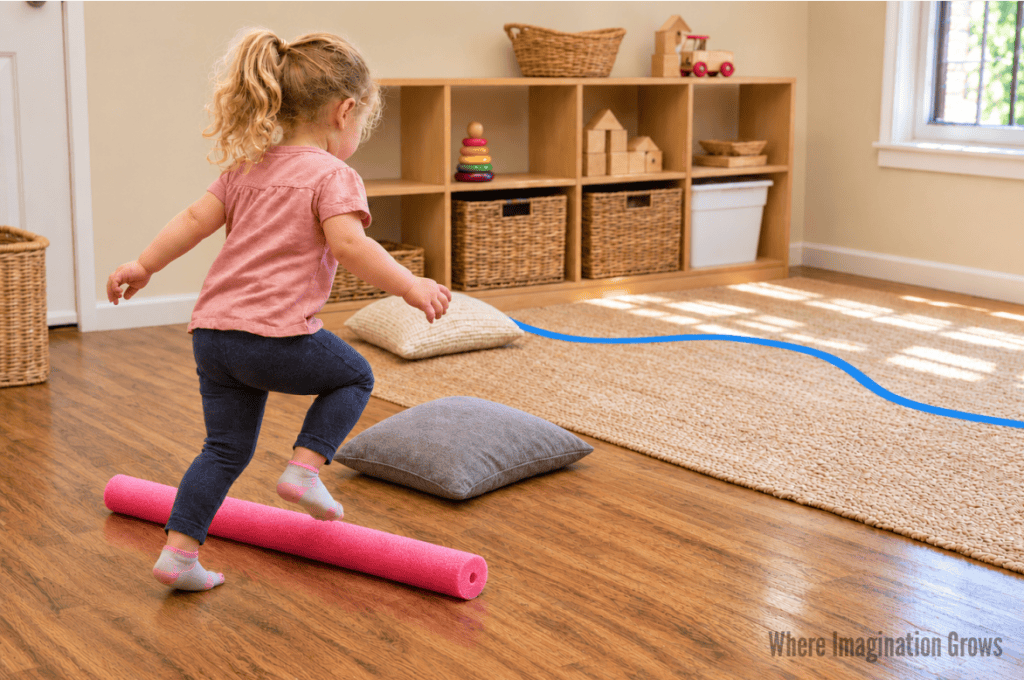
If you have a little extra floor space, make a short path with a few simple steps: walk along a tape line, step around a pillow, jump over brooms, then reach up to touch a paper shape on the wall.
Keep the path low to the ground and avoid asking children to climb on furniture. Let children try it one at a time so they have room to move.
Make Movement Games Work for Mixed Ages
When younger toddlers and preschoolers are together, keep the main idea the same and adjust the movement. A preschooler might walk along the tape path while a younger child steps over a short piece of tape nearby. One child can lead the animal moves while another copies just the arm motions.
It’s fine if children join for only a few turns or choose a smaller movement. The goal is to give them a chance to move and enjoy the game together.
For another simple imitation activity, try this gross motor game with mirrors.
When to Use Indoor Movement Activities
These games work well as a short break between table activities, a rainy-day plan, or a way to change the pace when children have been sitting for a while. A few minutes may be enough. If the group is still enjoying the game, repeat a favorite or let the children suggest a new movement.
You can also add familiar songs and motions. My apple songs and fingerplays include ideas for adding music and movement to the day.
If you care for a mixed-age group and want help planning the flow of the day, see my sample home daycare daily schedule.
Simple Movement Is Enough
Indoor gross motor activities don’t have to be elaborate. A little music, a soft ball, or a pretend walk can give preschoolers a fun chance to stretch, balance, dance, and move. Keep the directions short, make room for different abilities, and repeat the games your group enjoys.
More Preschool Activities to Try
- Personalized Gross Motor Game for Kids with Mirrors
- Apple Songs and Fingerplays for Preschoolers and Toddlers
- Home Daycare Daily Schedule: A Realistic Routine for Mixed Ages

Leave a Reply