Running a home daycare can feel very personal because the business operates inside your home. But it is still a business, and it needs a realistic budget.
It is easy to look at the tuition coming in each month and assume your program is doing well. Then groceries, supplies, insurance, utilities, taxes, licensing fees, and unexpected repairs begin eating away at that income. If you are not planning for those expenses, you may end up working long days without paying yourself enough to make the business sustainable.
After more than 18 years as a licensed home daycare provider, I have learned that a good budget does not need to be complicated. It simply needs to show what your program reliably earns, what it truly costs to operate, and how much money is left for taxes, time off, savings, and your own pay.
Here is how to create a realistic home daycare budget that works in real life, not just on paper.
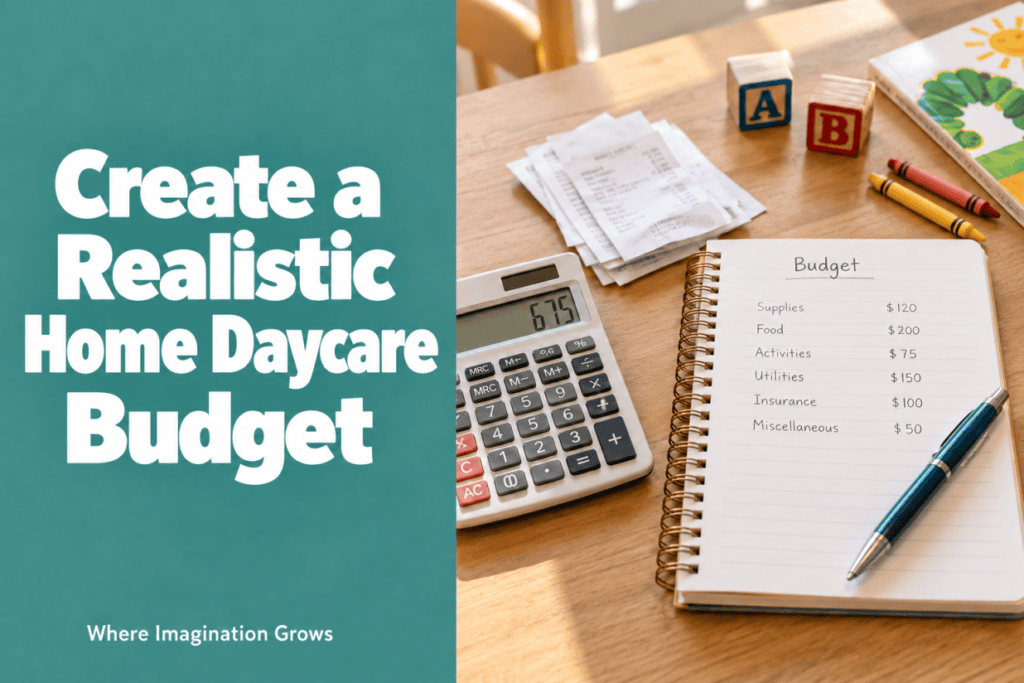
Why Home Daycare Providers Need a Budget
A home daycare budget helps you make decisions before money becomes a problem. It can show you whether your tuition rates are high enough, how many enrolled children you need, and which expenses are taking up too much of your income.
A clear budget can help you:
- Set sustainable tuition rates
- Prepare for vacancies and unpaid closures
- Plan for taxes
- Save for repairs and equipment replacement
- Build paid time off into your program
- Avoid overspending on toys and supplies
- Decide whether you can afford an assistant or substitute
- Pay yourself consistently
Most importantly, a budget helps you see the difference between revenue and actual income. The money families pay you is not the same as the money you get to keep.
Step 1: Calculate Your Reliable Daycare Income
Start with the income you can reasonably expect—not the maximum amount you could earn if every space were filled every week of the year.
List your regular sources of daycare income, including:
- Weekly or monthly tuition
- Registration or enrollment fees
- Child and Adult Care Food Program reimbursements
- Drop-in or extended-care fees, if they are dependable
- Other regular program income
Do not build your budget around late fees, occasional drop-in care, or a space that is not currently filled. Treat inconsistent income as extra rather than money you need to cover essential bills.
Convert Weekly Tuition to Monthly Income
If families pay weekly, multiply the weekly rate by the number of paid weeks in your contract, then divide by 12.
Weekly tuition × paid weeks per year ÷ 12 = average monthly tuition
For example, if a family pays $275 per week for 52 weeks:
$275 × 52 ÷ 12 = $1,191.67 per month
Repeat this calculation for each enrolled child. This gives you a more accurate monthly average than simply multiplying a weekly payment by four.
If your families do not pay for provider vacations, holidays, or other closures, subtract those unpaid weeks before dividing by 12.
Step 2: List Every Home Daycare Expense
The easiest way to build an accurate budget is to divide expenses into three groups: fixed, variable, and irregular.
Fixed Daycare Expenses
Fixed expenses stay fairly consistent even when attendance changes. These may include:
- Liability insurance
- Licensing fees
- Business registration fees
- Bookkeeping or accounting services
- Childcare management software
- Website or advertising expenses
- Professional memberships
- Required training and certifications
- Internet or phone costs used for the business
- Regular assistant or employee costs
If an expense is paid annually, divide it by 12 and add that amount to your monthly budget. For example, a $600 annual insurance premium becomes a $50 monthly expense.
Variable Daycare Expenses
Variable expenses change depending on enrollment, attendance, and the needs of the children in care. These often include:
- Food and milk
- Paper products
- Cleaning and disinfecting supplies
- Art and preschool activity supplies
- Diapers or wipes supplied by the program
- Laundry expenses
- Field-trip or transportation costs
- Payment-processing fees
- Substitute or extra-help costs
- Increased water, electricity, heating, and cooling use
Review several months of receipts or bank statements instead of guessing. Grocery and supply costs are especially easy to underestimate.
Irregular and Unexpected Expenses
These expenses do not happen every month, but they still need a place in your budget:
- Replacing broken toys
- Updating outdoor equipment
- Repairing furniture or appliances
- Carpet or upholstery cleaning
- Licensing renewals
- Background checks
- First-aid and CPR renewal
- Home repairs caused by regular business use
- Emergency supplies
- Replacing a high chair, crib, gate, or nap mat
Estimate what you spend on these items during a typical year, divide that number by 12, and move that amount into a savings category each month. A $1,200 annual repair and replacement estimate becomes a $100 monthly budget item.

Step 3: Separate Your Cash-Flow Budget From Your Tax Deductions
Your monthly operating budget and your tax calculations serve different purposes.
For your budget, focus on the actual money coming in and going out. You may also choose to have the daycare contribute a planned amount toward household expenses because the business increases your use of electricity, water, heat, internet, cleaning products, and other resources.
Tax deductions are calculated separately. Family childcare providers may qualify for special business-use-of-home rules, including a time-and-space calculation, even when daycare areas are also used by the family. Recordkeeping matters, so track attendance, business hours, receipts, and time spent on daycare work when children are not present.
Because every provider’s tax situation is different, work with a tax professional who understands family childcare businesses. A tax deduction can lower taxable income, but it does not make an expense free.
Step 4: Include Taxes in Your Home Daycare Budget
Taxes should not be whatever is left at the end of the year. Set aside money as tuition payments arrive. Keep tax savings in a separate account so the money is not accidentally used for groceries, supplies, or personal expenses.
The amount you need will depend on your profit, household income, filing status, state taxes, deductions, and other factors. No standard percentage works for every provider, but many providers set aside 25-30% of their net income. It’s highly recommended that you ask a qualified tax professional to help you choose a percentage based on your situation and determine whether you should make estimated tax payments during the year.
Step 5: Plan for Your Own Pay and Benefits
Home daycare providers often pay every business expense and then keep whatever happens to be left. That approach makes it difficult to tell whether the daycare is truly supporting you.
Your budget should include goals for:
- Regular owner pay
- Paid vacation and holidays
- Sick days
- Retirement savings
- Health-related expenses
- An emergency fund
If you are a sole proprietor, an owner’s draw is generally not recorded as a business expense for tax purposes. It should still be part of your cash-flow plan. You need to know whether the business produces enough money to pay you after operating expenses and tax savings.
Paid time off also needs to be funded. You can build paid closures into your tuition policies or save a portion of each payment to cover unpaid weeks. Whichever method you choose, explain it clearly in your contract.
For more help, read Paid Time Off for Home Daycare Providers.
Step 6: Calculate Your Break-Even Point
Your break-even point is the amount of income needed to cover your expenses before you begin earning money for yourself.
For a home daycare, it is more useful to include your desired pay and savings goals, not just basic operating costs.
Use this formula:
Monthly operating expenses + tax reserve + savings goals + desired owner pay = required monthly income
Then subtract dependable non-tuition income, such as an estimated food-program reimbursement:
Required monthly income − dependable non-tuition income = tuition income needed
Finally, divide that amount by the number of spaces you can realistically keep enrolled:
Tuition income needed ÷ enrolled spaces = average monthly tuition needed per child
This calculation does not automatically tell you what to charge. Ages, schedules, local demand, licensing ratios, and the amount families in your area can reasonably pay all matter. However, it does show whether your current rates and enrollment can support the program you are trying to run.
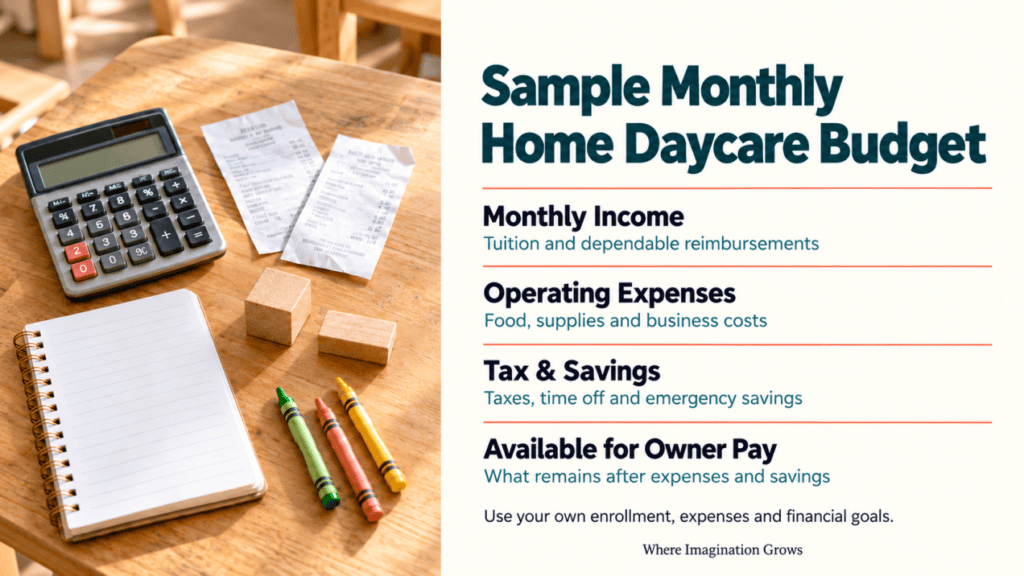
Sample Monthly Home Daycare Budget
Every program is different, but this sample shows how the pieces can fit together. These numbers are only an example and are not recommended rates or tax amounts.
Estimated Monthly Income
| Income | Amount |
|---|---|
| Tuition | $7,200 |
| Estimated food-program reimbursement | $500 |
| Other dependable income | $0 |
| Total monthly income | $7,700 |
Estimated Monthly Operating Expenses
| Expense | Amount |
|---|---|
| Food and milk | $900 |
| Activity and classroom supplies | $175 |
| Cleaning and paper products | $125 |
| Daycare share of household costs | $350 |
| Liability insurance | $140 |
| Licensing and training fund | $90 |
| Software, bookkeeping, and payment fees | $110 |
| Toy, equipment, and repair fund | $175 |
| Substitute or extra help | $250 |
| Marketing and administrative costs | $60 |
| Total operating expenses | $2,375 |
Income Remaining After Operating Expenses
$7,700 − $2,375 = $5,325
From that $5,325, the provider might create the following plan:
| Set-Aside or Pay Category | Amount |
|---|---|
| Example tax reserve | $1,330 |
| Paid time off and emergency savings | $500 |
| Retirement savings | $300 |
| Available for owner pay | $3,195 |
This example shows why gross tuition can be misleading. The program brings in $7,700, but that does not mean the provider earns $7,700.
Stress-Test Your Daycare Budget
A budget may look fine when every space is full, and nothing breaks. Before relying on it, ask a few harder questions:
- What happens if one family leaves unexpectedly?
- Can I cover expenses during a two- or four-week vacancy?
- What if food prices increase?
- Could I replace a major appliance or piece of daycare equipment?
- What happens if I need to close for an illness or family emergency?
- Can I afford a substitute when I need one?
Create a second version of your budget with one less enrolled child. If losing one enrollment immediately makes it impossible to cover basic bills, begin building a larger reserve or review your rates and expenses.
Start with a small emergency-fund goal if saving several months of expenses feels impossible. Even one month of essential daycare expenses can give you valuable breathing room. You can continue building from there.
Common Home Daycare Budgeting Mistakes
Budgeting From Full Enrollment
Licensed capacity is not always the same as consistent paid enrollment. Use the number of spaces you can realistically keep filled, and remember that age-related ratio rules may limit which openings you can accept.
Treating Gross Income as Take-Home Pay
Tuition must cover business expenses, taxes, savings, and your pay. Looking only at deposits can make your income seem much higher than it is.
Forgetting Annual Expenses
Renewals, training, insurance, equipment, and repairs can create a financial emergency when they are not included in the monthly budget.
Mixing Business and Personal Money
A separate business checking account and separate savings accounts for taxes and emergencies make it much easier to see where the money is going.
Spending Too Much on Toys and Activities
You do not need new materials every month to run a high-quality program. Rotate toys, reuse open-ended materials, borrow books from the library, and plan activities around supplies you already own.
Setting Rates Based Only on Other Providers
Local rates matter, but another provider may have different hours, expenses, policies, household income, or financial goals. Know your own numbers before deciding what your tuition should be.
Forgetting to Budget for Time Off
Vacation, holidays, appointments, and sick days are normal. If your budget only works when you are open every weekday of the year, it is not a sustainable budget.
How Often Should You Review Your Budget?
Your home daycare budget should change as your program changes.
Try this simple schedule:
- Weekly: Record income and save receipts.
- Monthly: Compare actual spending with the budget.
- Quarterly: Review enrollment, food costs, supply spending, and savings.
- Annually: Review tuition rates, policies, insurance, licensing costs, and financial goals.
You should also review your budget after a major change, such as losing or adding an enrollment, hiring help, changing your hours, joining a food program, or making a large daycare purchase.
When Should You Raise Your Daycare Rates?
It may be time to review your rates when:
- Regular income no longer covers normal operating costs
- Food, insurance, utilities, or supply costs have increased
- You cannot consistently set aside money for taxes
- You are unable to fund reasonable time off
- Your pay is too low for the hours and responsibilities involved
- You have added services, longer hours, meals, or program features
- Your rates are significantly below comparable local programs
Rate changes should be communicated in writing and with the notice required by your contract. A clear payment and rate-increase policy can prevent confusion later. You may find these tips for creating a home daycare contract helpful.
Frequently Asked Questions About Home Daycare Budgets
How much should a home daycare provider save for taxes?
No standard percentage works for every provider, but many providers set aside 25% of their net business income for taxes. Your federal and state tax needs depend on your profit, deductions, household income, filing status, and other factors. It’s best to ask a tax professional familiar with family childcare to help you choose an appropriate percentage and estimated-payment schedule.
Should food-program reimbursements be included as income?
Yes, include reimbursements you reasonably expect to receive, but keep them on a separate budget line. Reimbursement rates and eligibility can change, and the payment may not cover your entire food cost. Use your own payment history when estimating monthly income and confirm current rules with your sponsoring organization.
Should I include my mortgage or rent in my daycare budget?
For cash-flow planning, decide how much of your household cost the business needs to support. For taxes, business-use-of-home expenses follow separate rules. Do not assume the amount in your budget will equal your tax deduction.
How large should my daycare emergency fund be?
Begin with a goal that feels achievable, such as one month of essential daycare expenses. Over time, work toward enough savings to handle a longer vacancy, an unexpected closure, or a major repair without relying on credit.
What if my budget shows that I am not earning enough?
Look at both sides of the budget. Reduce expenses that do not improve safety or program quality, review your tuition rates, strengthen payment policies, and work toward stable enrollment. Small adjustments in several categories can make a meaningful difference.

Final Thoughts
Creating a realistic home daycare budget is not about cutting every expense or making your program feel overly businesslike. It is about making sure your daycare can continue serving children and families without exhausting you financially.
Use actual numbers, plan for irregular costs, save for taxes, and include your own pay in the conversation. Your experience, time, and work have value. A sustainable budget helps protect both your livelihood and the quality of care you provide.
More Home Daycare Resources
- How to Run or Start a Home Daycare
- Paid Time Off for Home Daycare Providers
- Tips for Creating a Home Daycare Contract
- Free 12-Week Home Daycare Lunch Menus
- Ultimate Home Daycare Cleaning Checklist


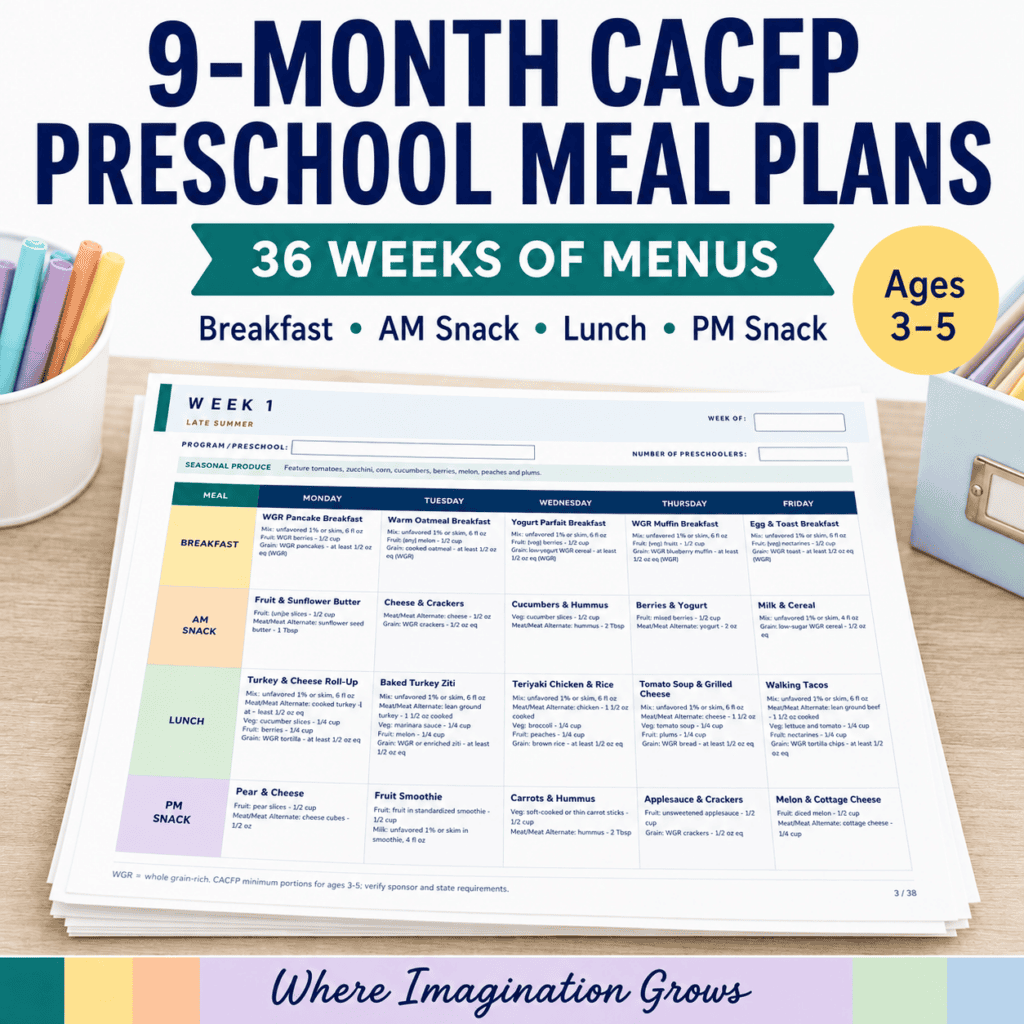
Need crafts and activities to keep your daycare kids busy? Check out our index for 100+ kids’ activities! Find activities by theme, materials, skills, age, and much more!
Leave a Reply