Running a home daycare means caring for children of different ages, needs, personalities, and schedules, all within the same day. A predictable home daycare daily schedule can help everything run more smoothly, but it shouldn’t be so rigid that one late arrival or missed nap throws off the entire day.
The best home daycare schedule creates a comfortable rhythm. Children learn what to expect, transitions become easier, and you have a realistic plan for fitting in meals, diaper changes, preschool activities, outdoor play, naps, and all the other little things that happen throughout the day.
Here is a realistic example of how to create a daily routine that works for a mixed-age home daycare.

Why a Daily Schedule Is Important in Home Daycare
Young children feel more secure when their days are predictable. They may not understand time yet, but they quickly learn the order of familiar events: breakfast is followed by playtime, outdoor play happens before lunch, and rest time comes after lunch.
A consistent routine can help:
- Make transitions easier
- Reduce challenging behaviors
- Give children a sense of security
- Ensure meals, naps, and outdoor time aren’t overlooked
- Help parents understand how their child’s day is structured
- Give providers a manageable plan for the day
A schedule also helps you protect time for important parts of your program. Without a general plan, preschool activities can get pushed aside, outdoor time may become rushed, and the entire day can start to feel reactive.
The goal is not to follow the clock perfectly. The goal is to create a dependable flow that supports both the children and the provider.
Sample Home Daycare Daily Schedule
The following sample schedule is designed for a home daycare with a mix of toddlers and preschoolers. Adjust the times to fit your operating hours, the ages in your care, school transportation, and your state’s child care requirements.
7:00–7:30: Arrival & Breakfast
Serve breakfast as children arrive rather than waiting for the entire group to be present. This works especially well in a home daycare because families often arrive at different times. This is also a good time to greet families, receive important updates, and help children settle into the day.
If children arrive outside of breakfast time, parents should send them having already eaten.
Children who have finished eating can choose from simple activities such as blocks, puzzles, books, play dough, or dramatic play.
7:30–9:00: Free Play and Simple Centers
Blocks, puzzles, books, play dough, and dramatic play materials work well because children can begin and end these activities without disrupting the group.
Keeping this part of the morning flexible gives later arrivals enough time to transition without holding up the rest of the group.
9:00–9:15: Morning Snack
Offer a small morning snack at 9:00. Children who arrived early may be ready to eat again, while children who arrived closer to snack time may choose to eat less.
After snack, wash hands and prepare for the morning’s activities.
9:15–9:30: Morning Group Time
Morning group time can include:
- A welcome song
- A short story
- Music and movement
- Weather or calendar activities
- A discussion about the day’s theme
- A simple preschool lesson
Group time does not need to be long. Ten to fifteen minutes may be plenty, especially when younger toddlers are part of the group.
9:30–10:30: Centers and Preschool Activities
Use this time for a planned preschool activity, art project, sensory experience, or learning centers.
Preschoolers might practice letter recognition, counting, cutting, or another age-appropriate skill while younger children explore blocks, sensory materials, large crayons, or simple toys nearby.
Not every activity needs to be complicated. A simple invitation to play often works better in a mixed-age setting than a project that requires the provider to assist every child individually.
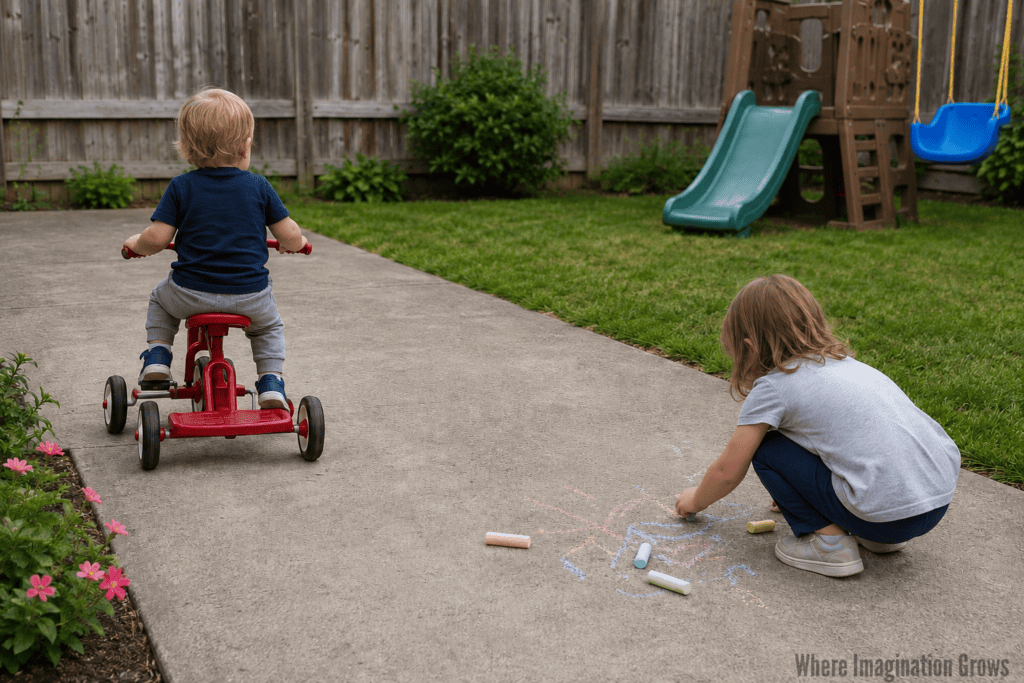
10:30–11:30: Outdoor Play
Outdoor play gives children time to move, explore, and release energy before lunch and rest time.
Depending on your space and the weather, outdoor time might include:
- Riding toys
- Balls and hoops
- Sidewalk chalk
- Sand or water play
- Nature walks
- Bubbles
- Simple outdoor art
- Free play in the yard
When the weather prevents outdoor play, substitute music and movement, an indoor obstacle course, or another large-motor activity.
11:30–12:00: Cleanup, Bathroom, and Lunch Preparation
Transitions with a mixed-age group often take longer than expected. Build enough time into your schedule for cleaning up, washing hands, changing diapers, using the bathroom, and getting everyone safely seated for lunch.
This transition time also gives the group a chance to settle down after active outdoor play while you prep lunch.
12:00–12:30: Lunch
Keep lunchtime relaxed and predictable. Sit with the children when possible, encourage conversation, and model positive mealtime habits.
A rotating home daycare meal plan can make meal preparation easier and reduce the daily stress of deciding what to serve.
12:30–12:45: Story and Rest-Time Routine
After lunch, begin a calming rest-time routine. Dim the lights, read a story, play quiet music, and help children prepare their nap mats or sleeping spaces.
Following the same routine each day helps children recognize that it is time for their bodies to slow down.
12:45–3:00: Nap and Quiet Time
Some children may sleep for the entire rest period, while others may wake early or no longer nap.
Children who do not sleep can look at books, complete puzzles, draw, or use quiet activity bins. Choose activities that allow resting children to continue sleeping.
Nap time may also provide a small window for providers to clean up, prepare the afternoon snack, complete paperwork, or set up the next activity. It is still active supervision time, so plan only tasks that allow you to supervise the children properly.
3:00–3:30: Wake-Up, Bathroom, and Afternoon Snack
Give children time to wake up gradually. Complete diaper changes and bathroom visits, put away rest materials, and serve the afternoon snack as children wake.
A flexible 3:00–3:30 snack window works well because not every child wakes from nap at the same time.
3:30–5:00: Afternoon Activities and Outdoor Play
The afternoon is a good time for outdoor play, sensory activities, open-ended art, music, or free choice. Children are often ready to move after rest time, so active play may work better than another teacher-directed lesson.
5:00–6:00: Free Play and Pickup
Offer familiar toys and activities that are easy to clean up while families arrive. Gather belongings, share important information with parents, and help children transition home.
Avoid activities that require your full attention during this time. Pickup times can be unpredictable, and parents may need to speak with you when they arrive.

Think in Blocks of Time Instead of Exact Minutes
A home daycare is not a traditional classroom. Babies need bottles, toddlers have diaper emergencies, children arrive late, and someone will occasionally spill an entire cup of milk just as you are preparing to go outside.
Instead of planning every part of the day to the minute, organize your schedule into larger blocks:
- Arrival and free play
- Breakfast and morning care routines
- Group learning
- Active or outdoor play
- Lunch
- Rest
- Afternoon play
- Departure
This gives the day structure without making you feel as though you are constantly behind.
What About Infants Who Nap Twice?
Infants may still need both a morning and afternoon nap. A baby’s schedule might include a morning nap around 9:00 or 10:00, followed by a second nap during the group’s afternoon rest time.
While the infant naps in the morning, toddlers and preschoolers can participate in centers or a planned activity nearby. Keep the rest of the group’s schedule consistent while following the infant’s individual sleep cues, feeding needs, and your program’s safe-sleep requirements.
Build Extra Time Into Transitions
Transitions are often the hardest part of a home daycare schedule. Getting several young children dressed for outdoor play can take longer than the outdoor activity itself.
Allow extra time for:
- Handwashing
- Diaper changes and bathroom visits
- Putting on coats and shoes
- Cleaning up activities
- Moving between indoor and outdoor spaces
- Setting up and cleaning up meals
- Preparing children for naps
Songs, visual reminders, and consistent cleanup routines can make these transitions easier. When children know what happens next, they are more likely to participate.
Plan Around the Children’s Basic Needs
Meals, snacks, toileting, diaper changes, naps, and active play should form the foundation of your schedule. Preschool lessons and crafts should fit around those needs—not compete with them.
A hungry or tired child is unlikely to enjoy even the best planned activity. You may find that your group is most ready for focused learning in the morning, while afternoons work better for outdoor play, sensory activities, and free choice.
Watch your current group and adjust the schedule based on what you observe.
Be Flexible With Mixed Ages
One of the biggest challenges of a home daycare daily schedule is meeting the needs of different ages at the same time.
A baby may need a morning nap while preschoolers are completing an activity. A toddler may need help with lunch while older children are already finished. One child may nap for two hours while another has stopped napping entirely.
It helps to:
- Keep independent activities available
- Use safe play spaces where children can remain engaged
- Choose activities that can be simplified or extended
- Prepare supplies before the children arrive
- Maintain consistent meal and rest routines
- Accept that not every child will participate in every activity
Mixed-age care does not have to mean creating a separate schedule for every child. Look for activities that allow children to participate at their own developmental level.

Don’t Overfill the Schedule
Children need time for unstructured play. You do not need to plan a craft, worksheet, lesson, sensory bin, and science experiment every day.
Free play gives children opportunities to practice communication, creativity, problem-solving, independence, and social skills. It also allows you to observe the children and see which interests or skills could guide future activities.
One meaningful preschool activity combined with plenty of free play, outdoor time, stories, and music can create a full and engaging day.
What to Do When the Schedule Falls Apart
Some days will not go according to plan—and that does not mean your schedule has failed.
If the children are deeply engaged in outdoor play, you may decide to stay outside longer. If everyone is tired after a busy morning, lunch and rest time may need to start early. If a planned activity is causing frustration, it is okay to put it away and try something else.
Return to your usual routine at the next natural point in the day rather than trying to rush through everything you missed.
A good schedule should support your program, not control it.
Review Your Schedule as Your Group Changes
The schedule that worked perfectly in September may not work in January. Children grow, naps change, new children enroll, and school transportation or family schedules may affect your routine.
Review your daily schedule whenever:
- A new child enrolls
- A child stops taking a morning or afternoon nap
- Several children move into a new developmental stage
- Transitions regularly feel rushed
- Planned activities are consistently skipped
- Children frequently seem hungry, tired, or restless at the same time
Small changes, such as serving lunch fifteen minutes earlier or moving group time before breakfast, can make a noticeable difference.
Create a Routine That Works for Your Home Daycare
There is no single perfect home daycare daily schedule. Your routine should reflect your hours, the ages you serve, your physical space, and the needs of your current group.
Start with predictable times for meals, outdoor play, and rest. Add a few flexible blocks for learning activities and free play, and leave enough breathing room for real life.
After more than 15 years as a licensed child care provider and over 20 years of working with preschoolers, I have learned that the most successful routines are consistent without being rigid. Children benefit from knowing what comes next, but both children and providers also need room to adjust when the day does not go as planned.
A realistic schedule will not make every day perfect, but it can help your home daycare feel calmer, more organized, and easier for everyone to navigate.
More Home Daycare Resources
Find more helpful tips and printables for running your program:
- Free Home Daycare Cleaning Checklist
- Free 12-Week Daycare Lunch Menu
- Tips for Creating a Home Daycare Contract
- More Home Daycare Tips and Resources

Looking for more crafts and activities? Check out our index for 100+ kids’ activities! Find activities by theme, materials, skills, age, and much more!
Leave a Reply