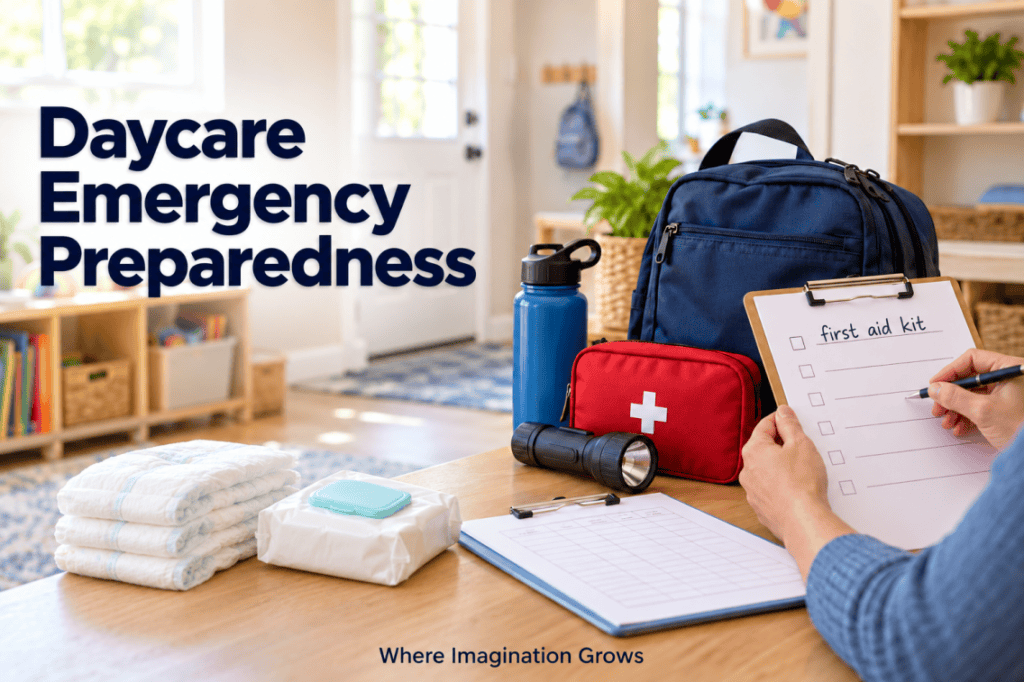
A home daycare emergency preparedness checklist can help you organize the plans, contacts, and supplies you may need to protect children in your care. A written daycare emergency plan gives caregivers clear steps to follow, while regular practice helps everyone know what to do if an emergency happens.
When you run a home daycare, emergency planning can feel like one more thing on a long to-do list. But creating a plan doesn’t have to be complicated. Start with situations that could happen in or near your program, decide how you’ll respond, and write down the steps so they’re easy to find.
I’ve worked with preschoolers for more than 20 years and have operated a home daycare for over 15. I’ve learned that a plan is most useful when it’s practical, easy to access, and familiar to the adults who may need to use it.
[Download the free daycare emergency policy template and drill tracking sheet]
This printable is a general planning tool. Check the child care licensing and emergency procedures that apply to your location and program.
Why does a home daycare need an emergency plan?
In an emergency, caregivers need to make quick decisions while supervising children. A written plan helps you think through those decisions ahead of time. It can also help you explain your procedures to families and any staff or substitute caregivers.
Your plan should describe what you’ll do in situations that could affect your program. These may include a fire, severe weather, a utility problem, a medical emergency, or another event that makes it unsafe to stay in the home.
The exact risks and procedures will vary by location and program. Use your plan as a working document, and check the requirements that apply to your child care setting.
What should a daycare emergency plan include?
A useful emergency policy is specific enough to guide your response. Instead of writing only “evacuate,” describe where everyone will go, what you’ll take, and how you’ll account for each child.
Evacuation procedures
Write down when you would evacuate, which exits you would use, and where you would take the children. Consider how you’ll move infants and toddlers, help children who need extra support, and bring attendance information and emergency contacts.
Choose a meeting location away from the building where you can check that everyone is accounted for. If there is a second safe location you may need to use, include its address and contact information.
Shelter-in-place procedures
Some situations may make it safer to stay inside rather than leave. Identify the area where children and caregivers should go, what supplies you might need, and how you’ll keep children supervised.
Make sure the plan explains how you’ll get reliable updates and decide when it’s safe to leave the shelter area.
Medical emergencies
Describe the steps you’ll take if a child or caregiver has a serious injury or medical emergency. Include how you’ll contact emergency services, who will supervise the other children, and how you’ll reach a child’s parent or guardian.
Keep children’s emergency contact and medical information accessible to the adults who may need it. Follow the applicable requirements for handling and sharing private information.
For related guidance on illness procedures, see How to Handle an Illness Outbreak in Your Home Daycare.
Lost or missing child
Plan for how you’ll respond if a child cannot be accounted for. Write down how you’ll keep the other children supervised, who you’ll notify, and how you’ll document what happened.
Natural disasters and other local hazards
Think about emergencies that are more likely in your area, such as earthquakes, flooding, extreme heat, or severe storms. Your response may involve evacuating, sheltering in place, or relocating to another safe location.
Practice emergency drills with children
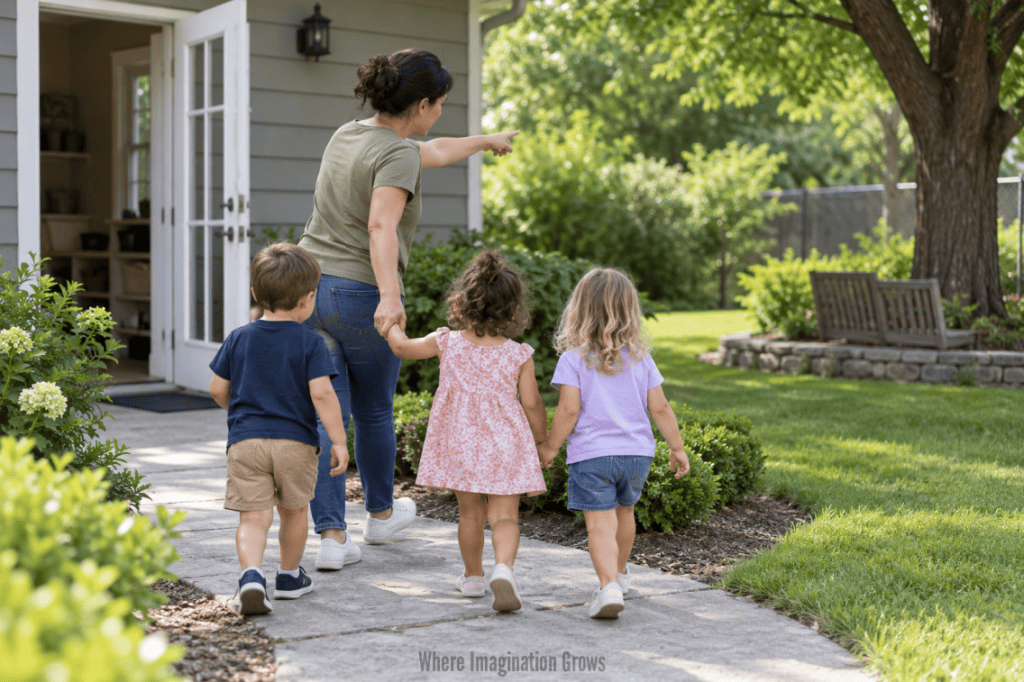
A written plan is easier to follow when caregivers and children have practiced the steps. Practice helps children become familiar with routines such as lining up, leaving the building, or moving to a safe area.
Keep drills calm and appropriate for the ages and needs of the children in your care. Explain what is happening in simple language and reassure children afterward. After a drill, note anything that worked well and anything you want to change, such as a route that was difficult to use or supplies that were hard to reach.
Drill schedules and documentation rules can vary by location and program type. Check the requirements that apply to your daycare before deciding how often to practice each procedure.
Keep emergency contacts and facility information current
A contact list is only helpful if it’s current and easy to find. Post or store the information where caregivers can access it quickly, and make sure more than one adult knows where it is.
Include:
- Emergency services
- Poison Control
- Children’s parent or guardian contacts
- A local hospital or medical facility
- Utility companies
- Your program’s address and phone number
- A nearby cross street or landmark
- The location of your emergency supplies
Review contact names and phone numbers when families enroll or update their information. Your home daycare contract and policy handbook is another place to explain important program policies and expectations to families.
Free daycare emergency policy template and drill tracking sheet
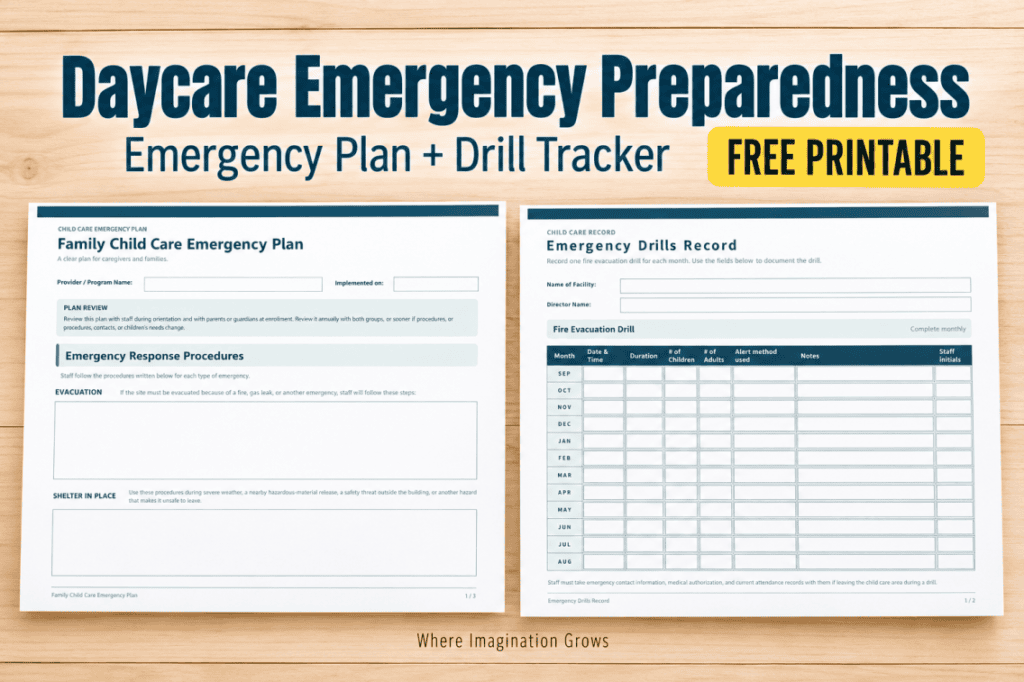
To make emergency planning easier, I created a free Daycare Emergency Plan and Drills Record. Use the template to write down your emergency response procedures, facility details, and important phone numbers. It includes sections for evacuation, sheltering in place, a lost or missing child, medical emergencies, and natural disasters.
The drill tracking sheet gives you a place to record the date and time, duration, number of children and adults, alert method, notes, and staff initials. Use it to keep your records organized and review how each practice went.
[Download the free emergency policy template and drill tracking sheet]
After downloading, fill in the procedures for your program, share the plan with the adults who may need to follow it, and keep it somewhere accessible. Review it regularly and update it when your contacts, procedures, or children’s needs change.
Make emergency planning part of your daycare routine
Emergency preparedness doesn’t have to happen all at once. Write your plan, check your contact information, practice your procedures, and make updates as your program changes. A clear plan and a simple record of practice can make it easier for caregivers to respond calmly and keep children together.
A regular cleaning routine is another part of maintaining a healthy daycare environment. You can use my Ultimate Home Daycare Cleaning Checklist to organize daily, weekly, and monthly cleaning tasks.
Related Home Daycare Posts
- Tips for Creating a Home Daycare Contract and Handbook
- How to Handle an Illness Outbreak in Your Home Daycare
- Ultimate Home Daycare Cleaning Checklist
- Home Daycare Daily Schedule: A Realistic Routine for Mixed Ages
Need crafts and activities to keep your daycare kids busy? Check out our index for 100+ kids’ activities! Find activities by theme, materials, skills, age, and much more!
Leave a Reply