This easy apple volcano science experiment is a fun way to add hands-on science to your fall preschool activities. With just an apple, baking soda, and vinegar, kids can watch a fizzy reaction happen right inside a real apple.
It’s simple enough for preschoolers, takes only a few minutes to set up, and works perfectly with an apple theme or September preschool unit.
Kids get to scoop, pour, make predictions, and observe what happens when two common ingredients are mixed together. And, of course, watching the bubbly “volcano” spill over the apple is the best part.
If you’re planning a whole week of apple activities, pair this experiment with our apple songs and fingerplays for preschoolers, apple pie playdough, and felt apple tree counting activity.
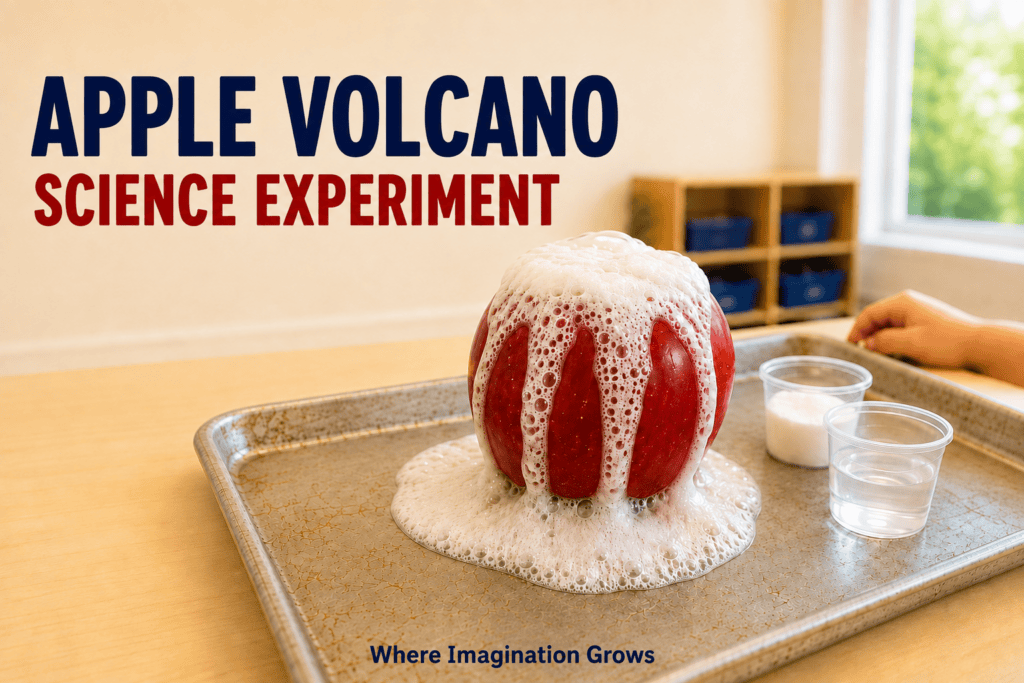
Easy Apple Volcano Experiment
Baking soda and vinegar experiments are always a hit with preschoolers. Using a real apple instead of a cup or container gives the classic experiment a fun fall twist.
The apple acts as the “volcano,” while the baking soda and vinegar create the fizzy eruption.
This is also an easy activity to repeat. Once the fizzing slows down, kids can add a little more baking soda and vinegar and watch it erupt again.
Apple Volcano Supplies
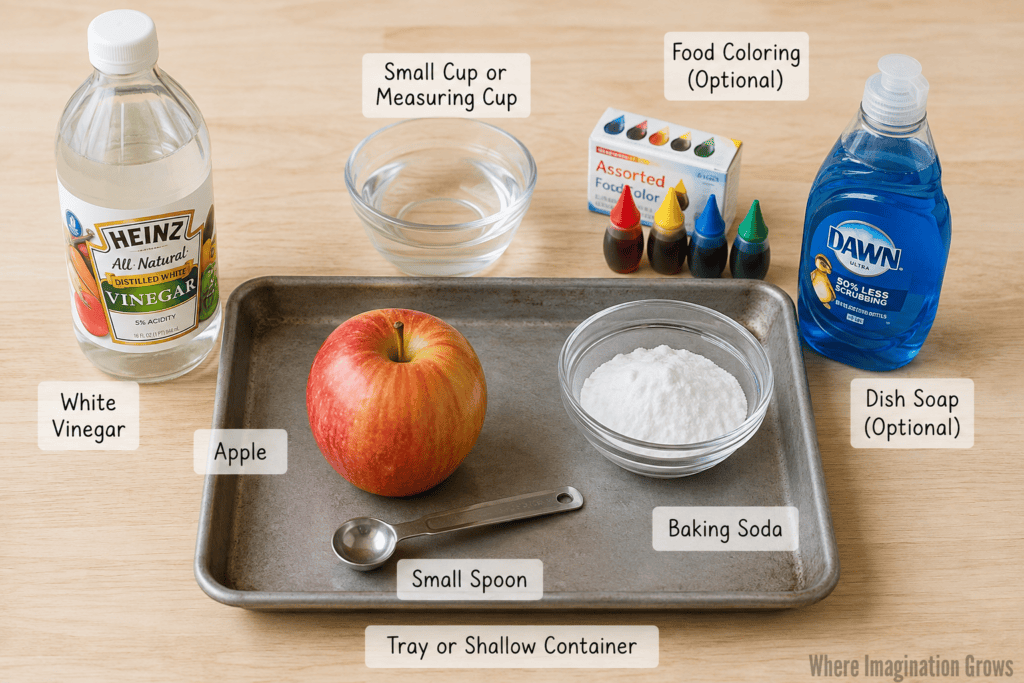
You only need a few simple supplies:
- 1 apple
- Baking soda
- White vinegar
- Small spoon
- Small cup or measuring cup
- Sheet pan, plastic tray, or shallow container
- Food coloring, optional
- Dish soap, optional
A tray underneath the apple will help contain the mess when the volcano begins bubbling over.
If you’re doing this activity with several children, you may want to use more than one apple so everyone has a chance to scoop, pour, and experiment.
How to Make an Apple Volcano
1. Hollow Out the Apple
Place the apple on a tray.
An adult should carefully cut around the stem and remove part of the center of the apple.
Scoop out enough apple to create a small cavity, but make sure you don’t cut through the bottom.
The opening doesn’t need to be perfect. You just need enough room to hold the baking soda and vinegar.
2. Add Baking Soda
Let your preschooler scoop about 1 to 2 tablespoons of baking soda into the hollowed-out apple.
This is a great opportunity to let kids do as much of the activity themselves as possible.
Scooping and pouring also adds a little fine motor practice to the experiment.
3. Add Color or Dish Soap
This step is optional.
Add a few drops of food coloring if you want a colorful apple volcano.
You can also add a small squirt of dish soap. The soap traps some of the gas bubbles and can create a thicker, foamier eruption.
4. Pour in the Vinegar
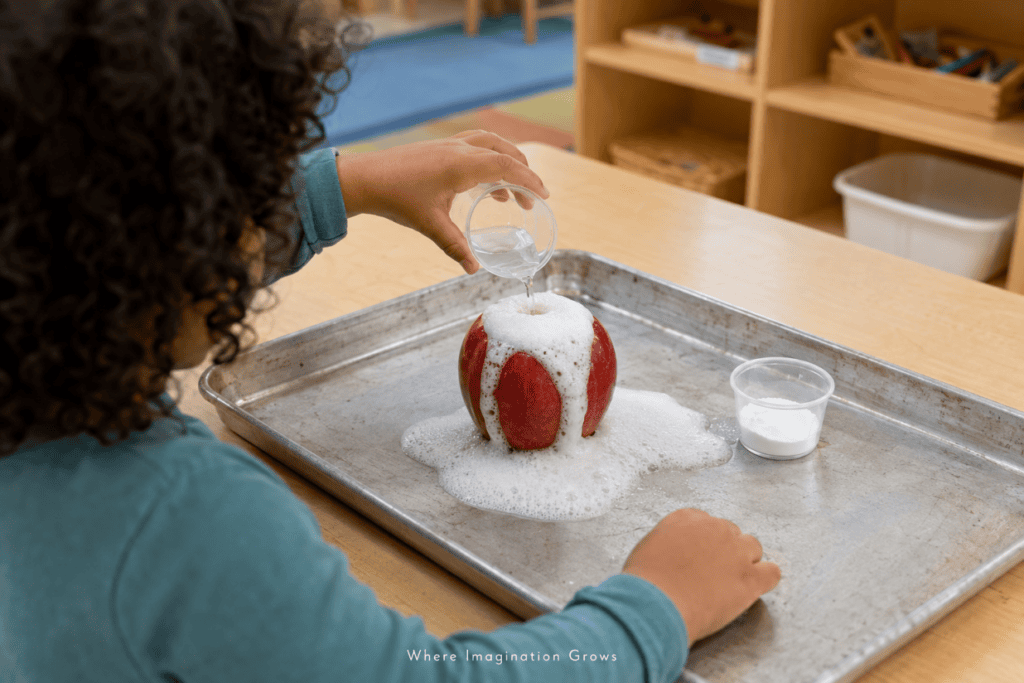
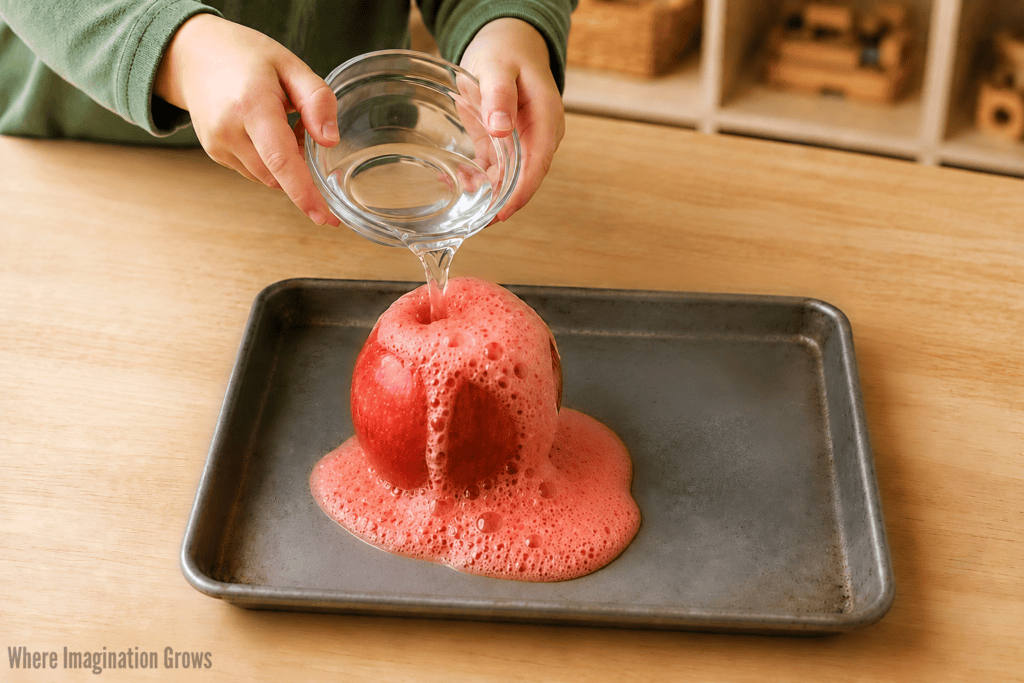
Now comes the fun part. Slowly pour vinegar into the apple and watch what happens.
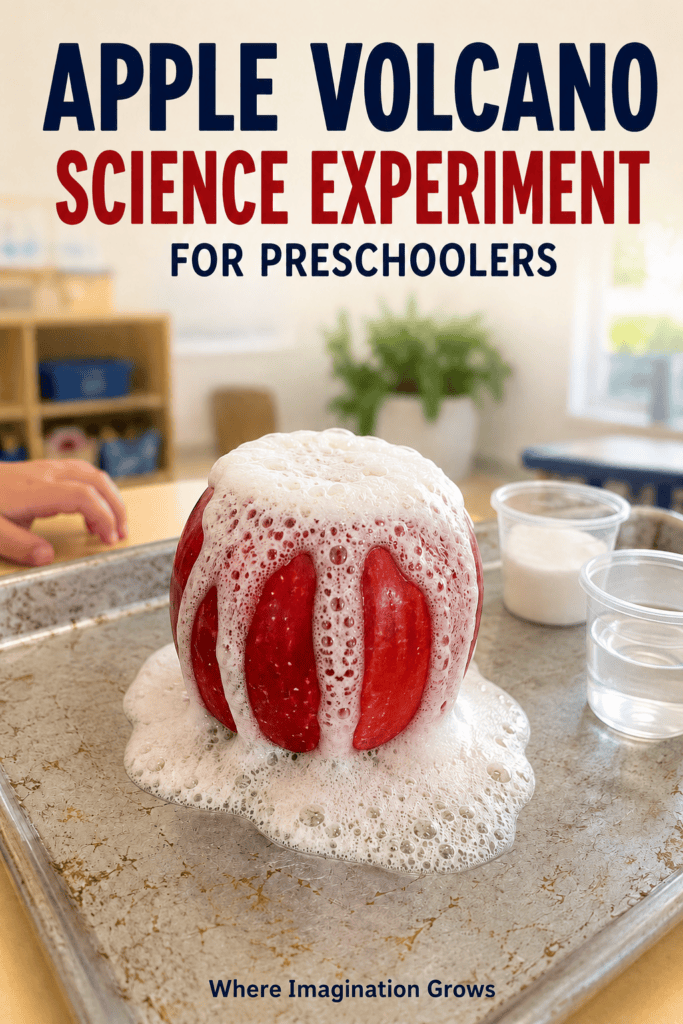
The mixture should immediately begin fizzing and bubbling before spilling over the top and down the sides of the apple.
Preschoolers will probably want to do it again, so keep extra baking soda and vinegar nearby.
Why Does Baking Soda and Vinegar Fizz?
The fizzing happens because baking soda and vinegar react when they are mixed together.
Baking soda is a base, while vinegar is an acid.
When the two combine, they create carbon dioxide gas. That gas forms all of the bubbles you see rising out of the apple.
For preschoolers, you can keep the explanation simple.
You might say: “When we mix the baking soda and vinegar together, they make a gas. The gas creates all of those fizzy bubbles!”
You don’t need to turn the activity into a formal science lesson. Simply noticing what happens and talking about it introduces children to important early science skills.
Ask Preschoolers to Make a Prediction
Before pouring in the vinegar, ask your child or preschoolers what they think will happen.
- Will anything happen?
- Will it bubble?
- Will it overflow?
- Will the apple change?
Then add the vinegar and compare what actually happened with their predictions. Making a prediction before an experiment is a simple way to introduce preschoolers to the scientific process.
Questions to Ask During the Experiment
Keep the conversation going with simple questions such as:
- What do you think will happen?
- What do you notice?
- What do you hear?
- What do the bubbles look like?
- Are the bubbles moving quickly or slowly?
- What happens when we add more vinegar?
- What happens when we add more baking soda?
- Do you think we can make it fizz again?
- What would happen if we used a bigger apple?
There isn’t always one correct answer. The important part is getting kids to observe, describe, wonder, and experiment.
What Preschoolers Learn From This Apple Science Experiment
This activity may look like simple fizzy fun, but preschoolers are working on several early learning skills at the same time.
Cause and Effect
Children can immediately see that something happens when the baking soda and vinegar are mixed together.
They add an ingredient and see a reaction.
Observation Skills
Preschoolers can observe the bubbles, fizzing sounds, foam, movement, and changes happening inside the apple.
Making Predictions
Asking children what they think will happen before adding the vinegar encourages early scientific thinking.
Early Science Vocabulary
Introduce words naturally as you play, including:
- Experiment
- Predict
- Observe
- Reaction
- Bubble
- Fizz
- Gas
There’s no need for preschoolers to memorize these words. Hearing them used during a hands-on activity helps children begin connecting new vocabulary with real experiences.
Fine Motor Skills
Scooping baking soda and carefully pouring vinegar also gives children practice using controlled hand movements.
Ways to Extend the Apple Volcano Experiment
Once your preschoolers understand the basic experiment, let them change one part and see what happens.
Try More or Less Baking Soda
Start with a small amount of baking soda. Then try the experiment again using more.
Ask: “Did anything change?”
Change the Amount of Vinegar
Let kids experiment with adding a little vinegar at a time.
Does adding more vinegar create more fizz?
Compare Different Apples
Try using two different-sized apples.
Ask your preschoolers if they think the size of the apple will change the experiment.
Try Different Colors
Add different food coloring to several apples. You could make red, yellow, green, or even rainbow apple volcanoes.
Leave Out the Dish Soap
If you used dish soap the first time, try the experiment without it.
Compare the two reactions. Which one makes more foam?
This type of simple experimenting helps kids learn that changing one part of an experiment can change what they observe.
Tips for Doing This Activity With a Preschool Group
If you’re doing the apple volcano experiment in a preschool classroom or home daycare, place the apple in the middle of a large tray where everyone can see it.
Let children take turns adding ingredients.
One child can scoop the baking soda while another pours the vinegar.
You can also prepare several apples and let children experiment in smaller groups.
Keep extra baking soda and vinegar available because this is definitely one of those activities preschoolers will ask to repeat.
Is the Apple Volcano Messy?
A little!
Most of the fizz and foam can be contained by putting the apple on a rimmed tray, baking sheet/pan, or shallow plastic bin.
You can also take the activity outside if the weather is nice.
The mess is usually part of the fun, and cleanup is fairly simple since the main ingredients are baking soda and vinegar.
Apple Volcano Safety
An adult should always cut and hollow out the apple.
Once the apple is prepared, preschoolers can help scoop and pour with supervision.
Remind children that the experiment is for exploring, not eating. Once the apple has been used for the experiment, it should be thrown away rather than eaten.
More Apple Activities for Preschoolers
Turn your apple volcano into part of a full apple-themed week.
Try some of these activities next:
- Apple Songs and Fingerplays for Preschoolers and Toddlers
- Apple Pie Playdough Recipe for Preschoolers
- Felt Apple Tree Counting Activity
- September Preschool Themes
- Fall Preschool Lesson Plans
- 30 Fall Kids Activities for September
Simple Fall Science for Preschoolers
Apple activities are an easy way to bring seasonal learning into your preschool day, and this fizzy experiment is simple enough to do without a lot of special materials or preparation.
The best part is that preschoolers aren’t just watching an experiment happen. They can scoop, pour, predict, observe, and change the experiment to see what happens next.
Add this apple volcano science experiment to your apple theme, fall preschool plans, or September activities for an easy hands-on science experience kids will want to repeat again and again.
[…] a real apple into an exciting apple volcano experiment. This is a fun way to add observation, predictions, and a simple chemical reaction to your apple […]